
Frederick Fleitz
last updated: November 23, 2018
Please note: The Militarist Monitor neither represents nor endorses any of the individuals or groups profiled on this site.
Affiliations
- Center for Security Policy: CEO; Former Senior Vice President for Policy and Programs
- Newsmax Media: Former Managing Editor, LIGNET.com
- National Collegiate Conference Association: Former President, Board of Directors
Government
- National Security Council: Former Chief of Staff (2018)
- House Intelligence Committee: Former Staff (2006)
- CIA: Former Analyst at the Weapons Intelligence Non-Proliferation and Arms Control Center
- House Permanent Select Committee on Intelligence: Former Staff Member (2006)
- State Department: Former Chief of Staff to Undersecretary John Bolton
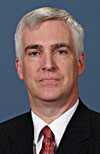
Fred Fleitz—former chief of staff in the Donald Trump administration’s National Security Council (NSC) under John Bolton—is a rightwing foreign policy hardliner who is known for pushing discredited conspiracy theories about Muslims and attacking political opponents. He once threatened Right Web with “legal actions” for mentioning in our profile of him reports by investigative journalists that linked Fleitz to the notorious PlameGate affair, which involved the public leaking of a CIA operative’s name and eventually led to the conviction of then-Vice President Dick Cheney’s chief of staff I. Lewis Libby. (see below, “PlameGate and Threatening Legal Action against Right Web”).
Fleitz’s résumé includes working as a CIA analyst and serving as chief of staff to John Bolton in the State Department during the George W. Bush presidency.[1] From 2013 to 2018, Fleitz was a senior staff member at the Center for Security Policy (CSP), a controversial right-wing think tank led by Frank Gaffney that promotes discredited conspiracy theories concerning Muslims, a hardline “pro-Israel” agenda, and militaristic responses to challenges in Iran and other countries in the Middle East. When Fleitz left the NSC in October 2018, he returned to CSP to take over for Gaffney as president and CEO in January 2019.[2]
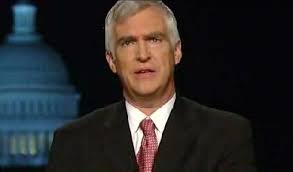
Fleitz spent his time at NSC—less than five months—outside of the spotlight. Yet during his tenure there, his boss, John Bolton, made numerous bold statements on Iran, North Korea, the International Criminal Court, and the Israel-Palestine conflict.
When Fleitz announced his departure, there was equally little fanfare. But journalist Curt Mills observed that the timing was potentially notable, as it came in the midst of a major crisis in U.S.-Saudi relations. The apparent murder by the Saudi regime of Saudi Washington Post journalist Jamal Khashoggi—a permanent U.S. resident—caused a major controversy, including calls for re-evaluating the long-standing alliance between the two countries.
“[S]ome worry in the wake of the probable murder of Saudi journalist Jamal Khashoggi, that the White House is poised to taper back from its bellicose commitments against political Islam and the regime in Iran. Much has been made of how integral the Saudis are to the counter-Iran strategy, but less attention has been given to the fact the Trump administration, until now, viewed Riyadh as the leading light against barbarism and Islamic extremism,” wrote Mills.
While Mills didn’t consider Fleitz’s departure to be directly related to the Khashoggi murder, he did believe it possible that it could be one more factor in a shift in U.S. policy away from strategic reliance on Saudi Arabia.
“It’s not likely his departure was directly related, but Fleitz was perhaps the leading agitator in the administration against the Muslim Brotherhood, a hobby horse of the Center for Security Policy. As I reported in September, the NSC, under Fleitz’s administration, was weighing labeling the Brotherhood a terrorist organization. After Khashoggi, are some in the administration preparing to pivot away from the hardliners?” Mills speculated.[3]
In early 2016, Fleitz was one of several CSP veterans to be included on the list of foreign policy advisers to the presidential campaign of Sen. Ted Cruz (R-TX). Others included Gaffney and Clare Lopez.[4]
Fleitz was formerly the managing editor of LIGNET.com (Langley Intelligence Group Network), a part of the conservative Newsmax Media group, which claimed to provide “global intelligence and forecasting from former CIA, U.S. intelligence, and national security officers, drawing on an international network of experts and sources.”[5] Advisors to LIGNET have included several high-profile right-wing figures, including Bolton, former Ambassador Otto Reich, and former CIA Director Michael Hayden.[6]
Publication Track Record
In his writings and public appearances, Fleitz has consistently promoted alarmist views of alleged threats to U.S. security. Among his subjects have been Middle Eastern countries targeted by neoconservatives and other “pro-Israel” hardliners, particularly Iran. His CSP publication page is littered with fear-mongering headlines about Iran, like “The Enormous Fraud of the Iran Deal Is Catching Up with Obama,” “Another Obama Bomb Concession: Iran May Get Access to US Financial Markets,” “More Indications of the Iran Nuclear Deal’s Dangerous Weakness,” “In Yet Another Secret Side Deal, Iran’s Nuclear Violations Won’t Be Publicly Disclosed.”[7]
This editorial slant on Iran was already apparent during his stint with LINGET. In July 2012, for example, LIGNET hosted a roundtable discussion “on the serious threat a nuclear Iran poses to the United States.”[8]Participants included Fleitz and Hayden, as well as Arnaud de Borchgrave and Thomas Sanderson of the Center for Strategic and International Studies. According to a Newsmax story about the event, which was available to LIGNET members only, Hayden “delivered a disturbing message” during the discussion, arguing that “Every time you turn the page, it gets scarier.” Fleitz, according to Newsmax, stated that “diplomacy is no longer an option,” arguing that Iran “wants to wipe Israel off the face of the earth.”[9]
In March 2012, Fleitz contended in a 2012 LIGNET.com interview that the Assad regime in Syria might try to transfer nuclear weapons-related material to Iran or terrorist groups, arguing: “If Assad thinks he’s in danger, he just may decide to transfer some technology, or maybe some uranium, to Iran.” The claims were reported on the LIGNET.com webpage under the heading, “The Secret Threat from Syria’s Nuclear Weapons Program.” Despite this alarming headline, it is not clear that Syria has ever had a “nuclear weapons program.” Although the International Atomic Energy Agency (IAEA) concluded in 2011 that a Syrian building destroyed by Israeli jets in 2007 was “very likely” a nuclear reactor, the IAEA made no claims with respect to a nuclear weapons program.[10] In an email to Right Web, Fleitz appeared to walk back some aspects of the LIGNET.com story, claiming that he did not think he ever said that there was a “secret threat” from Syria’s nuclear program and that his point was that there are “unanswered questions about the Syrian program and related materials.”[11]
CSP’s “Professional Islamophobe”
Fleitz’s appointment as chief of staff for John Bolton in May 2018 renewed the professional association of the two hardliners that dates back to the George W. Bush administration. Democracy Now! Described Fleitz as a “professional Islamophobe” and the show’s host, Amy Goodman, reported, “Civil rights groups condemned Fleitz’s appointment, and the group Muslim Advocates issued a statement[12] that, quote, ‘The White House continues to be the nation’s central organizing body for white supremacists.’”[13]
While Fleitz is less visible than Bolton or Gaffney, his tenure at CSP saw him promote some of the most pernicious myths about Muslims. As one reporter noted, “Fleitz has also promoted the myth of European ‘no-go zones’—places the CSP casts as being governed by Islamic law—as well as a widely debunked CSP survey that suggested a quarter of Muslims support violence against Americans. (During his campaign, Trump cited the same survey in calling for a ban on Muslims entering the United States.) Fleitz has promoted the idea of a ‘clash of civilizations’ between Islam and the United States and co-authored a 2015 CSP report titled ‘A Plan for Victory Over the Global Jihad Movement; that claimed that ‘the majority of Muslims and Islamic authorities…promote or at least support jihad and shariah supremacism.’”[14]
In June 2017, speaking to Breitbart News Daily, Fleitz commented on a terrorist attack in London saying that “there’s something they’re not talking about in the U.K. that really needs to be focused on: the role that the failure to assimilate British Muslims has created the situation. There are communities where British Muslims are deliberately not assimilating, are being taught to hate British society, and this is incubating radicalism. There’s actually a parallel system of sharia law courts in the U.K. that operate. We may have generations of radical Islamists in the U.K., until the British government wakes up and stops the situation.”
Fleitz made it clear that this concern focused exclusively on Muslims when the show’s host pointed out that groups like the Amish and ultra-orthodox Jews also resist assimilation and have their own, isolated community governments.
“It’s certainly true there are some communities in the United States that have not assimilated,” Fleitz agreed. “I’m not concerned about Amish or Jewish communities, but I will tell you that there are enclaves of Muslim communities in Michigan and Minnesota that concern me. We know that in Minnesota there’s a rising rate of measles because the community has not assimilated into the rest of the community and is not vaccinating their children. This is wrong. This is a big problem.”
Fleitz was referring to a measles outbreak among Somali children in Minnesota around 2008. But it had nothing to do with the community being isolated or being Muslim. It was the result of a frightened immigrant community being taken in by anti-vaccine conspiracy theorists.[15]
In the same 2017 Breitbart interview, Fleitz dismissed the notion of Islamophobia. “Anyone who raises concerns about radical Islam seems to be tarred and feathered as an Islamophobe in this country. I’ll let the people who peddle this term give a better explanation, but that’s my experience,” he said.[16]
Fleitz co-authored a 2015 CSP report titled, “The Secure Freedom Strategy: A Plan for Victory Over the Global Jihad Movement.” According to the Southern Poverty Law Center, “The report contains a number of radical recommendations about how to defeat the so-called ‘global jihad movement,’ including halting the immigration of ‘Shariah-adherent’ individuals to the U.S. It also claims there are ‘legal premises for deportation and stripping of American citizenship’ for ‘Shariah-adherent’ American Muslims.”[17]
Anti-Iran Conspiracy Theorist
Fleitz’s political leanings and ideology led him to vehement opposition to the Iran nuclear deal. Most of his writings for CSP since the election of Donald Trump have been either broad-based defenses of Trump or broadside attacks on the Iran deal.[18]
In September 2017, Fleitz signed an open letter developed by the militarist group High Frontier opposing the Iran deal and calling for President Trump to violate the deal by unilaterally withdrawing the United States from it without cause. The letter stated, in part, “We agree with Ambassador John Bolton that strong international sanctions, a tough negotiating strategy and a decisive American president who will not engage in appeasement is the best approach to rein in Iran’s belligerent behavior and induce it to joining negotiations on a better agreement. … It is time to move beyond President Obama’s appeasement of Iran and to begin work on a comprehensive new approach that fully addresses the menace that the Iranian regime increasingly poses to American and international security.”[19]
Similar to Fleitz’s vaccination claims, the letter also stated that Iran’s military budget grew by 90 percent in 2017. That figure, according to the fact-checking organization Check Your Fact, is unsubstantiated. It was a figure drawn from a proposed budget that leaked, not an actual one. It was also challenged as ignoring the contexts of frequent fluctuations in Iran’s military spending and of the percentage of military spending as part of overall spending.[20]
In July 2017, Fleitz supported claims made by four Republican senators[21] that Iran was in material breach of the nuclear deal.[22] In fact, all the accusations were either false or inflammatory statements that did not describe actual violations of the deal. The letter stated, for instance, that Iran refused to grant international inspectors access to nuclear research and military facilities. This was false. According to Diplomacy Works, there were “no reports by the IAEA of any problems making use of the inspection procedures under the JCPOA.”
Fleitz also parroted the claim that, “German intelligence agencies in 2015 and 2016 reported that Iran continued illicit attempts to procure nuclear and missile technology outside of JCPOA-approved channels.” Diplomacy Works made it clear that, “The 2015 report is about pre-JCPOA activities and thus not relevant to establishing compliance under the nuclear deal. A 2016 report of the national German intelligence agency pointedly underscored concern only about missile procurement activity, not nuclear activity.”[23]
Fleitz has pushed conspiracy theories implying that “left-wing” U.S. intelligence analysts are covering up Tehran’s activities. In a July 2011 op-ed for the Wall Street Journal’s neoconservative editorial page, Fleitz wrote that the U.S. intelligence community was “unwilling to conduct a proper assessment of the Iranian nuclear issue,” adding that it was “unacceptable that Iran is on the brink of testing a nuclear weapon while our intelligence analysts continue to deny that an Iranian nuclear weapons program exists.”
Responding to Fleitz’s claims, Ali Gharib of ThinkProgress opined: “[Fleitz’s] accusations would be hilarious if they weren’t so serious. In essence, Fleitz is writing that the consensus of the U.S.’s 16 intelligence agencies—that Iran has still not made the decision to build a nuclear weapon—should be thrown out and everyone should listen to him.[24] But Fleitz’s own tenure in government was so plagued by scandal and deeply flawed. … that it raised hackles from experts worldwide. He espoused a worldview that considers anything insufficiently edgy or hawkish enough ‘wimpy.’”[25] (Fleitz contested this view of his track record, stating in an email to Right Web that the report was “false and defamatory” and that it “must be removed” from Right Web’s profile on him. He added: “I do not know this person and he knows nothing about my distinguished 25-year career with the CIA, DIA, State Department, and Congress. There were no scandals in my career.”[26])
Fleitz also complained in the Wall Street Journal op-ed that his concerns about alleged flaws in the classified 2011 National Intelligence Estimate (NIE), which he claimed to have read as a staffer on the House Intelligence Committee, had been ignored. He alleged that the NIE had been “skewed” by the views of outside reviewers, who included “former senior intelligence officers, liberal professors, and scholars from liberal think tanks.” He also said that an earlier NIE from 2007, which concluded that Iran did not have a nuclear weapons program, “had been politicized by several officials who feared how President George W. Bush might respond to a true account of the Iranian threat.”[27]
Responding to the claim, Greg Theilmann, a former staffer on the Senate Intelligence Committee, wrote in the Wall Street Journal: “I strongly disagree with his assertion that the 2007 estimate was ‘politicized’ and that intelligence managers ‘have discouraged provocative analytical conclusions’ since 2003. The well-sourced and carefully reasoned 2007 estimate showed how much progress had been made by the intelligence community since the disastrous 2002 NIE on Iraq’s WMD. The disdain [the 2007 estimate] immediately provoked in some circles derived from the policy implications of its conclusions and the failure of the White House to provide substantive context in its rollout, not from the analytical tradecraft employed in its preparation.”[28]
Fleitz is perhaps best known as an author of a controversial 2006 report on the alleged nuclear threat from Iran that was harshly criticized by the International Atomic Energy Agency for containing “erroneous, misleading, and unsubstantiated information.”[29] (The Washington Post reported that Fleitz was the “principal author” of the report[30]; Fleitz, however, wrote in an email to Right Web that it was “a bipartisan committee paper signed out by Democratic and Republican members of Congress with three authors.”[31])
The report, titled “Recognizing Iran as a Strategic Threat: An Intelligence Challenge for the United States,” criticized the intelligence community for not providing more evidence of the threatening nature of Iran’s nuclear program.[32] Commenting on the report, journalist Jim Lobe wrote, “The fact that Frederick Fleitz, a former CIA officer, was apparently the report’s main author suggests that his effort to undermine confidence in the intelligence community’s estimates regarding Iran is part of a larger campaign that includes many of the same hawks who led the drive to war in Iraq. In addition to working for [Rep. Peter] Hoekstra, a staunch [Bush] administration loyalist, Fleitz served as John Bolton’s special assistant during Bush’s first term. Bolton, then undersecretary of state for international security and arms control, worked particularly closely with neoconservatives in [Dick] Cheney‘s office and the Pentagon to undermine efforts by his nominal boss at the time, Secretary of State Colin Powell, to engage Iran, North Korea, and Syria on a range of issues.”[33]
Working with Bolton in the Bush Administration
Fleitz’s work began to receive public attention during the April 2005 Senate Foreign Relations Committee hearings on John Bolton’s nomination to be the U.S. ambassador to the United Nations. Fleitz testified, “I’m a CI [counterintelligence] officer on detail to John Bolton’s staff as a special assistant, I’ve been on detail since August 2001. I’ve been a CI officer for 19 years, and I came [to]…the Weapons Intelligence Non-Proliferation and Arms Control Center. I’ve done some work in WMD, most of my work has been on international organizations.”[34] When a committee counselor asked why he had been sent from the CIA to the State Department, Fleitz replied, “In early 2000, 2001, Mr. Bolton asked that I be detailed, since he had worked with me during the first Bush administration; I also handled UN issues when he was the assistant secretary of state for international organizations, and he had asked that I be sent to him.”[35]
Describing his job responsibilities, Fleitz told the committee, “I’m the acting Chief of Staff for the T front office [the Under Secretary’s Office, which oversees four assistant secretaries], and I also have responsibilities with WINPAC, and I perform liaison function for the Agency and Mr. Bolton.”[36]
During Bolton’s spring 2005 nomination hearing, Alan Foley, who headed CIA’s weapons intelligence office, testified that in 2002 Fleitz told him about Bolton’s disappointment with an analyst who contested Bolton’s contention that Cuba was vigorously trying to develop weapons of mass destruction. Foley told the Senate Foreign Relations Committee, “What I remember is Fred said something in the conversation, like, ‘John thinks this guy ought to be fired.’ And I remember being jarred by that.”[37] In an email to Right Web, Fleitz appeared to challenge the veracity of Foley’s remarks, stating that the information reported in an earlier version of this profile about Foley’s testimony was “untrue nonsense.”[38]
Fleitz was also reportedly involved in efforts to “threaten” the State Department’s Bureau of Intelligence and Research (INR), which was one of the few intel outfits that seriously questioned the justifications used by the Bush administration for going to war in Iraq (for more on the INR, see Right Web Profile: Randall Fort). Citing declassified e-mails, Reuters reported that Fleitz “threatened to diminish the role of the State Department’s intelligence bureau because of a dispute over analyzing China’s missile export controls.”[39] In an email to Right Web, Fleitz claimed this report, too, was “untrue nonsense.”[40]
The emails quoted by Reuters, however, appear to belie Fleitz’s “nonsense” claim. In one of the emails, Fleitz criticizes the INR for its decision to include a rebuttal of a CIA assessment of Chinese export controls, which was produced by the CIA office Fleitz had formerly worked in. The INR rebuttal contended that the CIA’s assessment contained “certain mistakes” and that its analysis would have been different if it had been subjected to vetting by other intel agencies. In his memo to INR, Fleitz said he was writing on behalf of Bolton to express his “displeasure” with the INR’s rebuttal, adding that if Bolton’s office “cannot trust INR to follow established dissemination procedures, we may have to look for an alternate arrangement to send and relay [top secret] material.”[41]
An anonymous Senate source reportedly told Reuters that the State Department “sat on [Fleitz’s] email for three weeks. … The reason they didn’t want us to see this email is that it substantiates the pattern of behavior by John Bolton of cherry-picking and distorting intelligence and becoming angry … when someone dares to disagree with the analytic judgment he has about an issue.”[42]
Reuters was not the only news agency to report on declassified emails that appeared to demonstrate a similar “pattern of behavior” by Bolton and Fleitz. Several weeks before the Reuters story appeared, the New York Times reported that it had reviewed several recently declassified emails that suggested “animosity between Mr. Bolton and his staff on the one hand, and intelligence analysts on the other, at levels even greater than have emerged from recent public testimony by Mr. Bolton and others.” Among the emails was one from Fleitz to Bolton in which the former CIA agent characterized the language cleared by the intel community for a speech by Bolton on Cuba’s alleged biological weapons program as “wimpy.” Fleitz also sent messages to State Department intel officials, which one top official described as containing “unwarranted personal attacks.”[43]
Shortly after the Times story appears, Gary Schmitt, a neoconservative ideologue then based at the Project for the New American Century, attempted to defend Fleitz and Bolton, writing in an April 2005 “memorandum to opinion leaders” that the Times neglected to quote other declassified emails, including one from an unnamed government official to Fleitz claiming that INR’s rebuttal on Cuba “violated both State and IC protocol, big time. INR speaks to the IC on behalf of State, so the IC must presume that, when it receives an INC communication, INR is speaking on behalf of State.”[44]
However, as the emails quoted by the Times make clear, INR was only one of a handful of intel agencies that had problems with Bolton’s hardline take on Cuba’s alleged weapons. Wrote one INR official to Fleitz: “The demarche coordinator told me this evening that C.I.A., N.S.A., I.N.R, and D.I.A. had several difficulties with the proposed language and that C.I.A. is trying to craft an answer to you.”[45]
Some observers argued at the time that all the attention Fleitz was receiving was misguided. Steve Clemons opined in his Washington Note blog, “Fred Fleitz, an interesting and provocative CIA official who was loaned to Bolton, was not operating in his own right. Fleitz was not [a] renegade himself. He was following instructions of Bolton, operating on behalf of Bolton, in a manner consistent with the expectations—and apparently the behavior paradigm—of John Bolton.”[46]
“PlameGate” and Threatening “Legal Action” against Right Web
Fleitz’s connection to Bolton, his CIA work, and his role in confronting those who disagreed with Bolton’s views appeared to spur some writers and bloggers to speculate whether Fleitz had been involved in other scandals that occurred during the Bush administration, particularly the PlameGate affair, which involved the public leaking of a CIA operative’s name and ultimately led to the conviction of Cheney chief of staff I. Lewis Libby.
In September 2006, former Deputy Secretary of State Richard Armitage acknowledged that he was the source who first leaked Plame’s identity to journalists. However, before this admission, there was considerable public speculation about who could have been the source of the leak, some of which centered on Bolton and his aides. In an October 2005 entry in her War and Piece blog, Laura Rozen wrote: “It’s worth remembering, wasn’t Bolton’s acting chief of staff Frederick Fleitz wearing a second hat when he was working for Bolton? That hat was… wait…an analyst with the CIA’s WINPAC bureau. The precise bureau Libby told [reporter Judith] Miller that Joe Wilson’s wife worked for, Miller writes. Maybe Fleitz or Bolton supplied the name of Wilson’s wife after Libby had pushed Miller to dig in that direction?”[47]
These speculations were also fueled by attorneys involved in investigating the outing of the CIA operative’s name, who reportedly told bloggers Larisa Alexandrovna and Jason Leopold in November 2005 of Fleitz’s involvement in the affair. Wrote Alexandrovna and Leopold: “The attorneys … said that Frederick Fleitz, Bolton’s chief of staff and concurrently a senior CIA Weapons Intelligence, Nonproliferation and Arms Control official, supplied Bolton with Plame’s identity. Bolton, they added, passed this to his aide, [David] Wurmser, who in turn supplied the information to [John] Hannah. Upon receiving this information, Libby asked Bolton for a report on [Ambassador Joseph] Wilson’s trip to Niger, which Wilson presented orally to the CIA upon his return. Fleitz was one of a handful of officials who was in a position to know Plame’s maiden name, the sources said. Fleitz is named in the [Libby] indictment as an unnamed CIA senior officer, they added.”[48]
For his part, Fleitz has vigorously rejected having any connection to the PlameGate affair, going so far as to threaten to take legal action against Right Web if we did not remove references to the affair from this profile. He wrote that any claims linking him to the affair were “defamatory and completely false,” that his alleged role was only reported in “a handful of little-read blogs,” and that Right Web’s references to it “must come out.”[49] After Right Web informed Fleitz that while it would review his profile it nevertheless reserved the right to report the views and claims made by legitimate sources, he responded saying that he “may pursue legal options” if Right Web did not remove the Plamegate material from his profile.[50]
In an effort to undertake due diligence in following up on Fleitz’s claims, Right Web asked Jason Leopold—coauthor of a blog that reported that unnamed attorneys had alleged that Fleitz “supplied Bolton with Plame’s identity”—if he stood by his 2005 story and remained confident in his unnamed sources. He responded positively, writing in an email to Right Web: “I stand by what I reported as it pertains to Fleitz’s role in the Plame affair [and so do] my sources who provided information that formed the basis of my report in which he was named.”[51]
Book on Peacekeeping
Fleitz is the author of the 2002 book Peacekeeping Fiascoes of the 1990s: Causes, Solutions, and U.S. Interests. Blurbed by Jeane Kirkpatrick on its jacket as a “splendid analysis of peacekeeping in the 90s [that] illuminates the problems encountered by the United States in its effort to utilize the new tool to achieve military goals,” the book argues that peacekeeping operations can only work in a limited number of situations. Citing a number of peacekeeping “fiascoes” during the last decade, including in Somalia and Sierra Leone, Fleitz argues that UN peacekeeping missions should be limited to only one type of peacekeeping operation: “traditional” peacekeeping, which he defines as “unarmed or lightly armed multilateral troops deployed with the consent of state-party disputants. They are impartial and use force only in self-defense. Traditional peacekeeping forces sometimes are permissible to help end civil wars if verifiable cease-fires and the full consent of disputants can be obtained.”[52]
According to his biography on the book’s jacket, Fleitz is the former president of the board of directors of the National Collegiate Conference Association, a nongovernmental organization that oversees the National Model United Nations program.
SOURCES
[1] “Iran: Temporary Nuclear Halt Offer Reported; Other Developments,” Facts on File World News Digest, September 14, 2006.
[2] Press Release, “Center for Security Policy Welcomes Home Fred Fleitz from the White House; Frank Gaffney Passes the Torch to Fleitz for the Center’s Second Thirty Years,” Center for Security Policy, October 15, 2018, https://www.centerforsecuritypolicy.org/2018/10/15/center-for-security-policy-welcomes-home-fred-fleitz-from-the-white-house-frank-gaffney-passes-the-torch-to-fleitz-for-the-centers-second-thirty-years/
[3] Curt Mills, “Amid Khashoggi Affair, Fred Fleitz Leaves White House,” The National Interest, October 17, 2018, https://nationalinterest.org/feature/amid-khashoggi-affair-fred-fleitz-leaves-white-house-33706
[4] Eli Lake, “Cruz Assembles an Unlikely Team of Foreign-Policy Rivals,” Bloomberg, March 17, 2016, https://www.bloomberg.com/view/articles/2016-03-17/cruz-assembles-an-unlikely-team-of-foreign-policy-rivals
[5] Lignet.com, “About,” http://www.lignet.com/About.
[6] Lignet.com, “About,” http://www.lignet.com/About.
[7] Center For Security Policy, “About Fred Fleitz,” https://www.centerforsecuritypolicy.org/author/fred-fleitz/
[8] Newsmax, “Fmr. CIA Director Hayden: Iran Nuclear Crisis Gets ‘Scarier’,” July 17, 2012, http://www.newsmax.com/InsideCover/Iran-Nuclear-Crisis-Gets-Scarier/2012/07/17/id/445668.
[9] Newsmax, “Fmr. CIA Director Hayden: Iran Nuclear Crisis Gets ‘Scarier’,” July 17, 2012, http://www.newsmax.com/InsideCover/Iran-Nuclear-Crisis-Gets-Scarier/2012/07/17/id/445668.
[10] Paul Brennan, “ISIS Analysis of IAEA Report on Syria: IAEA Concludes Syria ‘Very Likely’ Built a Reactor,” Institute for Science and International Security,” May 24, 2011, http://isis-online.org/isis-reports/detail/isis-analysis-of-iaea-report-on-syria-iaea-concludes-syria-very-likely-buil/.
[11] Fred Fleitz, email to Peter Certo (Right Web editorial assistant), May 22, 2012.
[12] Scott Simpson, “Muslim Civil Rights Group Condemns Appointment of Hate Group Official to National Security Council,” Muslim Advocates, May 30, 2018, https://www.muslimadvocates.org/muslim-civil-rights-group-condemns-appointment-of-hate-group-official-to-national-security-council/
[13] “John Bolton Names Professional Islamophobe & Bush Official Fred Fleitz to National Security Staff,” Democracy Now!, May 31, 2018, https://www.democracynow.org/2018/5/31/john_bolton_names_professional_islamophobe_bush
[14] Abigail Hauslohner, “New NSC chief of staff is from group that believes Muslims are plotting to take over U.S.,”
[15] Jacqueline Howard, “Anti-vaccine groups blamed in Minnesota measles outbreak,” CNN, May 8, 2017, https://www.cnn.com/2017/05/08/health/measles-minnesota-somali-anti-vaccine-bn/index.html
[16] John Hayward, “Fred Fleitz: ‘We May Have Generations of Radical Islamists in the U.K. Unless the British Government Wakes Up,’” Breitbart News, June 5, 2 017, http://www.breitbart.com/radio/2017/06/05/fred-fleitz-may-generations-radical-islamists-u-k-unless-british-government-wakes/
[17] Hatewatch, “Anti-Muslim think tank staffer Fred Fleitz named National Security Council chief of staff,” Southern Poverty Law Center, May 30, 2018, https://www.splcenter.org/hatewatch/2018/05/30/anti-muslim-think-tank-staffer-fred-fleitz-named-national-security-council-chief-staff
[18] Fred Fleitz, Center for Security Policy, https://www.centerforsecuritypolicy.org/?s=fleitz
[19] Henry F. Cooper, “Our Letter to President Trump Regarding U.S. policy on the Nuclear Deal with Iran,” High Frontier, September 23, 2017, http://highfrontier.org/letter-president-trump-regarding-u-s-policy-nuclear-deal-iran/
[20] David Sivak, “Fact Check: Has Iran’s Military Budget Grown 40% Since the Nuclear Deal?” Check Your Fact, May 14, 2018, http://checkyourfact.com/2018/05/14/fact-check-iran-military-nuclear-deal/
[21] Tom Cotton, Ted Cruz, David A. Perdue, Marco Rubio, “Letter To Secretary of State Rex Tillerson,” Washington Post, July 11, 2017, https://www.washingtonpost.com/r/2010-2019/WashingtonPost/2017/07/11/Editorial-Opinion/Graphics/Tillerson_JCPOA_Letter07112017.pdf?tid=a_inl
[22] Fed Fleitz, “Iran Is Not Complying With The Nuclear Deal,” National Review, July 14, 2017, https://www.nationalreview.com/2017/07/iran-nuclear-deal-noncompliance/
[23] Diplomacy Works, “Responding To The Cotton Letter,” Lobelog, July 14, 2017, https://lobelog.com/responding-to-the-cotton-letter/
[24] Ali Gharib, “Report: Still Scant Evidence Iran Has Decided On Nuclear Weapons,” Think Progress, May 31, 2011, https://thinkprogress.org/report-still-scant-evidence-iran-has-decided-on-nuclear-weapons-eb4e8f227e84/
[25] Ali Gharib, “Discredited WSJ Op-Ed Writer Sees Liberal Conspiracy In The U.S. Intelligence Community On Iran,” ThinkProgress, July 20, 2011, http://thinkprogress.org/security/2011/07/20/274347/wsj-feitz-iran-intelligence/.
[26] Fred Fleitz, email to Peter Certo (Right Web editorial assistant), May 22, 2012.
[27] Fred Fleitz, “America’s Intelligence Denial on Iran,” Wall Street Journal, July 19, 2011.
[28] Greg Theilmann, “Intelligence on Iran Was Accurate,” Wall Street Journal, July 27, 2011, http://online.wsj.com/article/SB10001424053111903461104576462242653010646.html.
[29] David Sanger, “Nuclear Agency For U.N. Faults Report on Iran By U.S. House,” New York Times, September 15, 2006. See also letter from Vilmos Cseveny, IAEA, to Rep. Peter Hoekstra, September 12, 2006, http://www.globalsecurity.org/wmd/library/report/2006/iaea_hpsci-iran_12sep06.htm.
[30] David Sanger, “Nuclear Agency For U.N. Faults Report on Iran By U.S. House,” New York Times, September 15, 2006. See also letter from Vilmos Cseveny, IAEA, to Rep. Peter Hoekstra, September 12, 2006, http://www.globalsecurity.org/wmd/library/report/2006/iaea_hpsci-iran_12sep06.htm.
[31] Fred Fleitz, email to Peter Certo (Right Web editorial assistant), May 22, 2012.
[32] Dafna Linzer, “U.S. Spy Agencies Criticized on Iran,” Washington Post, August 24, 2006.
[33] Jim Lobe, “An Intel Air Ball,” Right Web Analysis, International Relations Center, August 29, 2006.
[34] Testimony of Frederick Fleitz, Hearing before the Senate Foreign Relations Roundtable, U.S. Senate 109th Congress, 1st Session, April 11, 2005, http://www.senate.gov/~foreign/hearings/2005/hrg050411a.html.
[35] Testimony of Frederick Fleitz, Hearing before the Senate Foreign Relations Roundtable, U.S. Senate 109th Congress, 1st Session, April 11, 2005, http://www.senate.gov/~foreign/hearings/2005/hrg050411a.html.
[36] Testimony of Frederick Fleitz, Hearing before the Senate Foreign Relations Roundtable, U.S. Senate 109th Congress, 1st Session, April 11, 2005, http://www.senate.gov/~foreign/hearings/2005/hrg050411a.html.
[37] Barry Schweid, “Ex-Official: Bolton Wanted Analyst Fired,” Associated Press, May 4, 2005.
[38] Fred Fleitz, email to Peter Certo (Right Web editorial assistant), May 22, 2012.
[39] Carol Giacomo, “Bolton Aide Targets State Dept. Bureau in Dispute,” Reuters, May 10, 2005.
[40] Fred Fleitz, email to Peter Certo (Right Web editorial assistant), May 22, 2012.
[41] Carol Giacomo, “Bolton Aide Targets State Dept. Bureau in Dispute,” Reuters, May 10, 2005.
[42] Carol Giacomo, “Bolton Aide Targets State Dept. Bureau in Dispute,” Reuters, May 10, 2005.
[43] Douglas Jehl, “Released E-Mail Exchanges Reveal More Bolton Battles,” New York Times, April 24, 2005, http://www.nytimes.com/2005/04/24/politics/24bolton.html.
[44] Gary Schmitt, “Memorandum to Opinion Leaders,” Project for the New American Century, April 25, 2005, http://www.newamericancentury.org/bolton-20050425.htm.
[45] Douglas Jehl, “Released E-Mail Exchanges Reveal More Bolton Battles,” New York Times, April 24, 2005, http://www.nytimes.com/2005/04/24/politics/24bolton.html.
[46] Steve Clemons, “It was ALL Bolton. Not Fred Fleitz,” TheWashingtonNote.com, May 10, 2005.
[47] Laura Rozen, War and Piece, October 16, 2005, http://web.archive.org/web/20051226213315/http://www.warandpiece.com/blogdirs/002854.html.
[48] Larisa Alexandrovna and Jason Leopold, “Bolton’s chief of staff gave information on outed agent to Libby, lawyers involved in leak case say,” The Raw Story, November 2, 2005, http://rawstory.com/news/2005/Laywers_involved_in_leak_case_say_1102.html.
[49] Fred Fleitz, email to Peter Certo (Right Web editorial assistant), May 22, 2012.
[50] Fred Fleitz, email to Michael Flynn (Right Web director), May 23, 2012.
[51] Jason Leopold, email to Michael Flynn (Right Web), June 7, 2012.
[52] Frederick Fleitz, Peacekeeping Fiascoes of the 1990s: Causes, Solutions, and U.S. Interests (Westport, CT: Praeger Publishers, 2002) pp. 3.