
Max Boot
last updated: September 4, 2018
Please note: The Militarist Monitor neither represents nor endorses any of the individuals or groups profiled on this site.

AFFILIATIONS
Council on Foreign Relations: Senior Fellow
Washington Post: Columnist
Weekly Standard: Contributing Editor
Project for the New American Century: Letter Signatory
Wall Street Journal: Editorial Features Editor, 1997-2002
Christian Science Monitor: Writer and Editor, 1992-1994
EDUCATION
Yale University: M.A. in Diplomatic History, 1992
University of California, Berkeley: B.A. in History, 1991
Max Boot is a neoconservative writer and military historian. A steadfast supporter of aggressive U.S. interventionism, Boot is a senior fellow at the Council on Foreign Relations, where he holds a security studies position named after the late Jeane J. Kirkpatrick.[1]
Boot, like some other neoconservatives, has been a staunch opponent of Donald Trump, both as a candidate for president and since his election. He has criticized many aspects of Trump’s foreign policy, including his approach to Russia. In March 2018 appearance on MSNBC, he said, “At every turn Trump is undercutting the ‘get tough on Russia’ message because he just can’t help himself, he just loves [Vladimir] Putin too much.”[2] After Trump’s raucous intervention at the NATO Summit in Brussels in July 2018, during which he lambasted numerous allies and threatened to leave the alliance if allies did not double previously agreed upon defense spending targets, Boot wrote that the “president’s bizarre performance” would help “unravel the trust that generations of transatlantic leaders have labored to build.” He added: “Putin must be watching this dismaying spectacle with a Cheshire cat grin on his face.”
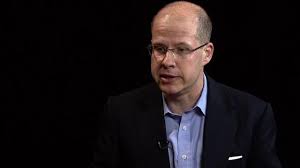
The author of several books on military history, Boot is a highly visible presence in the neoconservative print media. He has worked as an editor for the Wall Street Journal editorial page and contributes frequently to neoconservative publications like Commentary and the Weekly Standard, where he is a contributing editor. His work also appears regularly in mainstream outlets like the Los Angeles Times and the New York Times.
“Never Trump”
Boot came under criticism from Trump supporters for opposing Trump’s selection of John Bolton as his national security adviser in March 2018. Boot defended his change of heart, explaining, “Quite a few facts have changed since 2005. Back then, Bolton was being nominated for a post in which he was supposed to echo the president’s views. And that president – George W. Bush – was a traditional conservative who believed that the United States needs to promote free trade and freedom more broadly.
“But today Bolton … is going to the West Wing, where he will be one of the most important influences on a president who is so ignorant that he makes Bush seem like an international relations PhD by comparison – and whose protectionist, isolationist, authoritarian instincts are at odds with more than 70 years of U.S. foreign policy.”[3]
While Boot may not equal Bolton in his disdain for multilateral diplomacy, he still noted, “Note to the flip-flop patrol: I still agree with Bolton that if the 38-story U.N. Secretariat building ‘lost 10 stories, it wouldn’t make a bit of difference.’”
Boot reacted sharply when President Trump first announced that the United States will “be coming out of Syria, like, very soon.”[4] Boot responded in the Washington Post, “If Trump follows through – always a big if with him – he will be reversing a decision he made late last year at the urging of Defense Secretary Jim Mattis and then-Secretary of State Rex Tillerson. Staying in Syria appears to be another one of those moves – like not abandoning the Iran nuclear deal or not imposing tariffs – that was forced on Trump by his advisers and that he is reversing now that he has decided to stop listening to people who know what they are talking about.”
Boot expressed a strong preference for a sustained U.S. presence in Syria, writing, “The (Syrian Democratic Forces) fighters are the most moderate and reliable allies that the United States has in Syria …The right way to repay their trust is to help the SDF establish an autonomous zone in the one-third of Syria that it controls. This would protect at least a portion of Syrian territory from Russian and Iranian domination and give the United States a strong say in that country’s future.
“But Trump seems determined to betray the SDF … If the United States leaves both Syria and Iraq, it will be an incalculable windfall for Iran, a rogue state that Trump claims to hate — but not as much as he seems to hate long-term commitments.”[5]
Boot vocally opposed Trump during the 2016 presidential election campaign. He was among many signatories to a Republican letter denouncing his candidacy. “Mr. Trump’s own statements lead us to conclude that as president, he would use the authority of his office to act in ways that make America less safe, and which would diminish our standing in the world,” the letter read. “Furthermore, his expansive view of how presidential power should be wielded against his detractors poses a distinct threat to civil liberty in the United States.”[6]
Boot stated that he would support Hillary Clinton over Trump, calling her “vastly preferable.” He said he believed that “Donald Trump would destroy American foreign policy and the international system as it’s been built up since World War II.”[7]
Commenting on Boot and other neoconservatives who were expressing support for Hillary Clinton over Trump, journalist Jim Lobe wrote, “[W]hat disturbs me is the refusal – even among those who say they’ll vote for Hillary – to admit their own contribution to the rise of Trump and Trumpism. Their attitude recalls what happened after the Iraq War went south. With a few exceptions, neocons denied that they anything to do with getting us into the greatest U.S. foreign policy debacle since at least the Vietnam War … As with Iraq, neocons have so far refused to take any responsibility for helping create the environment in which Trump’s rise has been made possible.”[8]
In early 2018, Boot summed up his view of Trump’s foreign policy, “In general, it is hard to know where Trump is headed in foreign policy because of the continuing conflict between his isolationist and protectionist impulses, and the more internationalist worldview of his senior advisers.”[9]
Republican Roots
Boot has described himself as a neoconservative who “believe[s] in using American might to promote American ideals abroad”[10] and has urged the United States “unambiguously to embrace its imperial role.”[11] Starting in 2002, he signed a series of open letters issued by the Project for the New American Century advocating, among other things, massive U.S. military budgets and a prolonged commitment to the U.S. occupation of Iraq.
A staunch Republican, Boot was a foreign policy advisor to the 2016 presidential campaign of Sen. Marco Rubio (R-FL).[12]. “I’ve never been a Trotskyite, a Maoist, or even a Democrat,” he wrote in 2002, contrasting himself with an earlier generation of neoconservatives who migrated from the left. “There’s no ‘neo’ in my conservatism. … I’ve always identified with the Grand Old Party.”[13]
Boot has defended Rubio in “endorsing the underlying concept” of U.S.-led nation-building overseas and has lambasted what he terms “ill-advised aversion to the very idea of ‘nation-building.’”[15]
Boot has, however, praised former Secretary of State Hillary Clinton as “a principled voice for a strong stand on controversial issues, whether supporting the Afghan surge or the intervention in Libya,”[16] both of which Boot also supported.
In the aftermath of the 2014 U.S. midterm elections which ushered in a Republican-controlled Congress, Boot wrote an op-ed for the neoconservative Commentary urging President Obama to pursue a more aggressive foreign policy on all fronts.
Boot focused particularly on Iran, where he said the President should “make clear that any deal with Iran will require the dismantlement of its nuclear facilities.” If the President is unwilling to do this, Boot contends that “lawmakers can demand that Obama submit any deal with Iran for Senate approval as a treaty and, if he refuses, they can vote to keep sanctions in place that Obama will try to suspend unilaterally.” Boot further called on President Obama to “end the rapprochement with Iran that has scared our closest allies in the Middle East,” arguing a good way to restore the confidence of these allies would be by “launching airstrikes on Iran’s proxy, Bashar al-Assad.”[17]
In response to Boot, Daniel McAdams of the conservative Ron Paul Institute opined: “The foreign-born Boot, who was not himself inspired to join the military of his adopted country, nevertheless sees the election result as a clear mandate for … you guessed it: more and larger U.S. wars overseas.”[18]
In January 2015, after Saudi Arabia executed a well-known Shiite religious leader and political dissident, spurring widespread condemnation and an attack by a group of protestors on the Saudi embassy in Tehran, Boot called for stronger U.S. relations with Saudi Arabia.[19] Echoing other neoconservative writers like Elliott Abrams, Boot wrote: “Both are human-rights violators, but we should make no mistake that Iran is far worse from the American perspective: not only morally but also strategically … The American policy should be clear: We should stand with the Saudis – and the Egyptians, and the Jordanians, and the Emiratis, and the Turks, and the Israels [sic], and all of our other allies – to stop the new Persian Empire. But the Obama administration, morally and strategically confused, is instead coddling Iran in the vain hope that it will somehow turn Tehran from enemy into friend.”[20]
In November 2017, Boot found his support for his preferred human rights violators coming into conflict with opposition to the policies of President Donald Trump. “If there has been one constant in Donald Trump’s first year in office, it is his boundless admiration of, and support for, the world’s autocrats,” Boot wrote in the Los Angeles Times. “He congratulated Recep Tayyip Erdoğan on a referendum consolidating his rule and demolishing the remnants of Turkish democracy. He told Rodrigo Duterte of the Philippines that he was ‘doing an unbelievable job on the drug problem’ by unleashing death squads that have killed thousands. He said that Russia’s Vladimir Putin deserves an ‘A for leadership.’ He praised Egyptian President Abdel Fattah Sisi, who is jailing both liberals and Islamists, as a ‘fantastic guy.’ And after China’s Xi Jinping prolonged his rule indefinitely at the recent Communist Party Congress, Trump congratulated him on his ‘extraordinary elevation.’
“It is therefore no surprise to see Trump cheerleading the young crown prince of Saudi Arabia, Mohammed bin Salman (widely known as MBS), after he arrested an estimated 500 members of the Saudi elite, including at least 11 princes and confined them to the Riyadh Ritz-Carlton — the world’s most opulent prison.”
Boot’s conclusion was that U.S. support for MBS’ purge should depend on the outcome, the ends justifying the means. “There is, in short, good cause to wonder whether MBS knows what he is doing — and thus, also, if Trump knows what he is doing in backing him. Or has the president let his enthusiasm for autocrats, whom he would dearly love to emulate, get the better of him?”[21]
Interventionism
Boot is an unabashed supporter of a “global policeman” role for the United States. “To answer the question of why America should be the world’s policeman,” he remarked in a 2003 speech, “start by asking yourself: Does the world need a police force? To my mind, that’s like asking whether San Francisco or New York needs a police force. I think we’d all agree that yes they do need a police force, for the very simple reason that as long as evil exits, you have to have somebody who will protect peaceful people from predators.”[22]
Accordingly, Boot has endorsed sustained and aggressive U.S. intervention in a variety of countries. He was sharply critical of President Trump’s announcement that the United States would be pulling out of Syria in April 2018 and expected U.S.-allied Arab states to rebuild the war-torn country.[23]
He’s called it “vitally important” to keep “at least 10,000 [U.S. military] personnel” in Afghanistan after 2014,[24] and was an early supporter of the Iraq War, which he said was necessary “to destroy weapons of mass destruction, to bring down an evil dictator with links to terrorism, and to enforce international law.”[25] (Claims that Saddam Hussein possessed weapons of mass destruction and was linked to al-Qaeda were of course false, and critics have described the unprovoked U.S. invasion of Iraq as a blatant violation of international law. Boot has changed his opinion on the U.S. invasion, but is unrepentant about the decision based on his assertion that he believed, at the time, that Iraq did possess WMDs).[26]
In 2014, three years after the U.S. troop withdrawal from Iraq, militants from the extremist group ISIS poured over Iraq’s Syrian border and plunged the country into a renewed bout of conflict. Boot rebuffed charges that the Bush administration bore responsibility for the unrest, claiming that the violence in neighboring Syria meant a civil war in Iraq would have been likely even if the United States hadn’t invaded Iraq (a dubious claim, since the prior implosion of Iraq contributed mightily to the rise of militancy in Syria). Instead, said Boot, the “tenuous calm [in Iraq] started to unravel the minute that U.S. troops pulled out at the end of 2011.”[27]
Although Boot said the United States should be wary about supporting Iraq’s sectarian Shiite Prime Minister Nouri al-Maliki, he wrote in the Los Angeles Times that the United States should “immediately offer to send into Iraq a limited number of special operations forces and military trainers who can call in airstrikes and buttress the battered Iraqi security forces.”[28]
In the Weekly Standard, he added: “This would need to be combined with action in Syria to roll back Islamist advances there, meaning principally providing more arms and training to the nonjihadist opposition to Bashar al-Assad. This could be coupled with American airstrikes directed not only against Assad’s forces but also those of ISIS and other Islamist organizations such as the Nusra Front.”[29] (Boot was an early backer of military intervention in Syria, writing as far back as 2011 that the United States should support “armed action to bring down the Assad clique.”)[30]
In August 2014, Boot argued for sending “western advisory and special operations” personnel to Iraq to for the purpose of “defeating ISIS.” Writing for The Spectator, Boot proposed sending “10,000 to 15,000 personnel” as well as “sending aircraft that will be based in Iraq, rather than at sea or from distant bases, to facilitate a more sustained bombing campaign.”[31] In a follow-up piece for Commentary, Boot specifically mentioned sending “10,000 U.S. advisors and Special Operators” to “annihilate ISIS.”[32]
In addition to military intervention, Boot has been a persistent advocate for direct U.S. involvement in the political affairs of other countries. Alongside his advocacy for U.S. airstrikes to roll back ISIS in Iraq, for instance, Boot said that President Obama “must get personally involved” to ensure that Iraqi Prime Minister Nouri al-Maliki “doesn’t win a third term in office.”[33] In Afghanistan, he advocated using the CIA to handpick a successor to President Hamid Karzai, insisting that “the United States can’t afford a holier-than-thou attitude of committing ourselves to free and fair elections while remaining agnostic about the outcome.”[34] And in Egypt, he has called on “the U.S. to do more to aid secular liberal groups.”[35]
In November 2014, Boot reiterated his call for U.S. ground troops to be used in the fight against ISIS and called for a “no-fly zone” to be implemented in Syria in part to spur greater Turkish intervention in conflict. “[A] greater U.S. commitment, demonstrated by a no-fly zone and airstrikes on Assad’s forces, should be sufficient to entice Ankara to play a greater role,” he wrote for CFR. Boot also stated that the United States should “prepare now for nation-building” in Iraq and Syria and form new states out of those countries. “The United States should lay the groundwork for a postconflict settlement in both Iraq and Syria that does not necessarily require keeping both political entities intact,” he opined.[36]
After the November 2015 ISIS attacks in Paris, Boot wrote in a Commentary op-ed that “we will probably need at least 20,000 personnel and they will need much more permissive rules of engagement” in the war against ISIS. He lamented that “even now the truck drivers are receiving advance notice to leave their vehicles ahead of the bombing for fear they will get hurt.” Boot added: “This is hardly the action of a superpower fighting a war of survival.”[37]
Quipped one observer: “Has any serious person suggested that IS poses an existential threat to the United States or Western Europe?”[38]
In another op-ed published after the Paris attacks, Boot argued for the United States to unilaterally declare an autonomous Sunni region in Iraq. He stressed the “need to create a new Anbar Awakening by offering Sunnis autonomy within a federal Iraqi structure—something that the U.S. can effectively guarantee even without Baghdad’s cooperation.” He also argued that the United States can “simply train and arm Sunni rebel fighters.”[39]
Quipped one commentator: “Wow, it is so simple. I’m sure that the Shia-led government in Baghdad would never challenge a unilateral action like that. And it certainly won’t be necessary for U.S. warplanes to patrol the newly autonomous region as they did over Kurdistan for more than 10 years after the first Gulf War. And if Baghdad or its well-armed Shia militia allies did object to such an arrangement, I suppose a simple declaration by Washington would persuade them to back off.”[40]
Boot has been a leading agitator for a U.S. attack on Iran, accusing the country (against the assessments of the U.S. intelligence community) of developing nuclear weapons and insisting that “the only credible option for significantly delaying the Iranian nuclear program would be a bombing campaign,” as he put in a 2011 opinion piece for the Los Angeles Times.[41] “If the U.S. is truly determined to prevent [a nuclear Iran] – and if we’re not, we should be – the most effective option is to use force,” he added in a 2012 post for Commentary. “Obviously, air strikes carry risks of their own, but those risks have to be measured against the risk of letting Iran go nuclear.”[42] (Stephen Walt, a professor of foreign policy at Harvard, countered that such strikes would constitute “an unprovoked war of aggression” that would kill “many innocent people” and would, in any event, fail to “prevent Iran from acquiring nuclear weapons if it wants them badly enough.”)[43]
Political developments in Iran have failed to change Boot’s mind. In late 2013, for example, even as Western governments were reaching an interim accord with the relatively moderate Iranian government of President Hassan Rouhani concerning the country’s nuclear enrichment program, Boot complained that Rouhani was “no Gorbachev” and warned that the Iranians would neve “end their cold war against the West.”[44] Boot has also rebuffed broader efforts at U.S. cooperation with Iran, charging in 2014 that Iran’s “dreams of regional hegemony” mean that cooperation is “destined to fail.”[45]
Boot denounced the comprehensive nuclear agreement reached between Iran and six major world powers in July 2015 as a “massive capitulation to Iran.” He wrote for the neoconservative Commentary magazine at the time: “[F]uture historians may well write of July 14, 2015, as the date when American dominance in the Middle East was supplanted by the Iranian Imperium.”[46]
Yet Boot also opposed President Trump’s intention to unilaterally leave the agreement. In October 2017, Boot echoed many arguments put forth by supporters of the Iran deal.
“I would not recommend pulling out of the deal now – not when the International Atomic Energy Agency, whose inspectors monitor 27 separate sites, has certified that Iran is in compliance. Instead of nuking the nuclear deal, the United States should take other steps to check the growth of Iranian influence,” Boot wrote in Foreign Policy. “It would send a terrible signal to other states that in the future might be interested in concluding an arms control treaty with the United States if Washington were to abrogate a treaty simply because of a change of administrations. Why would anyone trust Washington to keep its word ever again?
“Pulling out of the treaty now would isolate not Iran but the United States. If the Trump administration simply leaves the treaty, without re-imposing meaningful sanctions on Iran, the effect would be purely symbolic – and the symbolism would be of America standing alone.
“Why would Iran, which resisted any [further] limits in 2015 at a time when it was under heavy sanctions, agree to them now, after already having gotten an economic windfall from having sanctions lifted? Even if Trump can now re-impose some penalties, it will not be nearly as many as existed prior to the Iran deal.”[47]
A relentless critic of the Obama administration’s foreign policy, Boot characterized the “Obama Doctrine” in a March 2015 Wall Street Journal op-ed as, “The U.S. puts down the burden, and Iran picks up the slack.”[48]
Boot was an early supporter of U.S. intervention in Libya’s civil war as well. After the UN passed a resolution authorizing NATO to protect civilians in the conflict, Boot argued that the United States should bend the language of the resolution to justify a full-fledged intervention on behalf of Libya’s rebels. “The only way we and our allies can achieve our objectives in Libya,” he wrote in March 2011, “is to remove [Libyan leader Muammar] Qaddafi from power.”
Quoting language from the UN resolution, which did not authorize action to topple the Libyan leader, Boot insisted, “The Obama administration should argue that the only ‘peaceful and sustainable solution’ [to the conflict] would be for Qaddafi to abdicate power.”[49] NATO forces eventually did help topple Qaddafi, which critics said helped to ensure that Russia and China—which had cautiously supported the resolution even as they opposed intervention against Qaddafi—would later veto resolutions on Syria in the UN Security Council.
In a 2003 interview with the Washington Monthly, Boot endorsed targeting Saudi Arabia. “We need to be more assertive and stop letting all these two-bit dictators and rogue regimes push us around,” he said, “and stop being a patsy for our so-called allies, especially in Saudi Arabia. If necessary, Boot added, the United States could end up “occupying the Saudis’ oil fields and administering them as a trust for the people of the region.”[50]
Permanent Mobilization?
To support his vision for a global U.S. military role, Boot has consistently supported increases to the U.S. military budget.
In a July 2010, Boot penned an op-ed for the Washington Post in which he decried the effort by some Democrats and the Barack Obama administration officials to modestly reduce the U.S. military budget. Pointing to historical cases like the period following the American Revolution and the reductions to the size of the army after World War I, Boot argued that every time the United States has reduced its military expenditures, “enemies” have taken advantage of the purported U.S. weakness.[51]
Among the “cases” he cited was the post-Vietnam War U.S. military. He wrote: “After the Vietnam War, our armed forces shrank from 3.5 million personnel in 1969 to 2 million in 1979. This was the era of the ‘hollow army,’ notorious for its inadequate equipment, discipline, training and morale. Our enemies were emboldened to aggression, ranging from the anti-American revolutions in Nicaragua and Iran to the Soviet invasion of Afghanistan. We are still paying a heavy price for the Iranian Revolution, with Iran on the verge of going nuclear.”[52]
Commenting on the article, Jim Lobe of the Inter Press Service wrote: “The implication of the second and third sentences … is that, if the armed forces hadn’t shrunk, they could somehow have deterred, or, if necessary, actually intervened in Nicaragua and Iran to thwart ‘anti-American revolutions’ that presumably would never have taken place were it not for our enemies’ ‘aggression.’ The notion that these revolutions, as in Vietnam, might have had homegrown roots doesn’t seem to have occurred to Boot for whom the whole post-World War II era of decolonization was presumably a Communist conspiracy masterminded in Moscow and/or Beijing. (And if the Shah had remained in power, it would have been inconceivable to Boot that Iran might try to acquire nuclear weapons!)”[53]
Lobe argued that Boot’s rhetoric was reminiscent of Sen. Daniel Patrick Moynihan’s reasons for distancing himself from the neocons in the 1970s, charging that his erstwhile comrades “wished for a military posture approaching mobilization; they would create or invent whatever crises were required to bring this about.” Lobe quipped that Boot’s “op-ed in the Washington Post … makes clear that he thinks permanent mobilization is a very good thing.”[54]
Israel
Boot has been a vocal supporter of some of Israel’s most controversial actions and has made a number of critical statements about Palestinians.
He conditionally supported President Donald Trump’s controversial decision, in December 2017, to move the U.S. Embassy from Tel Aviv to Jerusalem. He wrote, “Much as I oppose President Trump on many issues, he got this one right. My only complaint is that this move is more symbolic than substantive.”[55]
Boot continued, “Contrary to fears that Trump’s decision would ignite a new conflict, it has sparked only sporadic protests, some of which featured more journalists than actual demonstrators. This is indicative of another new reality in the region: The Sunni Arab states are far more exercised about Iran than Israel these days, and they see Israel as a de facto ally to stop the spread of a new Persian Empire.”
Commenting on the same dynamic, journalist Mitchell Plitnick wrote, “[T]here’s also a distinct possibility that after a week or two of protests, and even some violence, by the beginning of 2018, US recognition of Jerusalem as Israel’s capital has become the new normal. If it does turn out that way, the Palestinians will have received a very grim message. They will have been told that all the norms on which they have based their commitment to negotiations are nothing but smoke. They will have been told that the United States is their enemy, something a great many believe already, but which has never been so explicitly demonstrated. They will have been told that the international community is either unable or unwilling to do anything to materially assist them when the chips are down. They will have been told that their only hope is to create such pain for Israelis and unrest throughout the region that their needs will have to be addressed … It would also tell Israel, in no uncertain terms, that its view that its national and territorial desires completely trump Palestinian rights is correct.”[56]
During Israel’s 2014 incursion into Gaza, as Palestinian civilian casualties mounted, Boot complained that Hamas was winning a “public relations victory” amid the increasing international opprobrium over Israel’s actions. “In the battle of victims,” Boot wrote for the neoconservative Commentary, “Israel is losing—there are more dead Palestinians than dead Israelis. But that does not make the Hamas cause just, any more than the fact that, in World War II, the U.S. armed forces inflicted a lot more casualties on Germany and Japan than they themselves suffered made the cause of the Nazis and Japanese militarists a just one. Those are the incontrovertible facts.”[57] (The vast majority of Palestinians killed, however, were civilians, not Hamas fighters.)[58]
Boot has supported Israeli aggression against Gaza in the past, writing after Israel’s 2012 bombing of the densely populated strip that Israel would have to “reoccupy Gaza” if “it wants to end the Hamas rocket threat for good.”[59] But Boot reserved his most vitriolic commentary for his review of the Goldstone Report, a UN investigation of the 2008-2009 Israeli invasion of Gaza led by the Jewish South African jurist Richard Goldstone that accused both Israel and Hamas fighters of war crimes. Lauded by advocacy groups like Human Rights Watch, the report recommended that if the Israeli government and Hamas authorities failed to conduct credible investigations into alleged abuses, the matter should be referred to the International Criminal Court.[60]
In a scathing commentary that spurred one commentator to call Boot an “apologist for war crimes,”[61] Boot wrote: “It’s a good thing that the United Nations wasn’t around during World War II. I can just imagine its producing a supposedly evenhanded report that condemned the Nazis for ‘grave’ abuses such as incinerating Jews, while also condemning the Allies for their equally ‘grave’ abuses such as fire-bombing German and Japanese cities. The recommendation, no doubt, would have been that both sides be tried for war crimes, with Adolf Hitler in the dock alongside Franklin Roosevelt. Actually, that may be giving the UN more credit than it deserves. To judge by the evidence before us, the likelihood is that the UN in those days would have devoted far more space to Allied ‘abuses’ than to those of the Axis and would have recommended that FDR stand alone before the world court.”[62] (The comments were reminiscent of Boot’s past criticisms of U.S. opponents of torture, whom he said “would turn international law into a suicide pact” with their “absolutist grandstanding.”[63])
Instead of the Israeli occupation of the West Bank or its blockade of the Gaza Strip, Boot has blamed Palestinian economic troubles on Palestinian culture. In 2012, after GOP presidential candidate Mitt Romney was criticized for asserting that Palestinian underdevelopment was due to “culture and a few other things,” Boot—then a Romney campaign surrogate—defended the former governor. “Palestinian development has been hijacked by corrupt opportunists (like those who dominate the Palestinian Authority) and fanatical extremists (like those who run Hamas),” wrote Boot. “Gov. Romney was guilty of no gaffe. He was just telling it like it is: If Palestinians are to prosper, their culture—characterized all too often by anti-Semitism and blame-mongering—needs to change.”[64]
SOURCES
[1] Council on Foreign Relations, Max Boot bio, http://www.cfr.org/experts/national-security-warfare-terrorism/max-boot/b5641.
[2] VIDEO: “The Beat with Ari Melber,” MSNBC, April 2, 2018, https://www.msnbc.com/the-beat-with-ari-melber/watch/max-boot-trump-s-love-for-putin-undermines-u-s-foreign-policy-1200787523599
[3] Max Boot, “Why I changed my mind about John Bolton,” Washington Post, March 26, 2018, https://www.washingtonpost.com/news/global-opinions/wp/2018/03/26/the-world-has-changed-in-the-past-13-years-so-have-my-views-on-john-bolton/?utm_term=.669ecd28fbc0
[4] Steve Holland, “Trump tells advisers he wants U.S. out of Syria: senior officials,” Reuters, March 30, 2018, https://www.reuters.com/article/us-usa-trump-syria/trump-tells-advisers-he-wants-u-s-out-of-syria-senior-officials-idUSKBN1H61J0
[5] Max Boot, “Trump might give Iran an incalculable windfall,” Washington Post, April 2, 2018, https://www.washingtonpost.com/news/global-opinions/wp/2018/04/02/trump-is-about-to-squander-our-gains-against-the-islamic-state/?utm_term=.fcd94d26d4cf
[6] War on the Rocks Staff, “Open Letter On Donald Trump from GOP National Security Leaders,” War on the Rocks, March 2, 2016, https://warontherocks.com/2016/03/open-letter-on-donald-trump-from-gop-national-security-leaders/
[7] Zack Beauchamp, “One of the GOP’s biggest hawks explains why he’d vote for Clinton over Trump,” Vox, march 1, 2016, https://www.vox.com/2016/3/1/11141308/donald-trump-hillary-clinton-max-boot
[8] Jim Lobe, “How Neocons Helped Create Trump,” Lobelog, August 19, 2016, https://lobelog.com/how-neocons-helped-create-trump/
[9] Max Boot, “After the State of the Union, Trump’s foreign policy is still a mystery,” Washington Post, January 31, 2018, https://www.washingtonpost.com/news/global-opinions/wp/2018/01/31/after-the-state-of-the-union-trumps-foreign-policy-is-still-a-mystery/?utm_term=.4d8557539a8c
[10] Max Boot, “What the Heck is a Neocon,” Wall Street Journal, December 30, 2002, http://www.cfr.org/world/heck-neocon/p5343.
[11] Paul Crespo, “A new age of American imperialism,” Miami Herald, June 23, 2003, http://archive.today/dXaG0.
[12] Max Boot, http://www.maxboot.net/.
[13] Max Boot, “What the Heck is a Neocon,” Wall Street Journal, December 30, 2002, http://www.cfr.org/world/heck-neocon/p5343.
[15] Max Boot, “By Embracing ‘Nation-Building,’ Rubio Conveys a Hard Truth,” Commentary, June 5, 2015, https://www.commentarymagazine.com/politics-ideas/marco-rubio-nation-building-remarks-are-a-hard-truth/.
[16] Jacob Heilbrunn, “The Next Act of the Neocons,” New York Times, July 5, 2014, http://www.nytimes.com/2014/07/06/opinion/sunday/are-neocons-getting-ready-to-ally-with-hillary-clinton.html.
[17] Max Boot, “Obama’s Foreign Policy After the Midterms,” Commentary, November 5, 2014, http://www.commentarymagazine.com/2014/11/05/obamas-foreign-policy-after-the-midterms/.
[18] Daniel McAdams, “Neocon Pundit Max Boot’s Post-Election Demand: ‘Start a War Now!’” Ron Paul Institute, November 5, 2014, http://www.ronpaulinstitute.org/archives/neocon-watch/2014/november/05/neocon-pundit-max-boots-post-election-demand-start-a-war-now/.
[19] Jim Lobe, “Neocons Defend Saudi Arabia,” LobeLog, January 6, 2015, https://lobelog.com/neocons-defend-saudi-arabia/.
[20] Jim Lobe, “Neocons Defend Saudi Arabia,” LobeLog, January 6, 2015, https://lobelog.com/neocons-defend-saudi-arabia/.
[21] Max Boot, “Trump adds the Saudi crown prince to his list of favorite autocrats,” Los Angeles Times, November 8, 2017 http://www.latimes.com/opinion/op-ed/la-oe-boot-mohammed-bin-salman-trump-20171108-story.html
[22] Max Boot, “Does America Need an Empire?” Fleet Admiral Chester Nimitz Memorial Lecture at UC Berkeley, March 12, 2003, http://www.berkeley.edu/news/berkeleyan/2003/03/19_boot-transcript.shtml.
[23] Max Boot, “Trump might give Iran an incalculable windfall,” Washington Post, April 2, 2018, https://www.washingtonpost.com/news/global-opinions/wp/2018/04/02/trump-is-about-to-squander-our-gains-against-the-islamic-state/?utm_term=.fcd94d26d4cf
[24] Max Boot, “Without U.S. troops, Afghanistan, like Iraq, could descend into chaos,” Los Angeles Times, April 30, 2014, http://www.latimes.com/opinion/op-ed/la-oe-0501-boot-iraq-election-afghanistan-troop-20140501-story.html#axzz30TsAnPb1.
[25] Max Boot, “Does America Need an Empire?” Fleet Admiral Chester Nimitz Memorial Lecture at UC Berkeley, March 12, 2003, http://www.berkeley.edu/news/berkeleyan/2003/03/19_boot-transcript.shtml.
[26] Max Boot, “No Need to Repent for Support of Iraq War,” Commentary, March 18, 2013, https://www.commentarymagazine.com/foreign-policy/middle-east/iraq/no-need-to-repent-for-support-of-iraq-war/
[27] Max Boot, “Obama’s Iraq,” Weekly Standard, June 23, 2014, http://www.weeklystandard.com/print/articles/obama-s-iraq_794950.html.
[28] Max Boot, “Here’s what the U.S. can do about Iraq,” Los Angeles Times, June 18, 2014, http://www.latimes.com/opinion/op-ed/la-oe-boot-iraq-isis-obama-iran-20140619-story.html.
[29] Max Boot, “Obama’s Iraq,” Weekly Standard, June 23, 2014, http://www.weeklystandard.com/print/articles/obama-s-iraq_794950.html.
[30] Max Boot, “Assad Must Go,” Weekly Standard, December 5, 2011, http://www.weeklystandard.com/print/articles/assad-must-go_610136.html.
[31] Max Boot, “Another Iraq war is coming – the only question is whether we want to win,” The Spectator, August 16, 2014, http://www.spectator.co.uk/features/9287832/defeat-isis-yes-we-can/.
[32] Max Boot, “Time to Annihilate ISIS; Here’s How,” Commentary, August 20, 2014, http://www.commentarymagazine.com/2014/08/20/time-to-annihilate-isis-heres-how/.
[33] Max Boot, “Here’s what the U.S. can do about Iraq,” Los Angeles Times, June 18, 2014, http://www.latimes.com/opinion/op-ed/la-oe-boot-iraq-isis-obama-iran-20140619-story.html.
[34] Max Boot, “A Better Afghanistan,” Weekly Standard, April 1, 2013, http://www.weeklystandard.com/articles/better-afghanistan_708859.html.
[35] Max Boot, “A Foreign Policy Challenge Emerges,” Commentary, September 12, 2012, http://www.commentarymagazine.com/2012/09/12/a-foreign-policy-challenge-emerges.
[36] Max Boot, “Defeating ISIS,” Council on Foreign Relations, November 2014, http://www.cfr.org/iraq/defeating-isis/p33773.
[37] Jim Lobe, “The Mindless Militarism of Max Boot,” LobeLog, November 18, 2015, https://lobelog.com/the-mindless-militarism-of-max-boot/?utm_content=buffer36d5b&utm_medium=social&utm_source=twitter.com&utm_campaign=buffer.
[38] Jim Lobe, “The Mindless Militarism of Max Boot,” LobeLog, November 18, 2015, https://lobelog.com/the-mindless-militarism-of-max-boot/?utm_content=buffer36d5b&utm_medium=social&utm_source=twitter.com&utm_campaign=buffer.
[39] Jim Lobe, “The Mindless Militarism of Max Boot,” LobeLog, November 18, 2015, https://lobelog.com/the-mindless-militarism-of-max-boot/?utm_content=buffer36d5b&utm_medium=social&utm_source=twitter.com&utm_campaign=buffer.
[40] Jim Lobe, “The Mindless Militarism of Max Boot,” LobeLog, November 18, 2015, https://lobelog.com/the-mindless-militarism-of-max-boot/?utm_content=buffer36d5b&utm_medium=social&utm_source=twitter.com&utm_campaign=buffer.
[41] Max Boot, “The Iran Threat,” Los Angeles Times, December 1, 2011, http://articles.latimes.com/2011/dec/01/opinion/la-oe-boot-iran-20111201.
[42] Max Boot, “A Powerful Case for Force against Iran,” Commentary, January 9, 2012, http://www.commentarymagazine.com/2012/01/09/case-for-force-against-iran/. .
[43] Stephen Walt, “Why attacking Iran is still a bad idea,” Foreign Policy blog, December 27, 2011, http://walt.foreignpolicy.com/posts/2011/12/27/why_attacking_iran_is_still_a_bad_idea.
[44] Max Boot, “Iran’s Rouhani: He’s no Gorbachev,” Los Angeles Times, November 24, 2013, http://articles.latimes.com/2013/nov/24/opinion/la-oe-boot-iran-rouhani-reagan-gorbachev-20131124.
[45] Michael Duran and Max Boot, “Obama’s Losing Bet on Iran,” New York Times, January 15, 2014, http://www.nytimes.com/2014/01/16/opinion/obamas-losing-bet-on-iran.html?_r=1.
[46] Max Boot, “The Dawn of Iranian Empire,” Commentary, July 14, 2015, https://www.commentarymagazine.com/foreign-policy/middle-east/iran/iranian-empire-iran-nuclear-deal/.
[47] Max Boot, “Keep the Iran Deal, Attack the Regime,” Foreign Policy, October 2, 2017, http://foreignpolicy.com/2017/10/02/keep-the-iran-deal-attack-the-regime/
[48] Max Boot, “Obama’s Mideast Realignment,” The Wall Street Journal, March 25, 2015, http://www.wsj.com/articles/max-boot-obamas-mideast-realignment-1427324786.
[49] Max Boot, “Qaddafi Must Go,” Weekly Standard, March 28, 2011, http://www.weeklystandard.com/print/articles/qaddafi-must-go_554818.html.
[50] Joshua Micah Marshall, “Practice to Deceive,” Washington Monthly, April 2003, http://www.washingtonmonthly.com/features/2003/0304.marshall.html.
[51] Max Boot, “Impact of past defense cuts should warn of risks,” Washington Post, July 30, 2010, http://www.washingtonpost.com/wp-dyn/content/article/2010/07/29/AR2010072905005.html.
[52] Max Boot, “Impact of past defense cuts should warn of risks,” Washington Post, July 30, 2010, http://www.washingtonpost.com/wp-dyn/content/article/2010/07/29/AR2010072905005.html.
[53] Jim Lobe, “Boot: A Serious Militarist,” Lobelog, Inter Press Service, August 2, 2010, http://www.lobelog.com/boot-a-serious-militarist/.
[54] Jim Lobe, “Boot: A Serious Militarist,” Lobelog, Inter Press Service, August 2, 2010, http://www.lobelog.com/boot-a-serious-militarist/.
[55] Max Boot, “Trump is right about Jerusalem, but that’s not the help Israel needs,” Los Angeles Times, December 22, 2017, http://www.latimes.com/opinion/op-ed/la-oe-boot-jerusalem-un-trump-20171222-story.html
[56] Mitchell Plitnick, “Trump’s Jerusalem Declaration Is Even Worse Than You Think,” Lobelog, December 6, 2017, https://lobelog.com/trumps-jerusalem-declaration-is-even-worse-than-you-think/
[57] Max Boot, “Israel’s Critics Wage War on Reality” Commentary, July 17, 2014, http://www.commentarymagazine.com/2014/07/17/israels-critics-wage-war-on-reality/.
[58] B’Tselem, “50 days More Than 500 Children: Facts and Figures on Fatalities in Gaza, Summer 2014,” https://www.btselem.org/2014_gaza_conflict/en/
[59] Max Boot, “The Gaza Disengagement in Hindsight,” Commentary, November 21, 2012, http://www.commentarymagazine.com/2012/11/21/the-gaza-disengagement-in-hindsight/#more-811867.
[60] Human Rights Watch, “UN: US Block on Goldstone Report Must Not Defer Justice,” October 2, 2009.
[61] Max Kantar, “Max Boot: Vulgar Propagandist and Apologist for War Crimes,” Palestine Chronicle, September 24, 2009, http://www.countercurrents.org/kantar290909.htm.
[62] Max Boot, “The Goldstone Report,” Commentary, September 16, 2009, http://www.commentarymagazine.com/blogs/index.php/boot/96122.
[63] Max Boot, “Necessary Roughness,” Los Angeles Times, January 20, 2005, http://articles.latimes.com/2005/jan/20/opinion/oe-boot20.
[64] Max Boot, “Romney Tells the Truth in Israel,” Commentary, June 30, 2012, http://www.commentarymagazine.com/2012/09/12/a-foreign-policy-challenge-emerges/.