
Elizabeth Cheney
last updated: November 10, 2019
Please note: The Militarist Monitor neither represents nor endorses any of the individuals or groups profiled on this site.
AFFILIATIONS
- Alliance for a Stronger America: Cofounder
- Keep America Safe: Cofounder
- Mitt Romney 2008 Presidential Campaign: Senior Adviser
GOVERNMENT
- House of Representatives: R-WY
- State Department: Principal Deputy Assistant Secretary of State for Near Eastern Affairs (2005-2006); Deputy Assistant Secretary for the Near East (2002-2003)
EDUCATION
- University of Chicago: JD
- Colorado College: BA
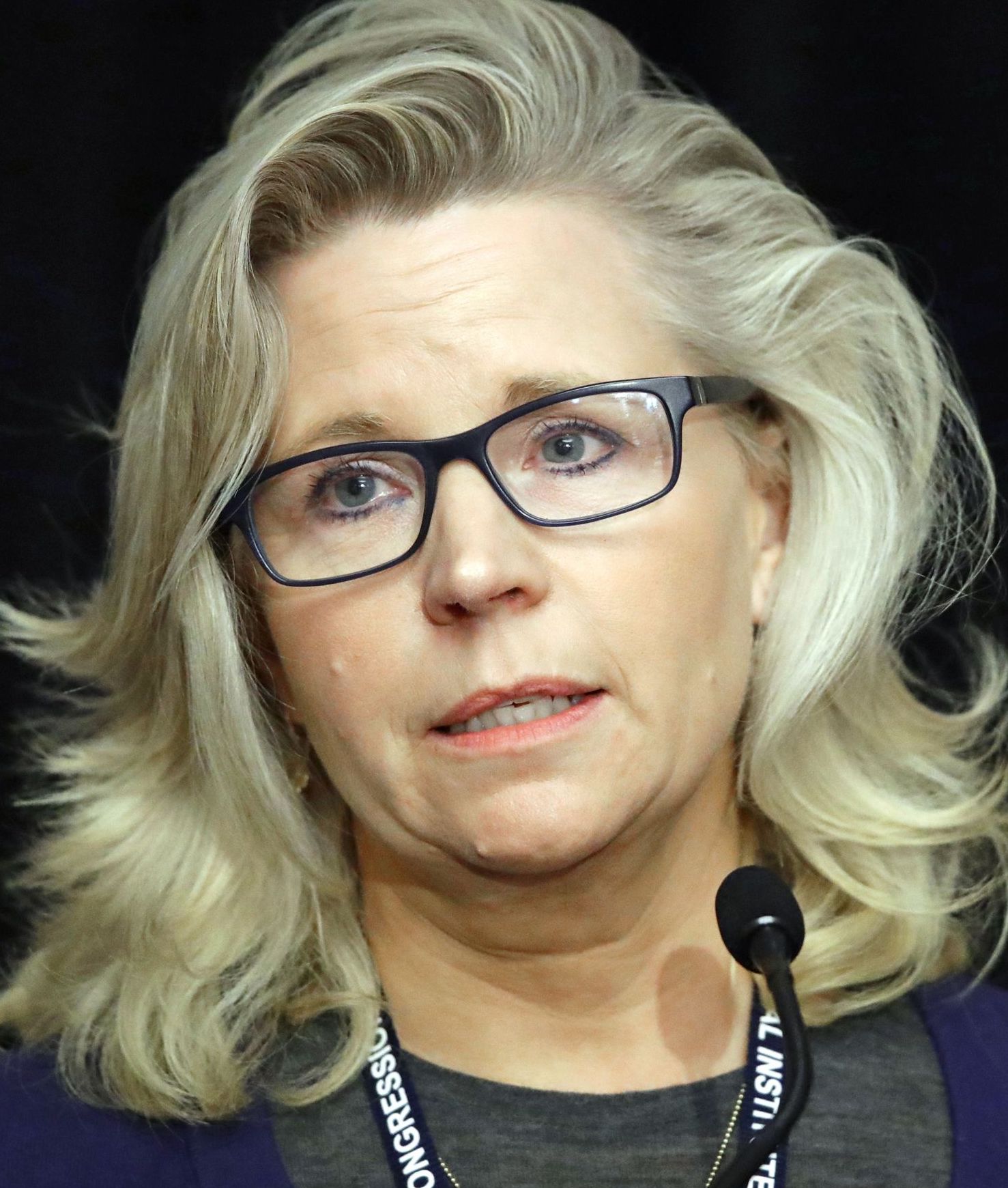
Rep. Liz Cheney (R-WY), daughter of former Vice President Dick Cheney, is an outspoken and controversial proponent of hawkish U.S. foreign policies. In 2016, Cheney was elected to the House of Representatives, winning the congressional seat in Wyoming formerly held by her father. Cheney previously served in the George W. Bush administration, working in the State Department overseeing Middle East policy.
Among her more outspoken views is her support for the use of torture, a stance which has brought her into conflict with many of her congressional colleagues, including several prominent Republicans. “It’s been clear, certainly since we stopped the enhanced interrogation program, we’re not even in a position anymore, frankly, where we’re very often capturing people,” Cheney once said. “We have nothing to do with people when we do capture them.”[1]
Cheney was an unrepentant advocate of the invasion of Iraq after 9/11, has pushed for confrontation with Iran, and embraces a one-sided “pro-Israel” view of Middle East peace and security. She has promoted these views through the creation of a series of pressure groups, including cofounding with her father the Alliance for a Stronger America, a 501(c)4 organization that was launched in 2014, which revived ideas she had promoted with an earlier group called Keep America Safe. A reporter for Salon who investigated the group found that it appeared to have no activities at all even though it filed annual reports. He wrote: “So as best as I can tell, this national security non-profit that congressional candidate Liz Cheney founded with her former vice president father, and boasts of on her campaign website, doesn’t actually do anything and hasn’t done anything of substance really ever.”
Cheney has often supported Donald Trump even if she has opposed some of his comments, including on Russia and Vladimir Putin.[2] She backed the president’s controversial decision to fire FBI director James Comey. In a tweet about the firing, which she later deleted after reports emerged alleging that Trump had pressured Comey to end the investigation into disgraced National Security Adviser Michael Flynn, Cheney childishly wrote: “Best. Termination. Letter. Ever.”[3]
However, in late 2019, Cheney found herself in opposition to the White House over a number of developments. In particular, she condemned Trump’s decision to remove troops from northern Syria, tweeting that it was a “catastrophic mistake.” She also vociferously attacked Trump allies in the media who sought to call into question the loyalty of Army Lt. Col. Alexander Vindman after he testified in the impeachment hearings against Trump. “I think that we need to show that we are better than that as a nation,” Cheney said, saying that was “shameful to question their patriotism and their love of this nation.”
A confrontational Republican partisan, Cheney once called Barack Obama “the most radical man to ever Occupy the Oval Office” and accused him of “so effectively diminish[ing] American strength abroad that there is no longer a question of whether this was his intent.”[4]
As Representative From Wyoming
As Wyoming’s lone representative in the House, Cheney has staked out an extremely hawkish position. For example, in August of 2017, when President Trump drew criticism even from some Republicans for his statement that North Korea would face “fire and fury”—which many interpreted as a threat of a nuclear strike—Cheney supported the president, echoing the tone of his statements.
“Frankly, I don’t think that the statements have been over the top,” Cheney said. “If we are forced to respond … Kim Jung Un will face the kind of response he can’t even contemplate.”[5]
“The level of casualties we would see if military action was needed is devastating,” Cheney continued. “At the same time, the alternative is to decide you’re going to acquiescence and live in a world where the North Korean regime—which is a murderous, torturous regime—can hold Los Angeles hostage or hold Seattle hostage.” When about the prospect for millions of deaths and potential cost of rebuilding a destroyed North Korea following war, Cheney simply said, “Obviously there are consequences to actions.”[6]
In 2018, Cheney reasserted herself as a leading advocate of the use of torture. The issue became prominent when Trump nominated Gina Haspel to head the Central Intelligence Agency. After Sen. Rand Paul (R-KY) came out against Haspel’s nomination due to her involvement in incidents of torture, Cheney lashed out at Paul. She tweeted, “Gina Haspel has spent her career defending the American people and homeland. @RandPaul is defending and sympathizing with terrorists.”[7]
When Sen. John McCain, who survived torture when he was a prisoner of war, noted that, “The Senate must do its job in scrutinizing the record & involvement of Gina Haspel in this disgraceful program,”[8] Cheney responded sharply, tweeting, “The Enhanced Interrogation Program saved lives, prevented attacks, & produced intel that led to Osama bin Laden. The techniques were the same as those used on our own people in the SERE program. No one should slander the brave men & women who carried out this crucial program.”[9] The SERE program was described by investigative journalist Jane Meyer as “a repository of the world’s knowledge about torture, the military equivalent, in a sense, of the lethal specimens of obsolete plagues kept in the deep-freeze laboratories of the Centers for Disease Control.”[10]
Cheney has also been a vocal opponent of the Iran nuclear deal. In January 2018, she and Rep. Peter Roskam (R-IL) introduced the Iran Freedom Policy and Sanctions Act. The bill was aimed at creating new conditions for Iranian compliance with the nuclear deal. Cheney stated that the bill “makes clear what any effective agreement would have to contain,” and that such an effective agreement, “at a minimum, authorize anywhere, anytime inspections including inspections of military facilities; disclosure of all past and present, military and civilian nuclear activity; a ban on weapons-grade enrichment; and a restriction on ballistic missile development.”[11]
Cheney had earlier made clear her opposition to the nuclear deal, stating in October 2017, “From Yemen to Lebanon, Iran is working to impose its brutal theocratic rule throughout the region. It supports terrorist groups like Hezbollah, bolsters the ruthless Assad dictatorship, promotes instability through sectarianism in Iraq, and abuses the human rights of the Iranian people. We cannot allow such a regime to become a nuclear power. The nuclear deal has significant flaws that must be addressed if that objective is going to be accomplished.”[12]
Alliance for a Stronger America
In June 2014, Cheney announced that she was starting a new 501(c)4 group with her father called the Alliance for a Stronger America.
In a YouTube video promoting the new organization, the duo issued starkly partisan broadsides against the Obama administration’s foreign policy. “The policies of the last six years have left America diminished and weakened,” said Dick. “We know America’s security depends upon our ability to reverse President Obama’s policies,” added Elizabeth. “We know that America is the exceptional nation, and that there is no substitute for American leadership around the world.”[13]
“If all this sounds familiar to you, you are right,” wrote national security blogger Heather Hurlburt for the Daily Beast. “Seems like just yesterday—2009, in fact—that Liz Cheney, along with Bill Kristol and Debra Burlingame (whose brother died on 9/11), founded Keep America Safe.” Arguing that the group seemed like a vehicle for the Cheneys’ self-promotion rather than a serious issue advocacy outfit, Hurlburt wrote that their “appeals to fear and canny marketing give them a continuing place in American life, as long as they can raise money for a media booker and a website.”[14]
As part of the group’s rollout, the two Cheneys penned an op-ed in the Wall Street Journal assailing the Obama administration’s decision to withdraw troops from Iraq. Claiming that Obama “seems determined to leave office ensuring he has taken America down a notch,” the Cheneys argued that Obama had “abandoned Iraq, and we are watching American defeat snatched from the jaws of victory.” In a line repeatedly cited by critics who accused them of ignoring the Bush administration’s own record on the country, the Cheneys added, “Rarely has a U.S. president been so wrong about so much at the expense of so many.”[15]
The renewed visibility for the Cheneys came amid a quieter effort to mend ties between the family and the Republican establishment, which had been frayed by Liz Cheney’s ill-fated primary challenge to Wyoming Sen. Mike Enzi. According to Politico, the father-daughter duo turned up at several exclusive, off-the-record Republican events in an effort “to repair their relationship with a Republican establishment of which they’d been card-carrying members for decades” but which Liz had campaigned against in Wyoming. “People close to the Cheneys say they hope to move beyond last year’s fray and pivot back to an issue that defines their brand: national security,” Politico reported. “But several of Liz Cheney’s friends also say she could well make another bid for elected office.”[16]
Senate Bid
In mid-2013, Cheney announced that she was challenging Wyoming Sen. Mike Enzi in the upcoming Republican primary. Many observers expressed surprise at her decision to take on the relatively popular Enzi—and also to contest a seat in Wyoming rather than Virginia, where she has spent most of her life.[17] Indeed, one poll released after Cheney’s announcement suggested that nearly half of Wyoming Republicans thought that she should run in Virginia instead.[18]
The backlash from establishment party figures was considerable, with GOP senators closing ranks around Enzi and former Sen. Alan Simpson (R-WY) warning that Cheney’s bid could bring about “the destruction of the Republican Party of Wyoming.”[19] “I love Liz Cheney,” added conservative pundit Ann Coulter. “But why should we be having a rancorous primary against a good Republican senator other than for Liz Cheney’s ego? … We are allowing shysters to take advantage of the Republican Party.”[20]
The Atlantic‘s Conor Friedersdorf observed that while “there are probably some Republican operatives who are upset that [Cheney] didn’t ‘wait her turn,'” other critics of Cheney were hardly lacking for fodder. Characterizing Cheney’s alarmist, right-wing attacks on Obama’s security policies as “especially inane,” Friedersdorf concluded that “This is someone who has a history of mistaken foreign-policy judgments, an inability to make sophisticated critiques of ideological opponents, and a bad habit of behaving dishonorably toward rivals. She should never be trusted to hold elected office in America.”[21]
Cheney’s bid stumbled in its early months amid a rash of negative press regarding misinformation in her Wyoming fishing license application, arguments with the Wyoming press, and a public spat with her sister Mary, who is gay, over same-sex marriage.[22] “In just 2 1/2 months as a declared candidate,” the Los Angeles Times reported in September 2013, “Cheney has generated more controversy and national headlines … than Enzi has managed in a 40-year career.”[23]
Foreign policy also proved challenging terrain during the campaign, with Cheney expressing opposition to President Obama’s request for authorization to strike Syria despite Cheney’s long history of statements advocating just that. “In her role as hard-ass conservative pundit, the pro-Gitmo, pro-waterboarding Liz has long been second to none in advocating liberal use of the U.S. military,” wrote Michelle Cottle for the Daily Beast in September 2013. “But as a Senate candidate, especially one looking to woo [isolationist] Tea Party types, her situation is somewhat more ticklish. … Faced with such a conundrum, what’s a hawkish yet ambitious Republican gal to do? Blame it all on Obama, of course. So it is that Cheney explained that she opposed the president’s Syria request because he has already cocked up the situation irretrievably with his ‘amateurish approach to national security and foreign policy.’ … Dishonest? Perhaps. Politically expedient? Most definitely.”[24]
Cheney ultimately dropped her bid in January 2014. “Ms. Cheney never was able to focus much on her opponent, spending much of her five-month candidacy fending off distractions to her campaign,” reported the New York Times after Cheney’s announcement. “A campaign meant to carry on the Cheney banner of pugnacious conservatism, especially on national security, offered a vivid reminder about the limitations of transferring political power.”[25] One November 2013 poll had shown Cheney more than 50 points behind Enzi.[26]
Keep America Safe
Cheney cofounded the neoconservative advocacy group Keep America Safe in late 2009 with the Weekly Standard’s William Kristol and support from right-wing donors like Melvin Sembler.
The group quickly became a lightning rod for controversy. In February 2010, it released a video that questioned the loyalty of Justice Department lawyers who had defended terrorism suspects. Defending the video, Michael Goldfarb, an adviser to the group, claimed that the lawyers targeted in the ad “have propagandized on behalf of our enemies, engaging in a worldwide smear campaign against the CIA, the U.S. military and the United States itself while we are at war.”[27]
The video was roundly criticized by conservatives and liberals. A group of conservative lawyers issued a letter stating that “such attacks” were undermining the judicial system. “Whether one believes in trial by military commission or in federal court, detainees will have access to counsel. … To delegitimize the role detainee counsel play is to demand adjudications and policymaking stripped of a full record. Whatever systems America develops to handle difficult detention questions will rely, at least some of the time, on an aggressive defense bar; those who take up that function do a service to the system.”[28]
Keep America Safe subsequently launched campaigns aimed at “saving” the controversial U.S. military prison at Guantanamo Bay, Cuba,[29] and opposing the construction of an Islamic cultural center in Lower Manhattan.[30] By 2013, the group appeared to be inactive or defunct.
Bush Administration
From 2005 to early 2006, Cheney served as principal deputy assistant secretary of State for Near Eastern Affairs, making her No. 2 in the State Department’s Bureau of Near Eastern Affairs. The post, which she left in spring 2006 to have her fifth child, reportedly entailed actively working to develop regime-change strategies for Middle Eastern countries, mainly Syria and Iran. According to unnamed colleagues interviewed by the newspaper The Australian, within the department she was called the “freedom agenda coordinator” or “democracy tsar.”[31]
The job was Elizabeth Cheney’s second in the Bush State Department. From 2002 to 2003, she served as a deputy assistant secretary, a post she left to aid her father’s vice presidential re-election campaign. Her earlier tenure, although a matter of concern among critics who regarded her as a spy within Colin Powell’s State Department, ended with little fanfare. According to Todd Purdum of the New York Times, “After two years of working on projects to promote women’s rights and democracy in the Arab world, she won praise from skeptical foreign service officers, the European press, Arab leaders, and prominent Democrats.”[32]
Not everyone, however, was pleased with Cheney’s work. Larry Wilkerson, Colin Powell’s assistant at State, told the American Prospect that she clashed with ambassadors while visiting the Middle East: “Liz Cheney comes out to this country, and she tells the ambassador—and she doesn’t outrank him—she tells the ambassador, ‘You’re not going in the meeting with me.’ And he says, ‘I’m sorry, I’m going in the meeting with you. You’re not going into a meeting with the head of State without me.’ And she says, ‘Nope—would you like a telephone call?'”[33]
Cheney’s return to State in 2005 fuelled speculation that she was pushing plans to intervene in Iran and Syria. Journalist Robert Dreyfuss wrote, “During the past 15 months, Elizabeth Cheney has met with and bolstered a gaggle of Syrian exiles, often in tandem with John Hannah and David Wurmser, top officials in the Office of the Vice President; has pressed hard for money to accelerate the administration’s ever-more overt campaign for forced regime change in both Damascus and Tehran; and has overseen an increasingly discredited push for American-inspired democratic reform from Morocco to Iran.”[34]
Observers also connected Cheney with two obscure offices in the State Department that were the focus of concerns in early 2006 about the Bush administration’s plans for the Middle East. On April 22, 2006, the Financial Times reported on the creation of an “Iran-Syria Operations Group” (ISOG) that purportedly reported to Cheney. Adam Ereli, a State Department spokesman, denied the group existed. However, other unnamed sources, including U.S. government officials and a European diplomat, assured the Financial Times that the group had in fact been established. These sources said that the group served as an interagency effort that “is supposed to coordinate with the Pentagon and other departments.”[35]
The New York Times reported that the State Department requested $85 million for a Liz Cheney-run program “for scholarships, exchange programs, radio and television broadcasts, and other activities aimed at shaking up Iran’s political system.” But observers were skeptical about the program’s impact. Said Vali Nasr, an Iranian-born professor at the Naval Postgraduate School in Monterey, Calif.: “It sounds good to fund civil society groups, but not when you don’t know who the groups are. No real group wants a direct affiliation with the United States. It will just get them into trouble with the government.”[36]
Cheney’s “unpublicized” meetings with Syrian dissidents in early 2005 also spurred speculation that the administration was repeating the strategy it followed with former Iraqi exile leader Ahmed Chalabi, who helped feed misleading information to the United States about Saddam Hussein’s weapons programs. The meetings were first reported in the Saudi-owned Asharq Al-Awsat newspaper, which claimed to have received confirmation of them from the State Department. According to an Agence France Presse account, Cheney, Hannah, and several Pentagon and National Security Council officials met with the dissidents to “discuss ways of ‘weakening the Syrian regime.'”[37]
Among those participating on the Syrian side was Farid Ghadry, a U.S.-based businessman who headed the Reform Party of Syria. According to Robert Dreyfuss, Ghadry is “a pro-Israeli Syrian who’s maintained ties to neoconservatives in Washington and who is close to [David] Wurmser and his wife, Meyrav Wurmser, the director of Middle East affairs for the Hudson Institute.”[38]
Mourhaf Jouejati, a Syria specialist at George Washington University, called Ghadry a “mini-me of Ahmed Chalabi.” Jouejati also claimed that Liz Cheney, Hannah, and the Wurmsers “are the backbone for Farid Ghadry’s movement. The question is, are they just seeking leverage with Syria, or is it a serious option? If it is the latter, I would be scared, because that means that they don’t know what they are doing.”[39]
War on Terror
After leaving the State Department in 2006, Cheney remained a vocal proponent of Bush foreign policies.
In January 2007, she wrote a sharply worded op-ed in the Post titled “Retreat Isn’t an Option.” The piece, which came on the heels of President Bush’s controversial decision to boost troop levels in Iraq, implicitly attacked the U.S. public for weakness on the war on terror. “American troops will win if we show even one-tenth the courage here at home that they show every day on the battlefield,” wrote Cheney. “And by the way, you cannot wish failure on our soldiers’ mission and claim, at the same time, to be supporting the troops. It just doesn’t compute.”[40]
The op-ed also revealed what one commentator called a “combination of overstatement and ancestor-worship”—in this case of former British Prime Minister Winston Churchill, a favorite historical figure of neoconservative ideologues.[41] “We will have to fight these terrorists to the death somewhere, sometime,” Cheney wrote. “We can’t negotiate with them or ‘solve’ their jihad. If we quit in Iraq now, we must get ready for a harder, longer, more deadly struggle later.” She then concluded: “America deserves better. It’s time for everyone—Republicans and Democrats—to stop trying to find ways for America to quit. Victory is the only option. We must have the fortitude and the courage to do what it takes. In the words of Winston Churchill, we must deserve victory. We must be in it to win.”[42]
Cheney also sharply criticized efforts to diplomatically engage with U.S. rivals in the Middle East. In early 2007, shortly after Dick Cheney publicly accused House Speaker Rep. Nancy Pelosi (D-CA) of “bad behavior” for meeting with Syrian President Bashar al-Assad, the Washington Post ran an op-ed in which Liz Cheney argued that “Talking to the Syrians emboldens and rewards them at the expense of America and our allies in the Middle East. It hasn’t and won’t change their behavior. They are an outlaw regime and should be isolated.”[43]
Cheney and her father’s ideological similarities made headlines in January 2009 when a writer for Slate discovered Elizabeth’s 1988 senior thesis at the library of Colorado College. Titled the “Evolution of Presidential War Powers,” Cheney’s thesis, according to writer Zac Frank, argued that “constitutionally and historically, presidents have virtually unchecked powers in war.” Adds Frank, “Thirteen years before her father became vice president, she had symbolically authored the first legal memorandum of the Bush administration, laying out the same arguments that would eventually justify Guantanamo and extraordinary rendition, wiretapping of American citizens, and, broadly, the unitary theory of the executive that shaped the Bush presidency.”[44]
Cheney’s husband, Philip Perry, served as general counsel to the Department of Homeland Security during the Bush presidency.
SOURCES
[1] Tim Murphy, “Liz Cheney Wants to Make Torture Great Again,” Mother Jones, January/February 2017, https://www.motherjones.com/politics/2017/01/liz-cheney-congress-donald-trump-torture/
[2] Jennifer Calfas, “Cheney’s daughter slams Trump’s ‘deeply troubling’ Russia defense,” The Hill, February 5, 2017, http://thehill.com/blogs/blog-briefing-room/news/317978-cheneys-daughter-slams-trumps-deeply-troubling-russia-defense
[3] Matt Shuham, “Liz Cheney Deletes Post: Comey Firing Letter ‘Best. Termination. Letter. Ever.’” Talking Points Memo, May 17, 2017, https://talkingpointsmemo.com/livewire/liz-cheney-comey-trump-best-termination-letter-ever
[4] Liz Cheney, “Liz Cheney: Republicans, Get Over the 2012 Loss—and Start Fighting Back,” Wall Street Journal, March 28, 2013, http://online.wsj.com/article/SB10001424127887324105204578384692398126294.html?mod=WSJ_Opinion_LEADTop.
[5] Arno Rosenfeld, “Cheney backs Trump’s aggressive stance on North Korea,” Casper Star-Tribune, August 10, 2017, http://trib.com/news/national/cheney-backs-trump-s-aggressive-stance-on-north-korea/article_91360467-de9a-5a3e-a6fc-2dae1a2edd68.html
[6] Arno Rosenfeld, “Cheney backs Trump’s aggressive stance on North Korea,” Casper Star-Tribune, August 10, 2017, http://trib.com/news/national/cheney-backs-trump-s-aggressive-stance-on-north-korea/article_91360467-de9a-5a3e-a6fc-2dae1a2edd68.html
[7] Liz Cheney, Twitter, March 15, 2018, https://twitter.com/Liz_Cheney/status/974011713187205121
[8] John McCain, Twitter, March 13, 2018, https://twitter.com/SenJohnMcCain/status/973643361922895872
[9] Liz Cheney, Twitter, March 13, 2018, https://twitter.com/Liz_Cheney/status/973673412785827840
[10] David J. Morris, “Cancel Water-Boarding 101,” Slate, January 29, 2009, http://www.slate.com/articles/news_and_politics/jurisprudence/2009/01/cancel_waterboarding_101.html
[11] AFP, “US lawmakers aim to tighten terms of Iran nuclear deal,” Times of Israel, January 19, 2018, https://www.timesofisrael.com/us-lawmakers-aim-to-tighten-terms-of-iran-nuclear-deal/
[12] Liz Cheney, “Congresswoman Cheney’s Statement on the Iran Nuclear Deal,” Press Release, October 13, 2017, https://cheney.house.gov/media/press-releases/joint-foreign-affairs-committee-statement-iran-nuclear-deal
[13] Paige Lavender, “Liz And Dick Cheney Launch Anti-Obama Group,” Huffington Post, June 18, 2014, http://www.huffingtonpost.com/2014/06/18/liz-and-dick-cheney_n_5507068.html?utm_hp_ref=politics.
[14] Heather Hurlburt, “The Cheneys’ Permanent War,” The Daily Beast, June 18, 2014, http://www.thedailybeast.com/articles/2014/06/18/the-cheneys-permanent-war.html.
[15] Dick Cheney and Liz Cheney, “The Collapsing Obama Doctrine,” Wall Street Journal, June 17, 2014, http://online.wsj.com/articles/dick-cheney-and-liz-cheney-the-collapsing-obama-doctrine-1403046522.
[16] Manu Raju, “The Dick and Liz Cheney recovery tour,” Politico, July 1, 2014, http://www.politico.com/story/2014/07/the-dick-and-liz-cheney-recovery-tour-108466.html.
[17] Jonathan Martin, “In Wyoming, a Cheney Run Worries G.O.P.” New York Times, July 6, 2013, http://www.nytimes.com/2013/07/07/us/politics/a-cheney-on-the-wyoming-ballot-if-so-a-problem-for-the-gop.html.
[18] Public Policy Polling, “Cheney Senate bid looks like an uphill battle,” July 23, 2013, http://www.publicpolicypolling.com/main/2013/07/cheney-senate-bid-looks-like-an-uphill-battle.html.
[19] Jonathan Martin, “In Wyoming, a Cheney Run Worries G.O.P.” New York Times, July 6, 2013, http://www.nytimes.com/2013/07/07/us/politics/a-cheney-on-the-wyoming-ballot-if-so-a-problem-for-the-gop.html.
[20] Noah Rothman, “Ann Coulter Names Liz Cheney, Other ‘Shysters’ in GOP Responsible for Losing Elections,” Mediaite, October 14, 2013, http://www.mediaite.com/tv/ann-coulter-names-liz-cheney-other-shysters-in-gop-responsible-for-losing-elections/.
[21] Conor Friedersdorf, “Angling for the Senate: Keep America Safe From Liz Cheney,” The Atlantic, July 27, 2013, http://www.theatlantic.com/politics/archive/2013/07/angling-for-the-senate-keep-america-safe-from-liz-cheney/277866/.
[22] Peter Grier, “Liz Cheney Senate bid off to a rocky start,” Christian Science Monitor, September 5, 2013, http://www.csmonitor.com/USA/DC-Decoder/Decoder-Wire/2013/0905/Liz-Cheney-Senate-bid-off-to-a-rocky-start.
[23] Mark Barabak, “Liz Cheney’s Senate run in Wyoming pits fame against familiarity,” Los Angeles Times, September 28, 2013, http://articles.latimes.com/print/2013/sep/28/nation/la-na-cheney-enzi-wyoming-20130929.
[24] Michelle Cottle, “Liz Cheney Uses Syria to (Try to) Salvage Her Campaign Train Wreck,” Daily Beast, September 5, 2013, http://www.thedailybeast.com/articles/2013/09/05/liz-cheney-uses-syria-to-try-to-salvage-her-campaign-train-wreck.html.
[25] Jonathan Martin, ” Liz Cheney Quits Wyoming Senate Race,” New York Times, January 6, 2014, http://www.nytimes.com/2014/01/07/us/politics/liz-cheney-to-quit-wyoming-senate-race.html.
[26] James Hohmann, “Commissioned poll: Mike Enzi up 53 on Liz Cheney,” Politico, November 13, 2013, http://www.politico.com/story/2013/11/mike-enzi-liz-cheney-poll-99814.html#ixzz2peBNEkgI.
[27] Ben Smith, “Cheney group questions loyalty of Justice lawyers,” Politico, March 2, 2010.
[28] Cited in “Conservative Lawyers Hit Keep America Safe,” The American Prospect Blog, March 8, 2010, http://www.prospect.org/csnc/blogs/tapped_archive?base_name=conservatives_ask_cheney_have&month=03&year=2010.
[29] See Right Web profile, Keep America Safe, http://www.rightweb.irc-online.org/profile/keep_america_safe.
[30] Tim Murphy, “10 Fun Facts About Wyoming Senate Candidate Liz Cheney,” Mother Jones, July 16, 2013, http://www.motherjones.com/mojo/2013/07/10-important-facts-about-liz-cheney.
[31] Sarah Baxter, “Cheney’s Daughter Takes on Iranian Mullahs,” Australian, March 6, 2006.
[32] Todd Purdum, “Weaned on Politics, Cheney Daughters Find a Place at the Table,” New York Times, May 31, 2005.
[33] Robert Dreyfuss, “The Commissar’s in Town,” American Prospect, June 2006, http://prospect.org/article/commissars-town
[34] Robert Dreyfuss, “The Commissar’s in Town,” American Prospect, June 2006, http://prospect.org/article/commissars-town
[35] Gideon Rachman, “The Neocons’ Route to Disaster,” Financial Times, January 15, 2007, http://www.ft.com/intl/cms/s/0/709d908e-a4d8-11db-b0ef-0000779e2340.html
[36] Steven Weisman, “U.S. Program Is Directed at Altering Iran’s Politics,” New York Times, April 15, 2006, http://www.nytimes.com/2006/04/15/washington/15diplo.html.
[37] “U.S. Discusses ‘Weakening Damascus Regime’ with Syrian Dissidents,” Agence France Presse, March 26, 2005, http://www.lebanonwire.com/0503/05032602AFP.asp.
[38] Robert Dreyfuss, “The Commissar’s in Town,” American Prospect, June 2006, http://prospect.org/article/commissars-town.
[39] Robert Dreyfuss, “The Commissar’s in Town,” American Prospect, June 2006, http://prospect.org/article/commissars-town.
[40] Elizabeth Cheney, “Retreat Isn’t an Option,” Washington Post, January 23, 2007, http://www.washingtonpost.com/wp-dyn/content/article/2007/01/22/AR2007012201103.html.
[41] Gideon Rachman, “The Neocons’ Route to Disaster,” Financial Times, January 15, 2007, http://www.ft.com/intl/cms/s/0/709d908e-a4d8-11db-b0ef-0000779e2340.html.
[42] Elizabeth Cheney, “Retreat Isn’t an Option,” Washington Post, January 23, 2007, http://www.washingtonpost.com/wp-dyn/content/article/2007/01/22/AR2007012201103.html.
[43] Elizabeth Cheney, “The Truth about Syria,” Washington Post, April 12, 2007, http://www.washingtonpost.com/wp-dyn/content/article/2007/04/11/AR2007041102115.html.
[44] Zak Frank, “Elizabeth Cheney, Bush Legal Counsel,” Slate.com, January 29, 2009, http://www.slate.com/articles/news_and_politics/politics/2009/01/elizabeth_cheney_bush_legal_counsel.html.