Institute for Policy Studies  –  www.ips-dc.orgPolitical Research Associates

Right Web

Tracking militarists’ efforts to influence U.S. foreign policy

Earhart Foundation


Please note: IPS Right Web neither represents nor endorses any of the individuals or groups profiled on this site.
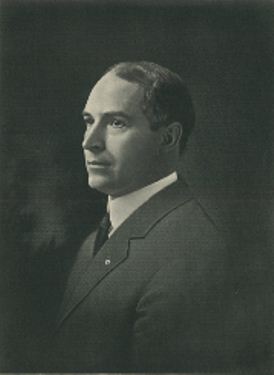
The Ann Arbor-based Earhart Foundation, perhaps best known for its support of several Nobel-winning economists, is arguably one of the least understood foundations in U.S. philanthropy. It appears to shun publicity, does not have a public web site, and has received very little scholarly attention.

Much of the information and commentary that is available on Earhart comes from sympathetic sources. In a 2004 article for Philanthropy, a journal published by the conservative Philanthropy Roundtable, Martin Davis highlights the foundation’s support for economists: “For economists, one pinnacle stands above all others—the Nobel Prize. And no philanthropic group has done more to assist top thinkers in their climb toward this prize than the Earhart Foundation of Ann Arbor, Michigan. Though relatively small, the foundation has enjoyed incredible success identifying and supporting those who will go on to Stockholm. The prize in economics was established in 1969 and has been awarded 35 times as of 2004]. Nine of those winners had received Earhart support.”1

Among the more notable Earhart-supported economists was the pioneering conservative theorist Friedrich von Hayek, author of The Road to Serfdom and The Constitution of Liberty. Other Earhart economists who have won the Nobel Prize include Gary Becker, James M. Buchanan, Ronald Coase, Milton Friedman, Friedrich A. Hayek, Robert Lucas, Daniel McFadden, Vernon L. Smith, and George Stigler.2

Earhart has also been a key backer of neoconservativism. Beginning in the late 1970s and early 1980s, it became a key supporter of the American Enterprise Institute, which served as a prominent source of ideas and staff people for the Reagan administration. According to a 1981 New York Times article, “About 60 percent of [AEI’s] money comes from foundations, such as the Lilly Endowment, the Smith Richardson Foundation, the Rockefeller Brothers Trust, and the Earhart Foundation.”3 AEI went on to become one of the major recruitment spots of the George W. Bush administration, providing scholarship and legal opinion in support of the “war on terror” and the war in Iraq."4

Although it has supported a number of think tanks that played key roles bolstering the militarist policies of the Bush administration—like AEI, the Heritage Foundation, and the Hudson Institute—much of Earhart’s funding goes to supporting rightist social and economic policies.

In the early 1990s, Earhart sponsored research into the application of a so-called “economic model” to HIV/AIDS. In their 1993 University of Chicago-published paper “Will the AIDS Epidemic be Self-Limiting?” Earhart-sponsored researchers Avner Ahituv, V. Joseph Hotz, and Tomas Philipson argue that AIDS infection rates tend to decline as young people substitute away from risky activities, such as unprotected sex and intravenous drug use. Thus, they argue, government intervention and medical research is often overstated, especially as the epidemic is largely limited to “homosexual men” and intravenous drug abusers.5

In the early 2000s, Earhart funded anti-affirmative action campaigns at major universities, and helped publish articles supporting these campaigns in the International Journal of Public Opinion Research and Irving Kristol’s The Public Interest. 6

Earhart has also been a key funder—along with the Olin, Scaife and Bradley Foundations—of the George C. Marshall Institute (GMI), a think tank that endeavors to debunk global warming theories.7 According to a Greenpeace-sponsored report, the institute, which has also received money from Exxon-Mobil, “primarily focused on defense issues, advocating funding for Reagan's Strategic Defense Initiative and Star Wars,” when it was founded in the early 1990s.8  However, more recently, it has “branched out and is one of the leading think tanks trying to debunk climate change. GMI works on a range of issues, including civic environmentalism, climate change, national defense, bioterrorism, and missile defense.”9

The single largest recipient of Earhart funding in recent years has been the ATLAS Economic Research Foundation, a sort of “meta think tank” that focuses on setting up more think tanks, especially those that espouse free market economics and limited government.10

Earhart’s assets at the beginning of 2008 totaled about $54 million.11 Approaching its 80th anniversary, the Earhart foundation is no longer officially “family-run” though family members continue to serve on the board and trustees are elected by a family board. Earhart’s grandson, David Kennedy, served as president until 2004, when Ingrid Gregg took over the reins
 

Please note: IPS Right Web neither represents nor endorses any of the individuals or groups profiled on this site.

Please click the following link to bookmark this page:


If the link doesn't appear don't worry, your browser doesn't support this function.

Try pressing 'ctrl + d' on a PC or 'cmd + d' if your using a Mac.

Close

      Contact Information 12 Earhart Foundation
    2200 Green Road
    Ann Arbor, MI 48105

    Mission Statement 13 Earhart has no known official mission statement, but according to its president, the “basic role [of the foundation] is to influence ideas.” It accomplishes this mission “by providing fellowships to young scholars, usually graduate students or junior faculty, who are committed to the principles of a free society and who show the potential for high-quality work in political philosophy, economics, and other disciplines in the humanities and social sciences.”

    Founded 14 1929 Key Personnel (2008) 15


  • Ingrid A. Gregg, President
  •  

  • Montgomery B. Brown, Secretary/Director of Program
  •  

  • Elayne J. Ellis, Assistant Secretary
  •  

  • Kathleen B. Mason, Treasurer
  •  

  • Cheryl D. Gorski, Assistant Treasurer
  •  

  • Dennis L. Bark, Chairman
  •  

  • John H. Moore, Vice-Chairman
  • Financials (2007) 16


  • Assets: $ 54 million
  •  

  • Revenue: $ 3.6 million
  •  

  • Expenses: $ 8.2 million
  •  

  • Grants paid: $ 7 million
  • Top Ten Non-Academic Grant Recipients, 1995-2005 17


  • Atlas Economic Research Foundation               $2,551,435
  •  

  • Intercollegiate Studies Institute                             $1,136,100
  •  

  • Institute of World Politics                                        $845,597
  •  

  • Social Philosophy and Policy Foundation         $770,000
  •  

  • Citizen’s Research Council of Michigan            $763,349
  •  

  • Institute of Economic Affairs                                 $729,491
  •  

  • Property and Environment Research Center     $626,000
  •  

  • Jamestown Foundation                                         $599,010
  •  

  • American Enterprise Institute                                $598,800
  •  

  • History and Economics Research Institute         $565,008
The Right Web Mission

Right Web tracks militarists’ efforts to influence U.S. foreign policy.

Sources

1. Martin Davis, “Adventures in Philanthropy,” Philanthropy Magazine, May/June 2004, http://web.archive.org/web/20041013073829/http://www.philanthropyroundtable.org/magazines/2004/mayjune/earhart.htm
2. Martin Davis, “Adventures in Philanthropy: Measuring Success in Generations.” Philanthropy, May/June 2004,
http://web.archive.org/web/20040813051619/http://www.philanthropyroundtable.org/magazines/2004/mayjune/earhart.htm

3. Bernard Weinraub, “Institute Plays Key Role In Shaping Reagan Programs,” The New York Times, January 15, 1981
4. RightWeb, “American Enterprise Institute,” http://rightweb.irc-online.org/profile/1431.html
5. Avner Ahituv, V. Joseph Hotz, Tomas Philipson. “Will the AIDS Epidemic be Self-Limiting? Evidence on the Responsiveness of the Demand for Condoms to the Prevalence of AIDS.”
http://www.unibg.it/dati/corsi/8920/26198-AIDS.zip

6. Greg Winter, “Study Challenges Case for Diversity at Colleges,” The New York Times, March 20, 2003
7. Mediatransparency, “George C. Marshall Institute, http://www.mediatransparency.org/recipientprofile.php?recipientID=137.
8. Exxonsecrets.org/Greenpeace, “Factsheet: George C. Marshall Institute,” http://www.exxonsecrets.org/html/orgfactsheet.php?id=36.
9. Exxonsecrets.org/Greenpeace, “Factsheet: George C. Marshall Institute,” http://www.exxonsecrets.org/html/orgfactsheet.php?id=36.
10. Media Transparency, “Recipients of Funder: Earhart Foundation,” http://www.mediatransparency.org/recipientsoffunder.php?funderID=13; Media Transparency, ‘ATLAS Economic Research Foundation,’ http://www.mediatransparency.org/recipientprofile.php?recipientID=591; ATLAS Economic Research Foundation website, http://atlasnetwork.org/.
11. Media Transparency, “Earhart Foundation,”
http://www.mediatransparency.org/funderprofile.php?funderID=13;
12. Media Transparency, “Earhart Foundation,”  http://www.mediatransparency.org/funderprofile.php?funderID=13
13. Martin Davis, “Adventures in Philanthropy: Measuring Success in Generations.” Philanthropy, May/June 2004
http://web.archive.org/web/20040813051619/http://www.philanthropyroundtable.org/magazines/2004/mayjune/earhart.htm; Earhart Foundation, “Summary Report 2008.” December 31, 2007.  Copy obtained from Earhart Foundation.
14. Martin Davis, “Adventures in Philanthropy: Measuring Success in Generations.” Philanthropy, May/June 2004
http://web.archive.org/web/20040813051619/http://www.philanthropyroundtable.org/magazines/2004/mayjune/earhart.htm
15. Earhart Foundation, “Summary Report 2008.” December 31, 2007.  Copy obtained from Earhart Foundation.
16. Earhart Foundation, “Summary Report 2008.” December 31, 2007.  Copy obtained from Earhart Foundation.
17. Media Transparency, “Recipients of Funder: Earhart Foundation,” http://www.mediatransparency.org/recipientsoffunder.php?funderID=13

Latest Feature Articles
Whither the Liberal Hawks?

Jim Lobe | January 31, 2012

Tehran's threat to close the Strait of Hormuz, coupled with mounting threats from hawks in Israel and the United States, has brought the possibility of war sharply into view. But a number of influential members of the U.S. foreign policy establishment—including several prominent liberal interventionists who supported the invasion of Iraq—are warning against further escalation.

Rise of the Vulcans Redux

Peter Certo | December 19, 2011

The purported “end of the neocon consensus” has hardly meant an end to hawkishness in the GOP fold. With the Republican candidates virtually all gunning for Iran, backing right-wing Israeli policies toward the Palestinians, and stabling a passel of neoconservative advisers (Ron Paul excepted), voters have plenty of clues about what the foreign policy of a new GOP administration would look like. And while some of the candidates have expressed wariness with neoconservative notions of armed democracy promotion, all the signs indicate that if a Republican wins next year, we will likely be in for a bit if George W. redux.

Turning the Tide on the “Pro-Israel” Debate

Michael Flynn and Peter Certo | December 13, 2011

With key members of the "Israel Lobby" acknowledging the importance of providing a broader space to Israel’s critics, the indelibly beltway Politico recognizing the influence of such critics in a full-length feature, and core Democratic organizations showing an increasing sensitivity to inappropriate uses of the anti-Semite charge, is the United States finally willing to undertake a real debate on what are the best U.S. interests in the Middle East?

The China Divide and the Future of the GOP

Robert Farley | November 08, 2011

The issue of whither U.S. relations with China is an important test case for observing the divide between the free market and neoconservative wings of the Republican Party. Thus far, the GOP presidential candidates have largely failed to articulate a vision of China that comes anywhere close to reflecting the complexity of U.S.-Chinese relations. Among the leading candidates, Mitt Romney has arguably been the most aggressive in his discussion of China policy. Yet, his embrace of a hawkish line towards Beijing would appear to indicate that President Obama’s would-be challengers have not yet found an alternative vocabulary for talking and thinking about one of the critical foreign policy issues of the 2012 election. It seems clear that even though neoconservatives lack grassroots support, they offer what is effectively the only option for an “establishment” GOP candidate, a fact that could have lasting impact both on the viability of any Republican Party foreign policy platform as well as future U.S. decision-making vis-à-vis other hotspots like Iran, Israel, and North Korea.

Right Web | rightweb.irc-online.org


1112 16th St. NW, Suite 600,
Washington, DC 20036
USA
|
|
202-234-9382

Except where otherwise noted, content on this site is licensed under a Creative Commons Attribution 3.0 License

Right Web is a project of the Institute for Policy Studies; www.ips-dc.org