
David Frum
last updated: October 26, 2015
Please note: The Militarist Monitor neither represents nor endorses any of the individuals or groups profiled on this site.
Affiliations
- The Atlantic: Senior Editor
- The Daily Beast: Contributor
- Newsweek: Contributing Editor
- FrumForum: Founder
- American Enterprise Institute: Former Resident Fellow
- Manhattan Institute for Public Policy Research: Senior Fellow, 1994-2001
- National Post: Columnist
- Weekly Standard: Contributing Editor since 1995
- National ReviewOnline: Former Contributor, “David Frum’s Diary”
- Forbes: Columnist, 1992
- Wall Street Journal: Assistant Editor, 1989-1992
- Yale University: Visiting Lecturer, 1986
- National Public Radio: Former Contributor, Morning Edition
Government Service
- White House: Special Assistant to the U.S. President for Economic Speechwriting (2001-2002)
Education
- Yale University: B.A., M.A.
- Harvard Law School: J.D.
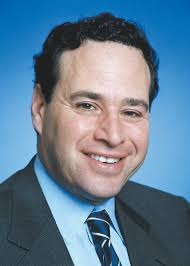
David Frum is a Canadian-American writer known for his advocacy of hawkish U.S. foreign policies as well as his often conflicted relationship with right-wing politics. He served as a White House speechwriter during the early years of the George W. Bush presidency and has worked for a number of rightist policy groups, including the neoconservative American Enterprise Institute (AEI). Frum is a senior editor at The Atlantic and has contributed to several major media outlets in the United States, including CNN, The Week, and The Daily Beast. He has also written for right-wing outlets like the Weekly Standard , the National Review, the Wall Street Journal, and Canada’s National Post.[1]
Frum first gained public attention in the wake of the 9/11 attacks, when he helped craft the Bush administration’s “war on terror” messaging as a White House speechwriter. According to Frum’s wife, the anti-feminist writer Danielle Crittenden, it was Frum who coined the term “Axis of Evil,” which Bush notoriously used to refer to the U.S. adversaries of Iran, Iraq, and North Korea.[2]
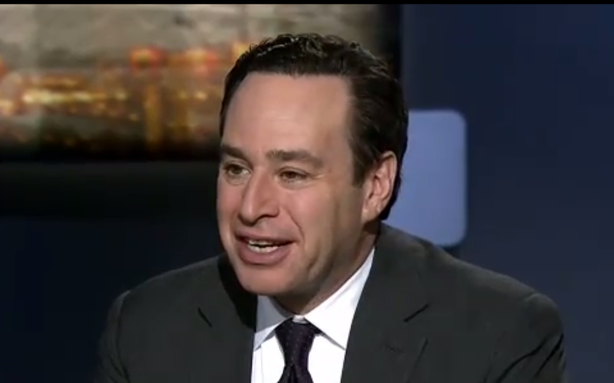
After leaving the administration in 2002, he continued to advocate an aggressive “war on terror” from his perch at AEI. His views were vividly presented in a 2003 book he cowrote with Richard Perle titled An End to Evil. “For us,” they wrote, “terrorism remains the great evil of our time, and the war against this evil, our generation’s great cause. … There is no middle way for Americans: It is victory or holocaust.”[3] Several years later, in 2007, Frum wrote that “civilizations are clashing” and that “more and more [Americans] are coming to believe that Islam really is inherently hostile to democracy and the West.”[4]
Since joining The Atlantic in March 2014, Frum garnered widespread criticism for his efforts to cast doubt on the authenticity of photos showing injured Palestinians during the 2014 Gaza War. The photos, which were used by theNew York Times and Reuters, showed two blood-soaked men in a Gaza hospital. Frum tweeted at the time: “In the NYT version of the faked photo, the man does not yet have blood on his arms. Reuters was given its version later, I suppose.”[5]
Photo experts debunked Frum’s claims. One expert said: “If there is a more obvious set of behavior evident in all this, it’s Frum’s eagerness to impugn the Palestinians, these media organizations and photojournalism.”[6] Frum eventually admitted he was wrong and apologized to the news outlets.[7]
In recent years, Frum has distanced himself from the U.S. right wing, expressing disappointment with the “collapsed intellectual state” of the Republican Party.[8] In an October 2013 post on his Daily Beast blog, he complained that “tea party extremism” had “contaminate[d] the whole Republican brand,” expressing hope that the faction would eventually break away from the GOP and “liberate the party to slide back to the political center—and liberate Republicans from identification with the Sarah Palins and the Ted Cruz-es who have done so much harm to their hopes over the past three election cycles.”[9] In a separate post, he called on “responsible Republicans” to “challenge their own party” so that it could “again become a positive force in American politics.”[10]
Frum’s disenchantment with the Republican Party appears to be in large measure fueled by his comparatively moderate views on health reform, gun regulations, and other domestic policies. He has also expressed qualified regret for the failures of the neoconservative agenda, notably the war in Iraq. In one apologia, written in September 2013, Frum blamed his support for the invasion of Iraq on a sort of starry-eyed admiration for Cold War-era hawks, writing: “It’s human nature to assess difficult questions, not on the merits, but on our feelings about the different ‘teams’ that form around different answers. To cite a painful personal experience: During the decision-making about the Iraq war, I was powerfully swayed by the fact that the proposed invasion of Iraq was supported by those who had been most right about the Cold War—and was most bitterly opposed by those who had been wrongest about the Cold War. Yet in the end, it is not teams that matter. It is results. As Queen Victoria’s first prime minister bitterly quipped after a policy fiasco: ‘What wise men had promised has not happened. What the damned fools predicted has actually come to pass.’”[11]
Frum opposed the Obama administration’s plans to launch a U.S. strike in Syria, arguing that the United States had “no dog” in the fight and brushing aside the common neoconservative argument that a strike on Syria was necessary to “send a message” to Iran. “If you want to deal with Iran, deal with Iran,” he wrote. “And if you want not to be drawn all the way into a Syrian civil war between factions none of them friendly to the United States, then the best way to avoid being drawn is: don’t take the first step.”[12]
In an October 2015 column, Frum bemoaned that the United States, unlike during the Iran-Iraq War where it supported both sides so that “both sides lose,” could not pursue this policy in Syria because “too many refugees are too close to Europe.”[13]
However, Frum has not entirely abandoned his hawkish proclivities when it comes to the Middle East. In 2013, for example, he credited diplomatic openings between the United States and Iran not to a de-escalation of martial rhetoric or the election of the comparatively moderate Iranian President Hassan Rouhani, but rather to harsh sanctions sponsored by Sens. Mark Kirk (R-IL) and Robert Menendez (D-NJ) aimed at cutting Iran’s banking sector off from the global economy. “If the Kirk-Menendez sanctions do force change on Iran, the Obama administration will claim credit for the strategy it resisted at the time,” Frum wrote.[14]
Frum was a strong opponent of the July 2015 Iran nuclear deal, saying: “The Iran nuclear deal upends the security of the Middle East region. Old alliances have been shoved aside. Massive new resources have been put at the disposal of the Iranian regime.”[15]
Frum has also argued that the United States has “made too much of a priority out of the Islamic State” and should instead treat Iran as the bigger threat. He opined in February 2015: “They [ISIS] are a nasty bunch of characters, probably as nasty as there are anywhere on the planet. But they are not America’s and the West’s most important strategic threat in the region. That is Iran. And we, because of our focus on the Islamic State, have been backing into, and the Obama administration has been leading us into, a de facto partnership with Iran and protecting the greater strategic threat at the expense of the lesser strategic threat.”[16]
One commentator said in response: “The notion that Iran is a greater threat than the Islamic State and therefore demands a tougher response is nonsense. Iran is considered an urgent danger by Israel and has caused regional trouble in the past by funding terrorism. But it’s also a stable nation state with a functional government and a relatively educated population.”[17]
Frum has also remained a “pro-Israel” hardliner. In early 2013, for instance, he joined a host of other neoconservative ideologues in criticizing the 2013 nomination of former Republican Sen. Chuck Hagel, a foreign policy “realist” with strong biparstian credentials who had criticized the so-called Israel lobby and spoken out against a U.S. attack on Iran, to lead the Department of Defense. “To the extent that the Hagel nomination expressed the president’s exasperation with Benjamin Netanyahu,” Frum wrote, “or a determination to downgrade the long and close U.S.-Israel relationship—well, to that extent the nomination was a peevish mistake. Hagel right now is paying the price of that mistake by his disavowal of, and apology for, a decade of poorly considered remarks.”[18]
Political Evolution
Frum appears to have begun reassessing his ideological views in 2008, when he left the right-wing National Review after authoring a blog there for several years. In a note to his NR readers in November 2008, Frum wrote: “My fundamental political principles remain the same as ever: free markets, American leadership in the world, and intense attachment to inherited moral and cultural traditions. Yet I cannot be blind to the evidence that we have seen free markets produce some damaging and dangerous results in recent years. Or that the foreign policy I supported has not yielded the success I would have wished to see. Or that traditions must evolve if they are to endure. There are new principles too that must be included in a majority conservatism: environmental protection as a core value and an unwavering insistence upon competence and integrity in government.”[19]
Frum’s concerns were exacerbated by Sen. John McCain’s choice of Sarah Palin as his running mate in the 2008 presidential election.[20] Frum argued in a September 2008 online discussion hosted by New York magazine that he was “disturbed about the choice [of Palin] from the start. … She really could be president! And here’s where my fellow conservatives really worry me. They are so attracted by the symbolism of the selection that they show no concern—never mind for her executive competence—even for her views.”[21]
Soon after, Frum left the National Review to start his own publication—which he originally called New Majority but later rebranded FrumForum—to “champion a responsive, responsible, inclusive, and environmentally-conscious conservatism.”[22]
The following year, Frum was ousted from the American Enterprise Institute after criticizing “conservatives and Republicans” for their approach to the healthcare debate, which Frum argued had led to “their most crushing legislative defeat since the 1960s.”[23] Several days after publishing this criticism, Frum was invited to lunch by AEI’s president, who asked Frum if he would consider continuing his association with the think tank on an unpaid basis. Frum declined.[24]
In January 2012, Frum joined Newsweek and The Daily Beast, authoring a blog that grew out of his work on FrumForum.[25] In his farewell post on FrumForum, he wrote: “When we launched, Sarah Palin was a leading candidate for president and Glenn Beck was broadcasting conspiracy theories on cable TV. Three years later—not so much. OK, maybe we can’t claim all the credit. But we won’t refuse some fair share.”[26]
In a post-mortem on the 2012 election, Frum continued to air his grievances about the Republican Party, criticizing Mitt Romney’s campaign for failing to resonate with the concerns of ordinary voters. The election “was a referendum on the question, which candidate would do a better job promoting prosperity and creating jobs?” he wrote. “That was the referendum that Romney and the Republican Party lost. We lost both because voters did not believe in the job-creating magic of upper-income tax cuts—and because voters were unpersuaded that the GOP even cared that much about job creation, as opposed to wealth preservation.”[27]
Books
In 2003, Frum published his best-known book, The Right Man: The Surprise Presidency of George W. Bush, which offered a firsthand account of the Bush presidency and the influence of the 9/11 attacks on the country and the administration. “George W. Bush was hardly the obvious man for the job. But by a very strange fate, he turned out to be, of all unlikely things, the right man,” wrote Frum.[28]
In 2004 Frum coauthored with Richard Perle An End to Evil: How to Win the War on Terror, which defended the invasion of Iraq and promoted U.S.-backed regime change in Syria and Iran. The authors also promoted more aggressive U.S. policies toward North Korea and Saudi Arabia and derided the United Nations for being weak and bureaucratic while heralding the United States as a force for peace. “A world at peace; a world governed by law; a world in which all peoples are free to find their own destinies: That dream has not yet come true, it will not come true soon, but if it ever does come true, it will be brought into being by American armed might and defended by American might, too.”[29]
The book appeared as the U.S. invasion of Iraq began to morph into a bloody counterinsurgency campaign, calling into question the rosy prognostications offered by neoconservatives and Bush administration hawks. According to Frum and Perle, however, the problems were a result not so much of the Sunni insurgency and other developments on the ground, but rather of attempts by the “realists” in the State Department and the CIA, and by senior retired and active-duty military officers, to change the approach in Iraq and elsewhere in the region. Perle and Frum lamented: “We can feel the will to win ebbing in Washington; we sense the reversion to the bad old habits of complacency and denial.”[30]
Commenting on the book, journalist Fareed Zakaria wrote: “Frum and Perle want transformation from 30,000 feet, without the moral taint of compromise. They scorn the diplomats who must deal with foreigners, not to mention the foreigners themselves.”[31]
In early 2008, Frum published Comeback: Conservatism That Can Win Again. According to a blurb on the website of the American Enterprise Institute, “Too many conservatives and Republicans have shut their eyes to negative trends. David Frum offers answers. Frum says that the ideas that won elections for conservatives in the 1980s have done their job. Republicans can no longer win elections on taxes, guns, and promises to restore traditional values. It’s time now for a new approach.”[32]
Earlier Years
Frum, born in 1960 in Toronto, Ontario, was exposed early to high-profile journalism by his mother, Barbara Frum, a well-known Canadian media personality who appeared regularly on CBC radio and television. After graduating from Yale University in 1982 and Harvard Law School in 1987—where he served as president of the local Federalist Society chapter—David Frum went on to work on the Wall Street Journal editorial board from 1989 to 1992 and as a columnist for Forbes magazine from 1992 to 1994. During 1995 to 2001, Frum worked at the Manhattan Institute , where he served as a senior fellow. With the election of George W. Bush in 2000, Frum joined the administration as a special assistant to the president for economic speechwriting, a post he held until early 2002.[33]