
Lee Smith
last updated: August 28, 2015
Please note: The Militarist Monitor neither represents nor endorses any of the individuals or groups profiled on this site.
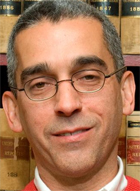
Affiliations
- Hudson Institute: Senior Fellow
- Weekly Standard: Senior Editor
- Foundation for Defense of Democracies: Former Fellow
- Tablet Magazine: Columnist
Education
George Washington University: BA
Lee Smith is a senior fellow at the neoconservative Hudson Institute who is known for his belligerent defense of hawkish U.S. and Israeli policies. Formerly a fellow at the Foundation for Defense of Democracies, Smith contributes to several media outlets, including Tablet Magazine, the Weekly Standard, and the Wall Street Journal, where he frequently lambasts the purported weakness of the Obama administration’s foreign policy, attacks writers who are critical of Israeli policies as being anti-Semitic, and promotes hardline “pro-Israel” views of Iran and the Israeli-Palestinian conflict.[1]
On Iran
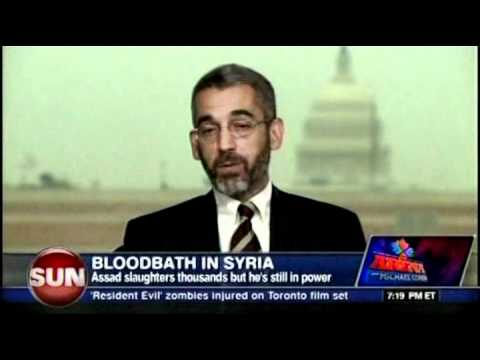
Smith was an ardent critic of the Obama administration’s nuclear negotiations with Iran and strongly opposed the nuclear deal reached between Iran and the P5+1 group on nations in July 2015. Smith alleged that the Obama White House favored Iran from the outset of the talks and desired to empower the country at the expense of traditional U.S. regional allies like Israel and Saudi Arabia.
“The sanctions relief that the IRGC will enjoy only underscores a disturbing trend in the Obama administration’s Middle East policy: the White House is coordinating with Iranian hardliners and their allies,” Smith argued in an August 2015 piece for the Weekly Standard. “It seems that the president has something of a soft spot for the IRGC, or at least its expeditionary unit, the Quds Force.”[2]
In another Weekly Standard piece from August 2015, Smith wildly claimed that Secretary of State John Kerry remarks about Israel’s stance on the deal bore resemblance to rhetoric from Iranian Foreign Minister Javad Zarif: “The terrible shame is that America’s top diplomat is starting to sound like his counterpart from the Islamic Republic. Both see the handiwork of Israel everywhere they turn. Like Zarif, Kerry is preemptively blaming Israel should the JCPOA fail. If the deal doesn’t fly past Congress, as Kerry said last week, Israel will be to blame.”[3]
Channeling standard neoconservative alarmism, Smith proclaimed that the deal would exacerbate instability in the Middle East and even lead to conflict spreading to U.S. soil. “The conflict Obama thinks he is balancing with the Iran nuclear deal looks more likely to widen throughout the region, spreading from Iraq and Syria to include the Gulf, the eastern Mediterranean, and North Africa. It may soon reach the capitals of Europe, where Sunni and Shiite fighters will seek to avenge their grievances with the West and with each other. It is not difficult to imagine it touching down on our shores as well. War is not the alternative to Obama’s Iran deal but its likeliest consequence,” he wrote in August 2015.[4]
Smith has argued that Congress should reject the Iran deal not only to scuttle the agreement itself, but to prevent further efforts at U.S.-Iran rapprochement. “When Congress votes, the point will be not simply to strike down a bogus nuclear deal, but to reject an alliance with a criminal regime,” he wrote in July 2015.[5]
In a July 2015 Weekly Standard article, Smith also posited that the United States should have pursued a deal that would not have required any sort of compromise on the part of the United States, and should have been prepared to launch military strikes against Iran if it refused to accept such a deal. He opined: “Any agreement that advances our interests must by necessity compromise Iran’s—doubly so since they are a third-rate power, far from an equal to the United States. The ayatollahs shouldn’t be happy with any deal; they should’ve felt compelled to accept a deal of our choosing lest they face economic devastation and military destruction of their nuclear infrastructure.”[6]
Obama Criticisms and Anti-Semitism Charges
Smith frequently resorts to accusing his critics and ideological opponents of antisemitism. He has gone so far as to allege that President Obama has hinted “broadly at anti-Semitic conceits” in defending the Iran nuclear deal. He speciously claimed in a July 2015 column for Tablet: “In his efforts to get the JCPOA through congress, Obama is using a dog-whistle. He’s hinting broadly at anti-Semitic conceits—like dual loyalties, moneyed interests, Jewish lobby—to scare off Democrats tempted to vote against the JCPOA because they think it’s a bad deal.”[7]
Smith has lashed out against the Obama administration’s approach toward Israel, contending that the Obama White House believes “Israel is the source of regional instability.”[8] He has also accused President Obama of “manipulating” Jewish Americans and has censured Jewish members of the Obama administration for not resigning from their posts, writing in June 2015: “Obama isn’t using his energy and inspiring leadership skills to help these people rise above their fear; he is instead capitalizing on it—masterfully, ruthlessly—by manipulating American Jews in ways that other minority groups would find unbelievably insulting. … By not resigning in protest, Obama’s Jewish aides have arguably not only harmed their community; they weakened their own position.”[9]
Regarding the Iran nuclear negotiations, Smith argued in November 2013: “American officials apparently feel that trafficking in stereotypes about Jewish deceptiveness and appetite for blood is fair play because of the size of the stakes involved—peace and a historical reconciliation with Iran, which has been one of the collective dreams of the U.S. foreign-policy establishment for 34 years.”[10]
Journalist Ali Gharib responded: “So because Israel and the Israel-advocacy organizations are composed mostly of Jews, anyone who dares to criticize their analysis or to point out that following their policy advice could well lead to a war is by definition calling Jews ‘deceptive’ and accusing them of having an ‘appetite for blood.’ Must the Obama administration take Israel and its supporters’ criticisms lying down simply because they are Jewish, even when it believes those criticisms are inaccurate?”[11]
During the 2014 Gaza War, Smith derided the Obama administration for supposedly treating Israel as the “least popular kid in the lunchroom.” He also lambasted a ceasefire proposal offered by Secretary of State John Kerry during the conflict, stating: “[T]he Kerry ceasefire draft shows the administration is willing to stab Israel in the back as many times as necessary in order to secure any kind of agreement with Iran.”[12]
In July 2010, a Smith column for Tablet spurred widespread attention when he charged that major U.S. media outfits were mainstreaming—and profiting from—anti-Semitism, by publishing blogs like those of Stephen Walt, Phillip Weiss, Glenn Greenwald, and Andrew Sullivan. Glibly interchanging descriptives like “anti-Semitic,” “Jew-baiting,” and “anti-Israel” to describe the work of these and other critics of Israeli policies, Smith claimed that the “anti-Israel blogosphere is a dirty little thrill that major U.S. media outfits have mainstreamed for the masses, the intellectual equivalent of the topless ‘Page Three’ girls that British tabloids use to boost circulation.”[13]
Smith’s larger concern in the article was the way some readers of these blogs use the comments sections to post anti-Semitic diatribes. Although there is a strong case to be made that racists use legitimate criticism of U.S. and Israeli policies as springboards for anti-Semitic invective, Smith repeatedly associated the bloggers he targeted with the uncensored comments written by anonymous readers.[14]
Smith appeared to characterize the views of one blogger, Jim Lobe of the Inter Press Service, based solely on two comments written by readers of Lobe’s Lobelog.com. Wrote Smith: “Commenters who are shut out at [the New York Times blog] The Lede can find a welcoming home on Lobeblog, hosted by Jim Lobe, a journalist with the IPS News Agency who believes that the roots of the U.S. invasion of Iraq lay not in the White House or the Defense Department, or in U.S. dependence on Arab oil, but in a small neoconservative outfit called the Project for a New American Century, which was supposedly run by American Jews looking to direct U.S. policy on behalf of the Israeli government. ‘It hasn’t been secret,’ writes Carroll, a commenter on a Lobelog post, that ‘for a long time that we have a small cabal of U.S. zionist[s] operating in and manipulating the US for their vision of Israel and a group of US Neocons and other assorted special interest who never met a war they didn’t like. … What do we have to do to put an end to them? … Suicide the cabal?’ On another post at the same site, a commenter named Rowan Berkeley writes: ‘It seems to me that it is no exaggeration to say roundly that the USA in its entirety is under Jewish control of one variety or another.’”[15]
Responding to the piece, Stephen Walt wrote: “The first thing to observe about Smith's screed is that even though he accuses me and my fellow bloggers of being anti-Semites and ‘Jew-baiters,’ his article contains not a scintilla of evidence that Sullivan, Greenwald, Weiss, or I have written or said anything that is remotely anti-Semitic, much less that involves ‘Jew-baiting.’ There's an obvious reason for this omission: None of us has ever written or said anything that supports Smith's outrageous charges.”[16]
The only evidence of Walt’s purported anti-Semitism that Smith provided was a quote from theAtlantic’s Jeffrey Goldberg, who recklessly claimed, “Walt is a throwback to the 1930s. In the ’30s the isolationists rode the Jews as a hobby horse. They tried very hard to marginalize American citizens of the Jewish faith by questioning their loyalty. These guys don’t even understand what ancient terror they’re tapping into. What’s original, what makes this period alarming, is that the Washington Post Company would give a Jew-baiter a platform.”[17]
After being widely criticized for his article, Smith wrote a follow-up piece in the Tablet in which he claimed that his critics “mistakenly believed that I was accusing specific journalists and academics—Stephen Walt, Andrew Sullivan, Phillip Weiss, and Glenn Greenwald—of being anti-Semites.” He then weakly added, “Whether or not these bloggers are anti-Semitic is precisely the argument Walt and the rest want to have and precisely the one I do not. Anti-Semitism is an idea held in the mind that finally can only be confirmed—and can always be denied—by the mind holding it.”[18]
In another July 2010 piece for the Tablet titled “Hollow Men: Why Israel’s Enemies Will Always Be the Darlings of Western Intellectuals,” Smith criticized journalists like Octavia Nasr—the CNN editor who was fired after tweeting that she respected late militant cleric Mohammad Hussein Fadlallah—claiming that she and other like-minded Western intellectuals are being deliberately misleading when they ignore the “genocidal” politics of Israel’s Middle East opponents.
He wrote: “Media consumers in the United States are by now well aware that Hezbollah and Hamas provide ‘social services’ for their communities. For the writers and television personalities who push such supposed palliatives on their audiences … respect for the resistance is a polite way of indicating one’s tolerance for murderous anti-Semitism.”[19]
After investigating much of Smith’s oeuvre, Daniel Luban, a contributor to Lobelog, wrote that he was surprised Tablet published his work: “It’s an interesting question why Smith has his gig at Tablet. … I’ve gone through just about all of Smith’s Tablet columns, and virtually without fail they fall into one of two genres: there are hit pieces against whoever the neocons’ enemy of the week is (e.g. Trita Parsi, the Leveretts, and this latest article), and there are sycophantic puff pieces touting the wisdom of various Likudnik policymakers (e.g. Elliott Abrams, Michael Oren). Last week, he attempted a deeper think piece on Israel, Intellectuals, And The Fate Of Western Civilization, and it didn’t go too well—the kind of turgid pop philosophy that would be more at home in a college newspaper.”[20]
The Strong Horse: Power, Politics, and the Clash of Arab Civilizations
Smith is the author of the 2010 book, The Strong Horse: Power, Politics, and the Clash of Arab Civilizations (Doubleday), which received a fawning review from Daniel Pipes of the Middle East Forum in the right-wing National Review.Describing the book as one of a handful of “excellent attempts to explain the pathology of Arab politics,” Pipes related that the cornerstone of Lee’s book is a 2001 quote from Osama bin Laden: “When people see a strong horse and a weak horse, by nature, they will like the strong horse.”
According to Pipes: “This principle predominates because Arab public life has ‘no mechanism for peaceful transitions of authority or power sharing, and therefore [it] sees political conflict as a fight to the death between strong horses.” He added, “Smith’s simple and near-universal principle provides a tool to comprehend the Arabs’ cult of death, honor killings, terrorist attacks, despotism, warfare, and much else. He acknowledges that the strong-horse principle may strike Westerners as ineffably crude, but he correctly insists on its being a cold reality that outsiders must recognize, take into account, and respond to.”[21]