
Jon Kyl
last updated: December 19, 2018
Please note: The Militarist Monitor neither represents nor endorses any of the individuals or groups profiled on this site.
Affiliations
- American Enterprise Institute: Project Co-Chair
- Committee on the Present Danger: Honorary Co-chairman
- Center for Security Policy: Honorary Co-chairman of National Security Advisory Council
- Phoenix Metropolitan Chamber of Commerce: Chairman (1984-1985)
- Arizona Crime Victim Foundation: Founder (1983)
- Jennings, Strouss, and Salmon: Attorney (1966-1986)
- Arizona Law Review: Editor-in-Chief (1966)
Government
- U.S. Senator (R-AZ): 1995-2013, 2018
- The U.S.-Israeli Parliamentary Commission: Co-chairman (1998)
- U.S. House of Representatives (R-AZ): 1987-1994
Education
- University of Arizona, Tucson: B.A.
- University of Arizona: LL.B.
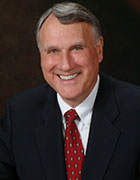
Jon Kyl (R-AZ) served as U.S. Senator from 1995-2013 and again for a short time in 2018. He was one of Congress’s more vocal supporters of conservative domestic and foreign policies, as well as a key proponent of U.S. military interventions and costly strategic weapons programs. Along with like-minded Senate colleagues, such as Sens. Joe Lieberman (I-CT) and John McCain (R-AZ), Kyl frequently spoke out about “enemies” across the globe, in particular in the Middle East, championing the 2003 U.S. invasion of Iraq and U.S.-backed “regime change” in Iran. In September 2018, Kyl was appointed back to the Senate after the death of John McCain. He served through the end of the year and retired again. He was replaced by Martha McSally, a Republican who had lost a tight race in November to Democrat Kyrsten Sinema.[1]
In early 2013, shortly after retiring from the Senate, Kyl joined the neoconservative American Enterprise Institute (AEI), where he co-chaired with former Senator Lieberman its American Internationalism Project, a purportedly cross-party initiative meant “to rebuild and reshape a bipartisan consensus around American global leadership and engagement.”[2]
Kyl and Lieberman have frequently made the case against the growing isolationism that emerged after the failed invasion of Iraq and which grew with the “America First” rhetoric of Donald Trump. Writing with his frequent co-author Lieberman, Kyl mused, “Since the end of World War II, the United States has worked with its allies to nurture and maintain an international environment that has expanded security, prosperity, and human rights throughout the globe. As new challenges to this system emerge, however, many across America have wondered whether the benefits of international leadership outweigh the costs.” In response, he said, “We concluded that the U.S. must continue to lead across the three realms of international engagement: security, economics, and democratic ideals.”[3]
As to the nature of that leadership, in 2013, Kyl—joined by neoconservative former George W. Bush administration undersecretary of defense for policy, Douglas Feith and John Fonte of the Hudson Institute—made the case that Congress should decide what parts of international law to accept and what parts not to. The adherence to international law in the United States is termed by these authors an “affront to the Constitution.”
Dismissing the power of both the president and U.S. courts to accept international law, they write, “The United States has an interest in promoting respect for international law that strengthens, rather than undermines, its constitutional system. Indeed, Americans can benefit from international cooperation that is rooted in countries’ widespread acceptance of useful rules of the road. But U.S. officials should adopt such rules, as they do with domestic legislation, through democratic processes. New rules should not be imposed by the executive branch through extraconstitutional machinations, and they should not be decreed by activist judges exploiting the democracy-unfriendly theories of the transnational legal movement.”[4]
Kyl was cool toward the presidency of Donald Trump but was neither harshly critical nor completely unwilling to be associated with it, although he did make it clear that he did not wish to return to government.
Amid rumors that then-president-elect Trump was considering offering him the position of defense secretary, Kyl said, “I retired from the Senate in 2013 to better care for my family and indicated at the time that I would not serve in government again. The Trump transition team is well aware of this and of my willingness to help in other ways.”[5]
But later, Kyl was less positive about Trump’s behavior, saying in an interview with an Arizona radio station, “I don’t like his style. I think it is boorish. I think he’s own worst enemy. He could be much more effective if he were more politique, more diplomatic—of course that’s one of the things that people like about him—the fact that he isn’t that way. But I think there’s a happy medium.”[6]
Yet in July 2018, Kyl agreed to become the guide for Trump’s second nominee to the U.S. Supreme Court, Brett Kavanaugh. Kyl’s experience in the Senate and the relationships he has with many senators on both sides of the aisle were seen as great boons for Kavanaugh. Kyl had been recommended for the role by Senate Majority Leader Mitch McConnell (R-KY), who was deeply involved in all of Trump’s judicial picks, and with shaping the United States’ judiciary, from top to bottom, in a conservative direction for years to come.[7]
By the time Kavanuagh’s second confirmation hearing was held under the shadow of accusations of sexual assault, Kyl had been appointed to the Senate again. He stayed scrupulously outside the debates over Kavanaugh’s past actions and performance during his hearings, notably refusing to commit to vote in favor Kavanaugh’s confirmation before the vote was held in the Senate.[8] He did, in the end, vote to confirm Kavanaugh to the Supreme Court.
Congressional Career
Kyl was one of the first senators to call for overthrowing the regime in Iran. In September 2009, shortly after revelations emerged about a secret Iranian nuclear enrichment facility, Kyl declared on “Meet the Press,” “What we’re trying to do here eventually is to get a regime change with a group of people in there that are more representative of the Iranian people, who we really can talk with in a way that might end up with a good result. I think it’s very difficult to do that with the current leadership and especially the elected president.” Asked whether he was calling for military action against Iran, Kyl responded that “you don’t take any of options off the table.”[9]
Kyl also promoted increasing U.S. troop levels in Afghanistan in support of controversial counterinsurgency efforts pushed by both rightist advocacy groups and liberal-interventionist groups, including the Center for a New American Security. Asked on “Meet the Press” in 2009 about calls by military commanders in Afghanistan to increase U.S. military forces in that country, Kyl stated, “General McChrystal makes clear that to successfully pursue this counterinsurgency policy, you not only have to beat the Taliban, but you have to keep them from coming back in. And that’s what we haven’t had enough troops to do and the Afghan army and police don’t have the capability of doing yet.[10]
A longtime proponent of the U.S. nuclear weapons program, Kyl emerged as a key Republican opponent of the Obama administration’s push for the Senate to ratify the New START arms control agreement with Russia. In July 2010, Kyl explained his opposition in an editorial for the Wall Street Journal. President Obama, Kyl wrote, “says all of his nuclear policies are rooted in his vision of a world with zero nuclear weapons, a world he claims would be more stable and less likely to suffer a nuclear war. But this position is not grounded in reality, and the policies that flow from it are dangerous and impractical.”[11] Kyl ultimately secured some $84 billion in funding for nuclear weapons modernization as part of the treaty’s eventual ratification.[12]
Kyl, who was first elected to the U.S. Congress in 1987 as a member of the House of Representatives, consistently complimented his hawkish foreign policies with a right-wing domestic agenda. In 2003 and 2004, for example, his votes “supported the interests” of the National Right to Life Committee 100 percent of the time (and therefore NARAL Pro-Choice America zero percent of the time), according to vote-smart.org. In 2005, on budget, spending, and tax issues, Kyl supported the interests of the rightist Americans for Tax Reform 90 percent of the time, and supported the American Conservative Union 100 percent of the time.
During the 2006 mid-term elections, Kyl won 53 percent of the vote in Arizona, bucking a trend that saw several hardline congressman (including Pennsylvania Republicans Sen. Rick Santorum and Rep. Curt Weldon) lose their seats, in part because of a backlash against the foreign policies promoted by the George W. Bush administration.
While Kyl was closely associated with the Bush administration’s war on terror, it was his stance on immigration that proved to be the lightning rod issue in his 2006 reelection campaign. An opponent of Bush-supported legislation that passed the Senate earlier that year that aimed to ease immigrants’ path to citizenship, Kyl used his reelection campaign to hype the purported threat posed by immigrants with criminal records. Among the policies he proposed was forcing undocumented immigrants to return to their countries before applying for a proposed temporary work program, an idea that his fellow Republican from Arizona, Sen. John McCain, harshly criticized.[13]
Kyl’s hawkish positions earned him the support of numerous military contractors, who donated generously to his election campaigns, including Lockheed Corporation, Raytheon, General Dynamics, Honeywell International, Veridian Corporation (later part of General Dynamics), TRW, Northrop Grumman, and United Technologies. From 1997 to 2002, Kyl received $3.8 million in campaign contributions—including 26 percent from PACs, of which 88.1 percent came from business, 0.5 percent from labor, and 11.4 percent from ideological or single-issue groups. While on the Energy and Natural Resources Committee, Kyl received contributions from such energy corporations as Bechtel, Enron, Halliburton, Occidental Petroleum, and PG&E. Kyl raised more than $7 million for his 2006 Senate reelection campaign.
Kyl demonstrated hawkish view from his earliest days in Congress, supporting U.S. military aid to the Nicaraguan Contras in the 1980s. In 1998, he co-chaired (with Lieberman and several Israeli Knesset members, among others) the U.S.-Israeli Parliamentary Commission, which argued that both countries faced imminent threats from nuclear-armed ballistic missiles. According to a September 1998 Center for Security Policy “Decision Brief,” commission members were invited to share their concerns with the so-called Rumsfeld Missile Commission, a congressionally mandated body led by Donald Rumsfeld that was heavily criticized for exaggerating the threat of ballistic missiles.[14]
Kyl joined fellow Republican Senators Jesse Helms, James Inhofe, and Robert Smith in orchestrating the defeat of the 1996 Comprehensive Test Ban Treaty (CTBT). The main point of contention on the CTBT was the issue of underground nuclear weapons testing, which the treaty prohibited. Opponents contended the United States would be unable to deter “rogue” nations from developing nuclear weapons unless it could test its own stockpiles. Treaty supporters argued that testing was unnecessary; physicists and the directors of the three nuclear labs pointed out that the existing Stockpile Stewardship and Management Program adequately tests the safety and reliability of stockpiles without underground testing.
Kyl also proved to be one of the Senate’s most vociferous promoters of militarist policies in the Middle East. His calls for “regime change” in Iran date back to at least 2003, when he promoted Senate resolutions aimed at tightening sanctions and isolating the regime in Tehran. Kyl also cosponsored the Iran Freedom and Support Act, which is subtitled, “A bill to hold the current regime in Iran accountable for its threatening behavior and to support a transition to democracy in Iran.” Commenting on the bill, Rep. Dennis Kucinich (D-OH) said: “While this bill makes a point of so-called not using force against Iran, be assured this is a stepping stone to the use of force, the same way that the Iraq Liberation Act was used as a stepping stone.”[15]
On Iraq, Kyl criticized calls during the final years of the Bush administration to reduce the U.S. military presence there. In September 2007, for example, he told CBS’s Bob Schieffer, “I don’t know of any responsible foreign policy or military analyst that doesn’t appreciate that a premature withdrawal would have severe national security consequences. The president has talked about it. Secretary [Robert] Gates has talked about it. General [David] Petraeus has talked about it. Start with Iran—leaving a vacuum in Iraq for Iran to fill would have disastrous consequences for us. The genocide and ethnic cleansing that would probably occur if the Iraqi forces are not able to keep peace and stability there would be blood on our hands, in effect.”[16]
After Israel’s summer 2006 offensive against Hezbollah, Kyl and other senators introduced a resolution “condemning the actions of Hezbollah and fully supporting Israel’s self-defense efforts.” In September 2007, Kyl and Lieberman spearheaded an amendment urging the State Department to label Iran’s Revolutionary Guards officially as a “foreign terrorist organization.” The non-binding amendment, which passed 76-22, says that “it is in the critical national interest of the United States to prevent Iran turning Shia extremists in Iraq into a ‘Hezbollah type force,'” according to the Agence France Presse.[17]
Ties to Advocacy Groups
Kyl joined numerous neoconservative-led causes aimed at widening U.S. Mideast intervention. He served as honorary co-chairman, along with Lieberman and George Shultz, of the reincarnated Committee on the Present Danger (CPD), the Cold War-era anti-communist group that was revived in 2004 with the declared intention of “protecting and expanding democracy by supporting policies aimed at winning the global war against terrorism and the movements and ideologies that drive it.” CPD members have included a number of well-known rightist and neoconservative figures such as Frank Gaffney, Newt Gingrich, Jack Kemp, and Jeane Kirkpatrick.
In a July 20, 2004 op-ed for the Washington Post addressing the nature of the “present danger,” Kyl and Lieberman warned that one of the biggest challenges facing America was dissent over the administration’s efforts to fight a global war on terrorism: “The leaders of the Democratic and Republican parties have so far stood firm in their commitment to finish the job in Iraq and to fight to victory the war on terrorism. But that bipartisan consensus is coming under growing public pressure and could fray in the months ahead. Although the tide is turning in the war on terrorism, a political undertow in this country could wash out our recent gains. We must not let this happen.”[18]
Like the latest version, the first two iterations of the CPD—in the early 1950s and again in the mid-1970s— consisted of policy elites committed to raising bipartisan congressional and public support for increased military budgets and a more aggressive global military posture. Both committees proved extremely successful—the first winning broad support for militant Cold War policies, and the second undermining the politics of détente and arms control. All three incarnations have defined the “present danger” as threats to U.S. national security from abroad and internal passivity in the face of these external threats.
Kyl has also served as the honorary co-chair, along with former CIA chief James Woolsey, of the National Security Advisory Council of the Center for Security Policy (CSP), a hawkish policy institute that cited the CPD as a model when it was founded in 1988. Led by former Reagan administration official Frank Gaffney, CSP claims to be “a non-profit, non-partisan organization committed to the time-tested philosophy of promoting international peace through American strength.” CSP’s advisory council is chock-a-block with neoconservatives and hardliners, including Morris Amitay, former director of the American Israeli Public Affairs Committee; Kathleen Bailey of the anti-arms control group the National Institute for Public Policy; William Bennett; Midge Decter, former head (with Donald Rumsfeld) of the Committee for the Free World; and former Bush administration officials Richard Perle and Douglas J. Feith.
SOURCES
[1] Jessica Taylor, “Republican Martha McSally Picked To Fill Senate Seat Formerly Held By John McCain,” NPR, December 18, 2018, https://www.npr.org/2018/12/18/677766098/republican-martha-mcsally-picked-to-fill-senate-seat-formerly-held-by-john-mccai
[2] AEI, “Senator Joseph Lieberman to Join Senator Jon Kyl as Co-Chair of the American Internationalism Project at the American Enterprise Institute,” March 11, 2013, http://www.aei.org/press/foreign-and-defense-policy/senator-joseph-lieberman-to-join-senator-jon-kyl-as-co-chair-of-the-american-internationalism-project-at-the-american-enterprise-institute-release/.
[3] John Kyl and Joseph Lieberman, “The Case for American Internationalism,” The Catalyst, Winter 2016, https://www.bushcenter.org/catalyst/leadership/the-case-for-american-internationalism.html
[4] John Kyl, Douglas Feith, and John Fonte, “The War of Law: How New International Law Undermines Democratic Sovereignty,” Foreign Affairs, July/August 2013, https://www.foreignaffairs.com/articles/united-states/2013-06-11/war-law
[5] Daniel Strauss, “Jon Kyl says he’s not interested in secretary of defense,” Politico, November 30, 2016, https://www.politico.com/blogs/donald-trump-administration/2016/11/jon-kyl-no-secretary-of-defense-231999
[6] Phil Latzman, “Former Sen. Jon Kyl Is No Fan Of President Trump,” KJZZ-FM, February 20, 2018, https://kjzz.org/content/610389/former-sen-jon-kyl-no-fan-president-trump
[7] Eli Watkins, “GOP ex-Sen. Jon Kyl will be the ‘sherpa’ for SCOTUS nominee,” CNN, July 9, 2018, https://www.cnn.com/2018/07/09/politics/jon-kyl-supreme-court-sherpa/index.html
[8] Elana Shor and Mike Zapler, “Kavanaugh’s former ‘sherpa’ won’t commit to vote for him,” Politico, September 25, 2018, https://www.politico.com/story/2018/09/25/kyl-wont-commit-vote-for-kavanaugh-840093
[9] MSNBC, “’Meet the Press’ transcript for Sept. 27, 2009,” http://www.msnbc.msn.com/id/33032390/ns/meet_the_press/page/2/print/1/displaymode/1098/
[10] MSNBC, “’Meet the Press’ transcript for Sept. 27, 2009, http://www.msnbc.msn.com/id/33032390/ns/meet_the_press/page/2/print/1/displaymode/1098/
[11] Jon Kyl, “The New Start Treaty: Time for a Careful Look,” Wall Street Journal, July 8, 2010, http://online.wsj.com/article/SB10001424052748704293604575343360850107760.html
[12] Josh Rogin, “White House moving ahead on New START with or without Jon Kyl,” Foreign Policy “The Cable” blog, November 19, 2010, http://thecable.foreignpolicy.com/posts/2010/11/19/white_house_moving_ahead_on_new_start_without_jon_kyl.
[13] Randal Archibold, “Democrats See Opportunity in Arizona,” New York Times, June 4, 2006, https://www.nytimes.com/2006/06/04/washington/04kyl.html?rref=collection%2Fbyline%2Frandal-c.-archibold&action=click&contentCollection=undefined®ion=stream&module=stream_unit&version=search&contentPlacement=2&pgtype=collection
[14] Center for Security Policy, Decision Brief, No. 98-D 163, September 16, 1998.
[15] Tom Barry, “Iran Freedom and Regime Change Politics,” Right Web, May 19, 2006, http://rightweb.irc-online.org/rw/3277
[16] “Face the Nation,” CBS Transcript, September 16, 2007.
[17] “U.S. Senate Brands Iran Guard ‘Terrorist Organization,'” Agence France Presse, September 27, 2007, https://thesaker.is/us-senate-brands-iran-guard-terrorist-organization/
[18] Joe Lieberman and Jon Kyl, “The Present Danger,” Washington Post, July 20, 2004, http://www.washingtonpost.com/wp-dyn/articles/A63067-2004Jul19.html.