
Eric Edelman
last updated: August 19, 2015
Please note: The Militarist Monitor neither represents nor endorses any of the individuals or groups profiled on this site.
Affiliations
- Jewish Institute for National Security Affairs: Co-Chairman, Iran Task Force
- United States Institute for Peace: Board Member(2011- )
- Foreign Policy Initiative: Member, Board of Directors (2010- )
- Center for Strategic and Budgetary Assessments: Distinguished Fellow (2009- )
- Philip Merrill Center for Strategic Studies: Fellow
- Belfer Center for Science and International Affairs: Associate
Government
- Defense Department: Undersecretary of Defense for Policy (2005-2009); Assistant Deputy Under Secretary of Defense for Soviet and East European Affairs (1990-1993)
- Office of the Vice President: Principal Deputy Assistant for National Security Affairs (2001-2003)
- State Department: Ambassador to the Republic of Turkey (2003-2005); Ambassador to the Republic of Finland (1998-2001); Executive Assistant to the Deputy Secretary of State (1996-1998); Deputy Chief of Mission at the U.S. Embassy, Prague, Czech Republic (1994-1996); Ambassador-at-Large and Special Advisor to the Secretary of State on the Newly Independent States (1993); Special Assistant (European Affairs) to the Under Secretary of State for Political Affairs (1989-1990); Head of External Political Section at the U.S. Embassy in Moscow (1987-1989); Head of Soviet Policies in the Third World at the Office of Soviet Affairs (1984-1986); Special Assistant to Secretary of State George P. Shultz (1982-1984); Staff Officer on the Secretariat Staff (1982); Watch Officer in the State Department Operations Center (1981-1982); Member of the U.S. Middle East Delegation to the West Bank/Gaza Autonomy Talks Delegations (1980-1981)
Education
- Cornell University: B.A., History and Government (1972)
- Yale University: Ph.D., U.S. Diplomatic History (1981)
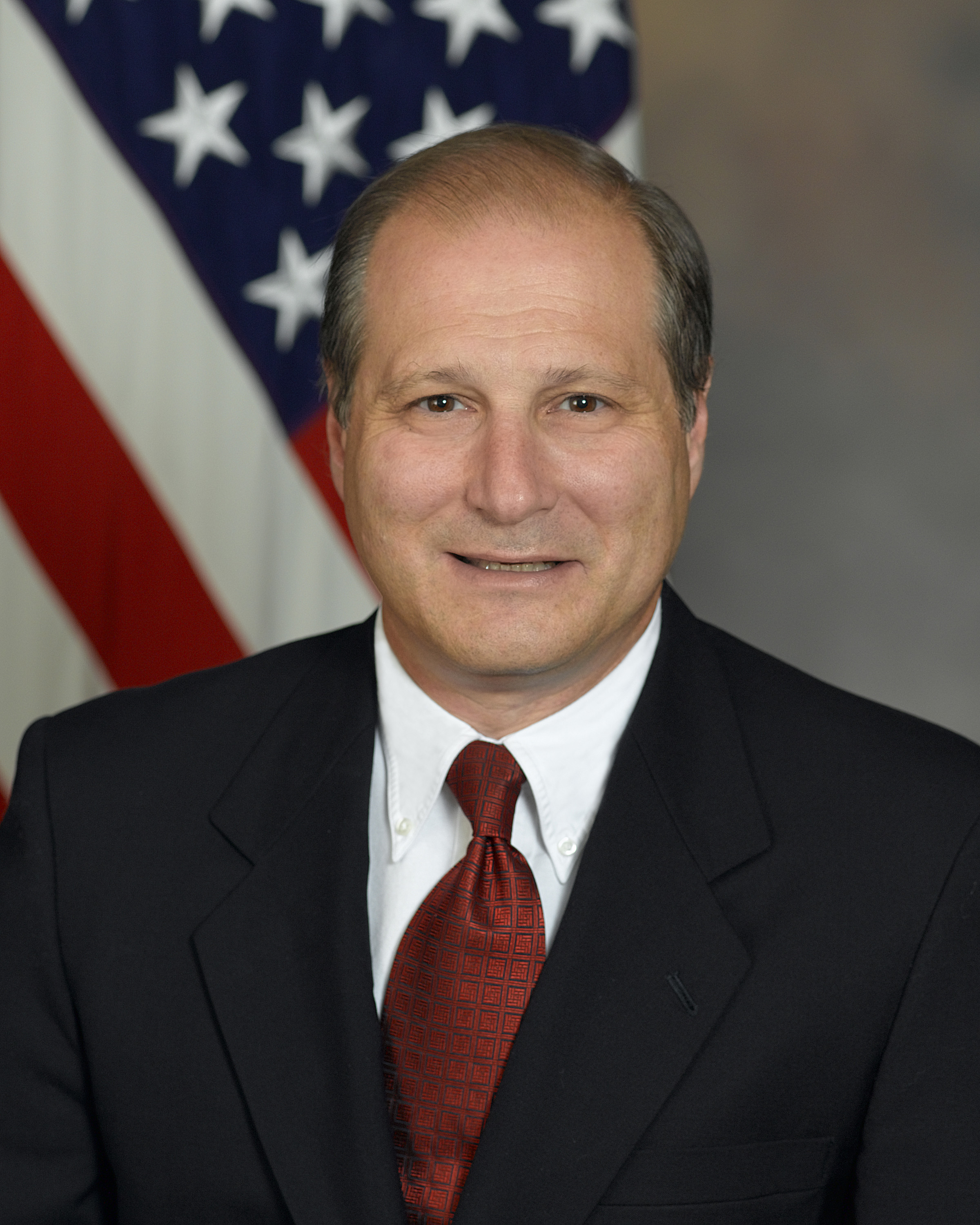
Eric S. Edelman, a former U.S. diplomat and adviser to Vice President Dick Cheney, has supported a number of militarist policy initiatives. He is a founding board member of the Foreign Policy Initiative, an advocacy group founded in 2009 by neoconservative figures William Kristol, Robert Kagan, and Dan Senor widely regarded as a successor group to the Project for the New American Century. He also served as a key foreign policy adviser to Mitt Romney’s presidential campaign in 2012 and helped launch a new pressure group dedicated to pressing a hawkish GOP line in the 2016 presidential campaign.
In 2014, Edelman joined the Jewish Institute for National Security Affairs (JINSA) as a co-chair of its Iran Task Force, which has pushed a hard line on Iran’s nuclear enrichment program. He has also worked as a senior fellow at the Center for Strategic and Budgetary Assessments (CSBA),[1] as a visiting scholar at the Philip Merrill Center for Strategic Studies, and as a senior associate of the International Security Program at the Belfer Center for Science and International Affairs at Harvard University. He was also appointed to the board of the U.S. Institute for Peace in 2011.[2]
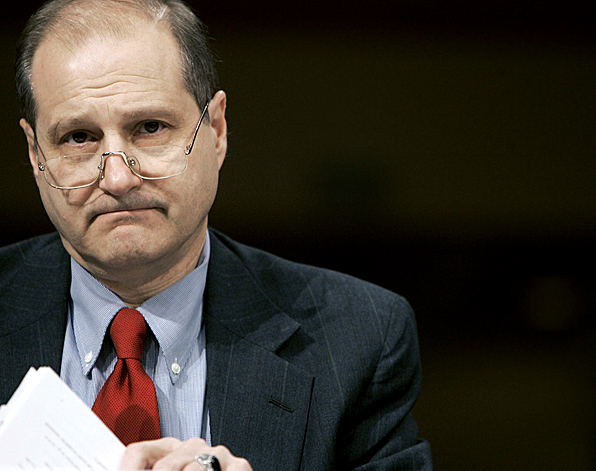
Although Edelman does not have the same reputation for divisiveness common among many of his colleagues in the neoconservative think tank work, observers have highlighted Edelman’s close associations within that world and frequent support for their policy agendas. The Inter Press Service once reported that when Edelman was tapped to serve as the successor to embattled undersecretary of defense Douglas Feith in 2005, it was due largely to support from the likes of Cheney and Richard Perle. Edelman “is a career foreign service officer with neoconservative views, albeit not as radical as those of his ultra-Likudist predecessor [Feith]. Although he has worked for Democratic appointees, most recently former Deputy Secretary of State Strobe Talbott, Edelman’s ties to Cheney are of long standing,” reported IPS Lobe, which added that Edelman’s Pentagon office had coordinated “closely with Devon Gaffney Cross’ London-basedPolicy Forum on International Security Affairs, a neoconservative outfit that quietly conducts public diplomacy for the Pentagon’s policy shop and various like-minded Washington-based think tanks.”[3]
During the Obama Administration
Edelman has been a vociferous critic of Obama administration’s foreign policy, claiming that President Obama has an “ideological aversion to American power” and that he has formulated a “strategy whose overriding impetus is to constrain that power.” In a February 2015 piece for the conservative Mosaic magazine, he claimed that the Obama White House has engaged in a “chronic neglect of allies” and that Obama has “a chronic need—the political equivalent of Tourette syndrome—to express regret and apologize publicly for past exercises of American power in pursuit of our national interests.”[4]
In March 2012, Edelman contributed his name to an open letter to President Barack Obama lambasting the president’s record on foreign policy and claiming that his administration was marked by “weakness and inconstancy.” Signatories claimed that the president was weakening America by cutting back on missile defense, going easy on Russia, pressuring “the Israelis to grant one-sided concessions to the Palestinians,” and cutting the military budget. Signatories to the letter included John Bolton, Eliot Cohen, Robert Joseph, Robert Kagan, Dan Senor, and Walid Phares, who served along with Edelman as foreign policy advisers to the Mitt Romney presidential campaign.[5]
In a Boston Globe op-ed coauthored with fellow Romney advisers Meghan O’Sullivan and Eliot Cohen shortly before the election, Edelman argued: “Because of the last four years, we face a world in which our enemies do not fear us, our friends do not believe they can trust us, and those who maneuver between the two camps feel that they will not get in trouble by crossing us.”[6]
In early 2013, Edelman and other Romney campaign alums joined to form the “John Hay Initiative.”[7] The aim of the group is to influence potential 2016 GOP presidential candidates. Its more than 150 members include prominent militarists such as Eliot Cohen, Michael Chertoff, and former Sen. Norm Coleman. Mitt Romney himself is on the group’s advisory council.[8]
In August 2015, Bloomberg View reported that members of the John Hay Initiative were playing a key role shaping the foreign policy agendas of most of the 2016 Republican presidential candidates. “The co-founders say the group issues biweekly policy papers on a range of issues, does specific research for different campaigns on demand, and has briefed more than half of the 17 Republican candidates running for president. The Hay Initiative helped write recent foreign policy speeches for Carly Fiorina and Chris Christie, speeches that struck very similar notes. Members have also briefed Jeb Bush, Scott Walker, Marco Rubio, Ted Cruz, Lindsey Graham and others,” the piece stated.[9]
The article added: “For the party itself, the group's omnipresence behind the scenes is shaping a hawkish, right-of-Hillary-Clinton foreign policy agenda that is quickly becoming the established position of the party hopefuls going into 2016.”[10]
In September 2014, Edelman argued in a Washington Post op-ed written with Michele Flournoy, a former Obama administration undersecretary of defense for policy and noted “liberal hawk,” that military spending should be increased to “sustain the rules-based international order that underpins U.S. security and prosperity.” The two called for an immediate repeal of the Budget Control Act, which provided for the “sequestration” cuts much loathed by foreign policy hawks, and a “return, at a minimum, to funding levels proposed by then-Defense Secretary Robert Gates in his fiscal 2012 budget.” Edelman and Flouroy further argued that “the U.S. military must be able to deter or stop aggression in multiple theaters, not just one, even when engaged in a large-scale war.”[11]
In a February 2015 Weekly Standard op-ed co-authored with former Sen. Jim Talent, Edelman claimed that “the government has—with full knowledge of the consequences—funded defense at a level that it knows is far less than needed to protect the vital interests of the United States.”[12]
On several occasions, Edelman has criticized the Obama administration’s policies toward Russia. In 2013, for example, he accused the White House of making a “number of unnecessary concessions in the New START Treaty,” a nuclear arms-reduction agreement between the United States and Russia ratified by the Senate in 2012.[13] Edelman has said the treaty “should concern those who believe in a strong and secure America able to deter and defend against attacks on the U.S. homeland and on the country's friends and allies.”[14]
In a March 2015 National Review op-ed, Edelman contended that the Obama administration reached the New START Treaty with Russia and ended plans for a U.S. missile defense system in Europe in order to “induce Moscow to continue engaging in arms-control negotiations to further President Obama’s naïve and dangerous goal of seeking a world free of nuclear weapons.”[15]
Edelman urged an aggressive U.S. response to Russia’s annexation of Ukraine’s Crimean peninsula and support for pro-Russian rebels in Ukraine’s eastern regions. In a Weekly Standardcommentary, Edelman called for the United States “to dispatch a military needs assessment team to identify crucial shortfalls in the Ukrainian military and to lay the basis for urgent and longer-term military assistance programs on a bilateral U.S.-Ukraine basis.”[16]
Edelman has also pushed for greater involvement of NATO in Ukraine, arguing that NATO should “help share intelligence with the Ukrainians” and “assist them with planning a more targeted NATO military assistance program.” Edelman has called on NATO to “consider whether and how it wants to position ground combat forces on the territory of the former Warsaw Pact states that now are members of NATO.” Edelman has even pushed for the deployment of nuclear weapons in these states, saying NATO should “reconsider the so-called three no’s—no intention, no plan, no reason to deploy nuclear weapons on the territory of the new NATO members.”[17] (Edelman’s advice stood in direct contrast to the advice of experts like John Mearsheimer, who has argued that NATO and EU expansion into the former states of the Soviet Union is seen by Russia as a threat, helping to precipitate aggressive Russian maneuvering in Ukraine in the first place.)[18]
Edelman has also taken a hawkish line on Iran. In January 2011, Edelman co-wrote, with two CSBA colleagues, an article for Foreign Affairs titled “The Dangers of a Nuclear Iran: The Limits of Containment.” The article argued that the United States should pursue an approach “that brings diplomacy and sanctions, clandestine action, and the threat of military force into alignment.” According to Edelman and his coauthors, “Although finding a peaceful way to preclude Iran from getting nuclear weapons is obviously desirable, Washington will likely have to decide between two unattractive options: pursuing a military strike to prevent Iran from going nuclear or implementing a containment strategy to live with a nuclear Iran.”[19] However, U.S. intelligence assessments had long maintained that Iran was not currently developing a nuclear weapon.
Edelman, a longtime skeptic of negotiations over Iran’s nuclear program, opposed the July 2015 nuclear agreement between Iran and the P5+1 world powers. Edelman and longtime “pro-Israel” hawk Dennis Ross wrote in a May 2014 report for JINSA: “How can a regime with such ingrained radical policies be entrusted with sensitive nuclear technologies?”[20]
While the negotiations were on-going, Edelman also urged to keep the threat of military action on the table, writing in a July 2014 report for JINSA: “To peacefully prevent a nuclear Iran, American policymakers must use all available instruments of coercive diplomacy to restore credibility to their mantra that the United States is keeping all options on the table. They must do this promptly and resolutely.” In this regard, the report called for “augmenting the credibility of both the U.S. and Israeli military options.”[21]
In addition to threatening military action, the Edelman co-authored report argued that United States should also “threaten even deeper sanctions against energy and other vital economic sectors that would take effect if an acceptable deal is not concluded by the [then July 2014] interim deadline.”[22]
Bryan Gibson of Middle East Eye countered that JINSA’s recommendations in these reports “do not seem to be designed to maximize America’s interests, but rather Israel’s.” Observing that “Iran appears to be living up to its obligations under the JPA” (the interim nuclear deal worked out in November 2013), Gibson noted that the report’s hard line against Iranian “nuclear capability” was closer to Israel’s position than that of the Obama administration, which has assented to a scaled back Iranian enrichment capability.[23]
In January 2015 testimony to the House Committee on Foreign Affairs, Edelman argued that the United States should take action to demonstrate to Iran that the military option against the country is “viable.” “American policymakers should clarify and strengthen their declaratory policy, including Congressional hearings on the feasibility of the U.S. military option and publicizing advanced U.S. military capabilities, such as the GBU-57 Massive Ordnance Penetrator (MOP) bunker buster designed specifically to reach targets like Iran’s deeply-buried illegal nuclear facilities,” he stated.[24]
Edelman added that the “United States should also boost the credibility of Israel’s military option,” including by actively considering “transferring MOP bunker busters to Israel. Because Israel currently lacks aircraft to carry the MOP, the United States would need to consider transferring an appropriate delivery platform and additional tanking capability as well.”[25]
After the Iran deal with reached in July 2015, Edelman joined a chorus of hawkish voices calling for Congress to rescind it. “No agreement is perfect, but at times the scale of imperfection is so great that the judicious course is to reject the deal and renegotiate a more stringent one. The way for this to happen is for Congress to disapprove the JCPOA,” he said in a Washington Post op-ed co-authored with fellow Iran-hawk Ray Takeyh shortly after the agreement was announced.[26]
James Jeffrey of the “pro-Israel” Washington Institute for Near East Policy rebutted Edelman and Takeyh’s piece, writing: “Congress should not reject the agreement assuming that the United States can then get a better deal. Who would negotiate it? … We would be left with no restraints, rather than the JCPOA's limited ones, on Iran, eroding sanctions and little international support if force must ultimately be used against Iran.”[27]
In August 2015, Edelman testified before the Senate Armed Services Committee about the Iran agreement, employing hyperbolic rhetoric characteristic of many of the deal’s detractors. “This agreement reverses almost 50 years of U.S. non-proliferation policy,” he claimed, “It is likely, in my view, that the prospect of Iranian nuclear latency will, in turn, put the Middle East on the path to a catastrophic arms race.”[28] Edelman also argued at the hearing that the United States would have to increase its military foothold in the Middle East as a result of the agreement. “In the wake of this deal, the United States will likely have to expand its regional military presence to reassure Israel and the Gulf States and to deter Iran,” he stated.[29]
Edelman argued that the United States should revoke the deal and “embark on a new round of diplomacy,” and that Congress should pass an authorization for the use of military force against Iran to deter it from going back on its commitments as part of the existing deal. “The reality is that Iran could undertake such an effort, but only at great potential peril to itself. Congress might consider raising the potential costs by coupling its disapproval of the deal with authorization for the use of force to prevent Iran from acquiring a nuclear weapons capability,” he said.[30]
Edelman also supported U.S. intervention in Syria’s civil war over the Syrian regime’s alleged use of chemical weapons in 2013. Edelman linked the issue to the U.S. standoff with Iran, arguing if the United States does not “enforce the WMD norm in Syria,” Iran would “not put too much stock in the threat of the use of force if they don't negotiate an end to their nuclear weapons program.”[31]
Although not typically grouped with the hawks and neoconservatives who helped push for an expansive “war on terror” in the Middle East after the 9/11 attacks, Edelman was an outspoken and sometimes controversial defender of the Bush administration’s foreign policies. For example, in July 2007 he sent an alarmist letter to then-Sen. Hillary Rodham Clinton (D-NY), arguing that her efforts to push the Pentagon to begin planning for the withdrawal of troops from Iraq was a boon to terrorists. He wrote, "Premature and public discussion of the withdrawal of U.S. forces from Iraq reinforces enemy propaganda that the United States will abandon its allies in Iraq, much as we are perceived to have done in Vietnam, Lebanon, and Somalia.”[32]
The letter infuriated a number of people, including Clinton, whose spokesperson told the Associated Press that it was “at once outrageous and dangerous."[33] Responding to an inquiry from Talking Points Memo, Defense Secretary Robert Gates appeared to distance himself from Edelman’s letter, saying in an e-mail statement, “I have long been a staunch advocate of Congressional oversight, first at the CIA and now at the Defense Department. I have said on several occasions in recent months that I believe that congressional debate on Iraq has been constructive and appropriate.”[34]
In the Bush Administration
President George W. Bush named Edelman ambassador to Turkey a few months after the U.S. invasion of Iraq in March 2003. It was widely speculated at the time that Edelman was named to this key post not only because of his close ties to administration hardliners, but also because of his family connections to Turkey. Edelman's grandmother fled Russia in the early 1920s, and his mother was born in Turkey. His great-uncle taught at Ankara University.[35]
As the face of the Bush administration’s efforts to pressure an uncooperative Turkish government to aid the U.S. war in Iraq, Edelman became a lightning rod for deepening anti-U.S. sentiment brought on by the conflict.
The Turkish columnist Ibrahim Karagul described Edelman as “probably the least-liked and trusted American ambassador in Turkish history." In a column for the newspaper Yeni Safak, Karagul wrote: "Considering the range of his activities, his statements which violate the decorum of democracy, and his interest in Turkey's internal affairs, Eric Edelman acts more like a colonial governor than an ambassador. Edelman's actions have exceeded his diplomatic mission. His 'interest' in nongovernmental organizations (NGOs), the Turkish media, and ethnic minorities make him go beyond his role as an ambassador. His presence here has never contributed to Turkish-American relations, and it never will. If we want to address the reasons for anti-Americanism, Edelman must be issue one. As long as Edelman stays in Turkey, the chill wind disturbing bilateral relations will last."[36]
In early 2005, Edelman was nominated to as undersecretary of defense for policy, replacing Douglas Feith, the controversial aide to Donald Rumsfeld who resigned at the end of Bush's first term.[37] At the time of his nomination, many regarded him as a potential candidate for the number-two spot at the State Department after Condoleezza Rice became secretary of state. The Washington Post's Al Kamen wrote at the time: "The latest name du jour for deputy secretary of state is Eric S. Edelman who is seen as someone—perhaps the only one on the planet—who can comfortably straddle all the relevant political worlds. He's a career foreign service officer, a former ambassador to Finland who also worked for then-Secretary of State George P. Shultz and for Clinton Ambassador-at-Large Strobe Talbott. But he also worked for Defense Secretary Richard B. Cheney from 1990 to 1993 and for Vice President Cheney from 2001 to 2003 and with Secretary of State-designate Condoleezza Rice frequently when he represented Cheney at top-level meetings."[38]
Early Career
Edelman began his government career in the Reagan administration. While completing his doctorate in history at Yale University, Edelman joined the U.S. Middle East Delegation to the West Bank/Gaza Autonomy Talks. He then became a special assistant to Secretary of State George Shultz. In 1990, Edelman moved from the State Department to the Pentagon, where he served as assistant deputy undersecretary of defense for Soviet and East European affairs.[39]
Edelman served under then-Defense Secretary Dick Cheney during the administration of George H.W. Bush. At that time, he became part of a "shop" within the Pentagon that was set up by Cheney "to think about American foreign policy after the Cold War, at the grand strategic level," wrote Nicholas Lehman in the New Yorker.[40]
The work of this shop, which was headed by Paul Wolfowitz, eventually led to the crafting of the 1992 Draft Defense Planning Guidance , a document that was meant to serve as a post-Cold War framework for U.S. military strategy. Others working on the guidance were Zalmay Khalilzad and I. Lewis “Scooter” Libby . According to Lehman, the guidance team was "generally speaking, a cohesive group of conservatives who regard themselves as bigger-thinking, tougher-minded, and intellectually bolder than most other people in Washington."[41] However, its plans, which called for actively promoting U.S. predominance throughout much of the world, proved too ambitious for Bush Senior and congressional Democrats. Although the initial draft was immediately retracted after being leaked to the press, it served as a framework for neoconservative advocacy during the 1990s, and many of its ideas resurfaced in President George W. Bush's post-9/11 national security strategy.
During the Clinton administration, Edelman moved back to the State Department. As ambassador-at-large and special advisor to the Secretary of State for the Newly Independent States, Edelman oversaw defense, security, and space issues, among other later positions in the administration.[42]