
Michael Rubin
last updated: October 29, 2015
Please note: The Militarist Monitor neither represents nor endorses any of the individuals or groups profiled on this site.
Affiliations
- American Enterprise Institute: Resident Scholar
- Middle East Forum: Middle East Quarterly, Editor (2004-2009)
- Council on Foreign Relations: International Affairs Fellow (2002-2003)
- Carnegie Council for Ethics and International Affairs: Fellowship Recipient (2000-2001)
- U.S. Committee for a Free Lebanon: Former Golden Circle Member
- Leonard Davis Institute for International Relations: Visiting Fellow
- Washington Institute for Near East Policy: Soref Fellow (1999-2000)
- Naval Postgraduate School: Senior Lecturer (2007-present)
- John Hopkins University: Lecturer (2010)
Government
- Office of the Secretary of Defense: Staff Adviser for Iran and Iraq and Member of Coalition Provisional Authority in Iraq (2002-2004)
- Pentagon Office of Special Plans: Iran/Iraq Adviser (2002-2004)
Education
- Yale University: B.S. in biology; M.A. in history; Ph.D. in history
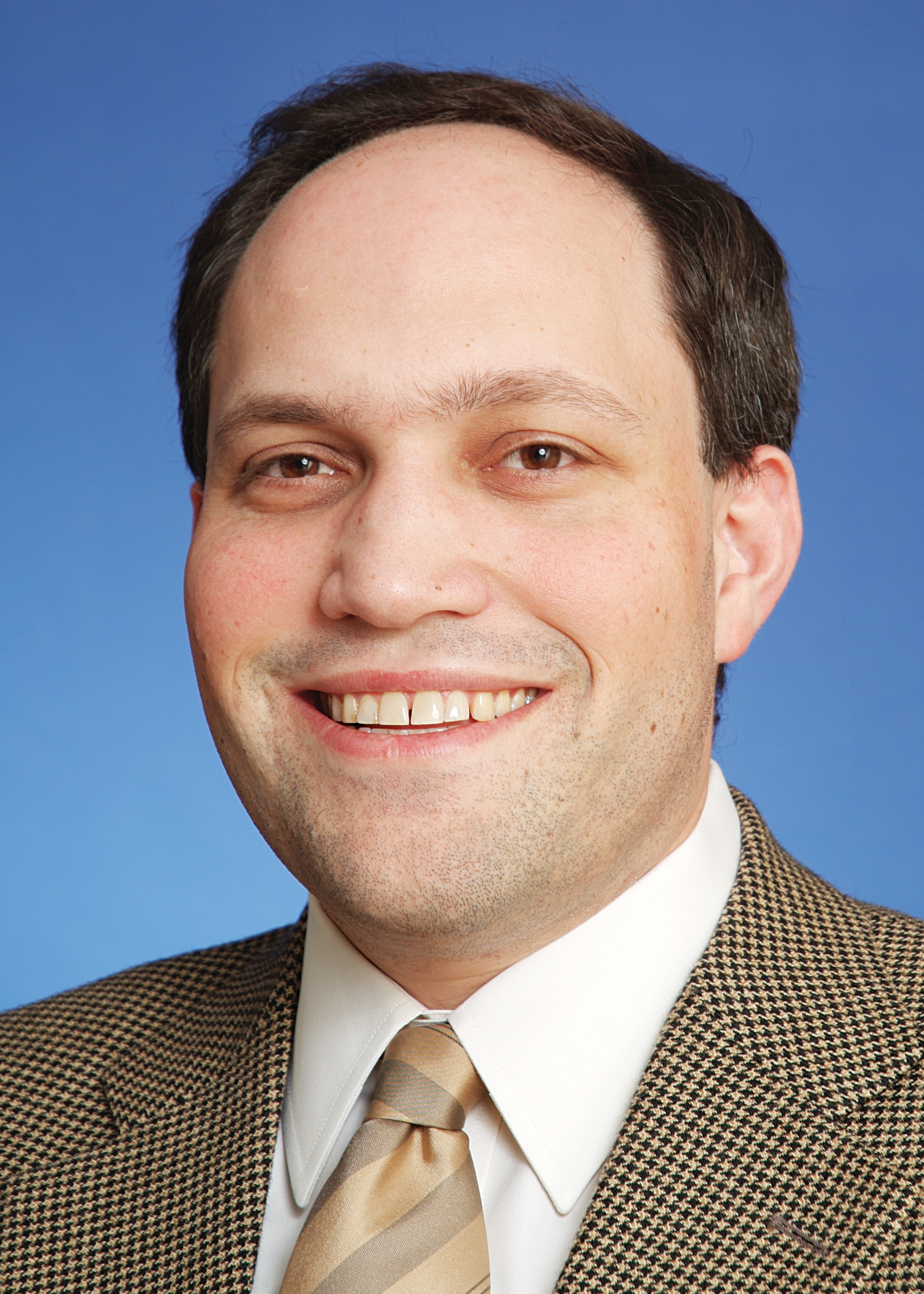
Michael Rubin is a resident scholar at the American Enterprise Institute (AEI) who worked as a Pentagon adviser on Iran and Iraq during the first George W. Bush administration.
An outspoken and sometimes controversial proponent of hawkish U.S. foreign policies, Rubin is closely associated with neoconservatism. His track record includes working for a number of groups associated with the U.S. “Israel lobby” (including AEI, the Washington Institute for Near East Policy, and the Middle East Forum), championing the U.S. invasion of Iraq, suggesting assassinating foreign leaders like Iranian President Mahmoud Ahmadinejad, mistranslating statements by Iranian officials,[1] serving as a consultant for the heavily criticized Pentagon Office of Special Plans, and consulting for the PR firm the Lincoln Group, which was accused of planting propaganda in the Iraqi press.
On Obama Foreign Policy
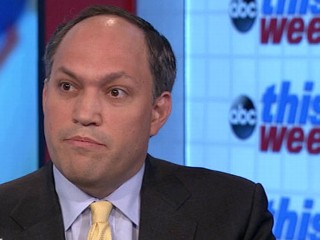
Rubin has been a bombastic critic of Obama administration foreign policy, often penning broadsides for right-wing outlets like the National Review and the Wall Street Journal editorial page.
He has repeatedly criticized what he terms “Obama’s embrace of negotiations with America’s enemies.” Writing for the Washington Post in February 2014, Rubin argued that “Threats—rather than conciliation—can also facilitate diplomacy.” He called President Obama’s stated goal of preventing Iran from obtaining a nuclear weapon as “noble,” but opined that “if history is any guide, talking may not suffice, and agreements may come at a dear price.”[2]
In January 2014, Rubin signed a letter published by the William Kristol-founded Foreign Policy Initiative (FPI) that called for additional sanctions on Iran while the nuclear negotiations were ongoing, which experts argued would have scuttled the diplomatic efforts.[3] One journalist commented that the FPI letter “implicitly endorses” a bill that had been floated in Congress by hawkish Sens. Robert Menendez (D-NJ) and Mark Kirk (R-IL) that would impose new Iran sanctions.[4]
Before the successful conclusion of an historic nuclear deal between Iran and the P5+1 group of states in July 2015, Rubin charged that Obama’s insistence on pursuing that diplomatic process would not ameliorate concerns about Iran’s nuclear program, and would ultimately “leave Israel with no choice” but to attack Iran’s nuclear sites.[5]
After the agreement was reached, Rubin called it a “craven capitulation” and claimed that it was “destructive to American and regional security.” He said the deal went “farther” than British Prime Minister Neville Chamberlain’s alleged concessions to Hitler in 1938, a talking point frequently used by neoconservatives to criticize the agreement.[6]
In October 2015, Rubin co-authored an op-ed about Iran with other foreign policy hardliners like Ilan Berman, Foundation for Defense of Democracies Vice President Jonathan Schanzer, and former Cheney-advisor David Wurmser. The op-ed argued for the United States to designate the entirety of Iran’s Revolutionary Guards force as a “terrorist entity.” Rubin and his co-authors called for a “recapitalization of American defense capabilities” that would enable the country to “undertake unilateral military action against the Islamic Republic in the event of material breach of the JCPOA or some other casus belli.”[7]
Rubin has fiercely criticized the Obama administration’s relationship with Israel. Commenting on an October 2014 piece by the Atlantic’s Jeffrey Goldberg, which attributed a quote calling Israeli Prime Minister Benjamin Netanyahu “chickenshit” to a “senior” administration official[8], Rubin argued that “Obama has been more antagonistic to Israel than he has to rogue states like Iran, Venezuela, Russia, or dictatorships like the Palestinian Authority.” Rubin went on in his column for AEI, “there was a lot of evidence that Obama was no Israel-lover.”[9]
In a separate October 2014 piece for AEI, Rubin accused former special adviser for the Persian Gulf and Southwest Asia Dennis Ross of “criticizing Netanyahu in sometimes undiplomatic ways.” He also chastised Martin Indyk—the administration’s special envoy for the 2013-2014 Israeli-Palestinian negotiation and co-founder of the “pro-Israel” Washington Institute for Near East Policy—of being a “Qatar-funded sometimes Middle East peace envoy who used his Obama administration perch to launch a smear campaign against Israeli leaders.”[10]
Rubin has attacked President Obama’s policy on Syria in the wake of the takeover of swathes of territory in Iraq and Syria by the so-called Islamic State group (IS or ISIS). “Had the United States imposed a no-fly zone … and had U.S. forces targeted extremists, the Islamic State might not have grown to the point where it not only threatens to consume Syria and Iraq, but Jordan and Lebanon as well,” he wrote in August 2014.[11]
In a September 2015 interview, Rubin responded “yes” to a question about whether the United States should send ground forces to combat ISIS. “Diplomacy won’t resolve the problem, because its [ISIS] roots are more ideological than based in local grievances,” he opined.[12]
In a November 6, 2009 op-ed, Rubin joined a chorus of conservative writers like Newt Gingrich in lambasting Obama for not attending ceremonies celebrating the fall of the Berlin Wall, making the outlandish claim that this was a sign of “American isolation and weakness.” He wrote: “Pres. Barack Obama’s decision not to celebrate one of the seminal events of the 20th century … [is] replete with symbolism. … I’m afraid that Obama does not understand how important his refusal to attend commemoration events will be, not only to those still suffering under the yoke of oppression, but also to adversaries who see American isolation and weakness as a phenomenon to be exploited.”[13]
On Libya, Rubin claimed the Obama administration was holding back the military, writing that while on a trip across the Atlantic aboard a U.S. aircraft carrier, “some of the less discreet pilots expressed frustration they were not able to do their jobs to the fullest: If only they could operate non-stop for 48 hours and provide Qaddafi with a bit of shock-and-awe, they felt they could accomplish the mission rather than have it drag on endlessly. President Obama and his advisers appear too detached from reality: They have no sense of the importance of momentum.”[14]
Rubin also criticized Obama for his decision to extend constitutional rights to suspected terrorists and pursue their cases in civilian courts, making the legally dubious argument that the Geneva Conventions do not “fully apply” to them—this despite the fact that the Supreme Court ruled against the George W. Bush administration’s argument that the conventions did not apply to so-called unlawful combatants.[15] Rubin opined, nevertheless, that Obama’s decision “undermined national security and eroded the foundation of human rights law.”[16]
On Iran
Rubin has been a long-standing hawk on Iran policy, promoting a variety of strategies aimed at overthrowing the regime in Tehran, including assassinating key leaders. In an August 28, 2006 National Review article, Rubin wrote: “If a single bullet or bomb could forestall a far bloodier application of force, would it not be irresponsible to fail to consider that option—especially when the leaders of both Iran and North Korea threaten to use nuclear weapons and call for the destruction of both regional democracies and the United States?”[17]
On the other hand, Rubin has been critical of arguments promoting full-scale U.S. military intervention in the country, writing in March 2012: “Military action against Iran would delay the program only by a few years. True, the same estimate was made before Israel’s strike on the Iraqi nuclear reactor and Saddam Hussein never managed to rebuild his program, but it would be foolish to assume the same would occur. After all, the Iranians will not be stupid enough to invade Kuwait. The problem in Iran today is not simply the regime’s nuclear ambitions, but rather the regime itself. To use the military to delay Iran’s nuclear program—effectively kicking the can down the road—would be an irresponsible use of the military unless there is a policy in place to take advantage of the time won in any strike.”[18]
Rubin has at times appeared overzealous in his efforts to promote regime change. In early 2009, for example, a number of commentators—including Paul Kerr, an arms control expert, and Farideh Farhi, an Iranian scholar—accused Rubin of providing misleading translations of comments from Iranian officials in an effort to push his agenda.[19] In one case, Rubin wrote in a National Review blog entry criticizing New York Times writer Roger Cohen, “One of Cohen’s interlocutors, at least according to his February 5, 2009 column, was former IRGC Chief Mohsen Rezai. Here is Rezai in today’s Iranian press: ‘Our enmity with the U.S. has no end.’ Cohen painted him as a bit more reasonable.” However, according to Farhi, “Rezai in fact said exactly the opposite, using a double negative. He said: ‘Our enmity with the U.S. is not without end.’”[20]
Responding to the accusations, Rubin dismissed Farhi, “a sometimes-academic and activist with the National Iranian American Council,” as simply “dishonest,” arguing that she “cherry picks and removes quotations from immediate context.” However, Rubin did not address directly Farhi’s criticism of the Rezai quotation.[21]
Commenting on the affair, Jim Lobe of the Inter Press Service, wrote, “Now, polemics is one thing; simple translation errors are yet another; but deliberate misrepresentation is quite something else, and that’s what Farhi suggests may be going on. Not that that would be particularly surprising. After all, Rubin not only is a protégéof Richard Perle, who recently denied the existence of neoconservatism or that it had the slightest impact on Bush’s foreign policy; he also worked with the notorious OSP. … On the other hand, Rubin is a stickler for accuracy when it comes to what other writers report about him, myself included, so you would expect him to exercise great care in his own writings and translations.”[22]
In 2008, Rubin was the lead drafter of a report entitled Meeting the Challenge: U.S. Policy Toward Iranian Nuclear Development, which was published by a study group convened by the Bipartisan Policy Center (BPC), a group led by several former government officials. Other participants in the study group included Dennis Ross; Henry Sokolski; Michael Makovsky, a former aide to Douglas Feith in the Donald Rumsfeld Pentagon; Stephen Rademaker, the husband of AEI’s Danielle Pletka who worked under John Bolton in the State Department; and Kenneth Weinstein, CEO of the Hudson Institute.[23]
Called by one commentator a “roadmap to war,”[24] the report argued that despite Iran’s assurances to the contrary, its nuclear program aims to develop nuclear weapons and is thus a threat to “U.S. and global security, regional stability, and the international nonproliferation regime,” a conclusion that contrasted with the CIA’s November 2007 National Intelligence Estimate, which found that Iran had put its efforts to develop nuclear warheads on hold.[25]
In contrast to many realist assessments of the situation, the report contended that “Cold War deterrence” is not persuasive in the context of Iran’s program, due in large measure to the “Islamic Republic’s extremist ideology.” Thus, even a peaceful uranium enrichment program would place the entire Middle East region “under a cloud of ambiguity given uncertain Iranian capacities and intentions.”[26]
The report advised that the incoming U.S. president should bolster the country’s military presence in the Middle East, which would include “pre-positioning additional U.S. and allied forces, deploying additional aircraft carrier battle groups and minesweepers, emplacing other war material in the region, including additional missile defense batteries.”[27]
In addition, the report says the new administration should suspend “bilateral cooperation” with Russia on nuclear issues to pressure it to stop providing assistance to Iran’s “nuclear, missile, and weapons programs.” And, if the new administration agrees to hold direct talks with Tehran without insisting that the country first cease enrichment activities, it should set a pre-determined compliance deadline and be prepared to apply increasingly harsh repercussions if the deadlines are not met, leading ultimately to U.S. military strikes that would “have to target not only Iran’s nuclear infrastructure, but also its conventional military infrastructure in order to suppress an Iranian response.”[28]
Commenting on the report, one observer wrote, “In other words, if Tehran is not eventually prepared to permanently abandon its enrichment of uranium on its own soil—a position that is certain to be rejected by Iran ab initio—war becomes inevitable, and all intermediate steps, even including direct talks if the new president chooses to pursue them, will amount to going through the motions (presumably to gather international support for when push comes to shove).”[29]
On the other hand, Rubin has at times taken exception to some of the views promoted by hawkish anti-Iranian factions. For instance, Rubin has been critical of advocates expressing support for the controversial Iranian exile group, the People’s Muhajedin of Iran (Mojahedin-e Khalq-e, or MEK), an Islamic- and Marxist-inspired militant organization that advocates the overthrow of the Islamic Republic of Iran and is regarded by the U.S. State Department as a terrorist organization. After news agencies reported that the MEK—with support from Israel—had allegedly been involved in the assassination of Iranian scientists, a number of neoconservatives outlets hailed the group. The Ruport Murdoch-owned New York Post ran an editorial stating: “Were the MEK to play the critical role in derailing an Iranian bomb, it would be far more deserving of a Nobel Peace Prize than a certain president of the United States we could mention.”[30]
Rubin, however, argued in early 2012 that such support could delay the goal of toppling the regime in Iran, writing: “By utilizing the MEK—a group which Iranians view in the same way Americans see John Walker Lindh, the American convicted of aiding the Taliban—the Israelis risk winning some short-term gain at the tremendous expense of rallying Iranians around the regime’s flag. A far better strategy would be to facilitate regime change. Not only would the MEK be incapable of that mission, but involving them even cursorily would set the goal back years.”[31]
On Israel
Rubin is a proponent of right-wing Israeli policies, frequently attacking those critical of Israel and associating himself with some of the more extremist “pro-Israel” figures in the United States. In mid-2012, for example, Rubin was advertised as a star attraction on a junket to Turkey organized by the right-wing anti-Islamic writer David Horowitz’s Freedom Center.
Reported the liberal-leaning ThinkProgress: “Rubin has long maintained relationships with Islamophobes. For five years, Rubin edited the Middle East Quarterly, a journal put out by Daniel Pipes’ Middle East Forum. And Rubin appears to have contributed to Horowitz’s Frontpage web magazine several times between 2004 and 2006. Over the past year, he has appeared five times on far-right Islamophobe Frank Gaffney’s radio show.”[32]
During the 2014 Gaza War, Rubin called on Israel to deliver “death” to Hamas. “[Israel] should do what’s necessary to Hamas. Hamas wants to fight to the death. Well, let the Israelis deliver them to that,” he told conservative Newsmax in July 2014.[33]
Rubin also cast blame on the Obama administration for the conflict, accusing it of indirectly supporting Hamas. “We can thank the American taxpayer in part for this because the Obama administration decided to continue to fund the coalition government that Palestinian [Authority] President Mahmoud Abbas went into with Hamas,” he said.
After the conflict, Rubin joined a chorus of neoconservative voices—including former Bush administration official Joshua Muravchik—in criticizing Human Rights Watch for its reporting of the fighting. In an October 2014 article written for the neoconservative Commentary magazine, Rubin accused the organization’s executive director Ken Roth of being biased against Israel. “HRW now is much less of a human-rights organization, and is instead a shrill and biased political advocacy group,” Rubin said. “It is long past time that Roth step down.”[34]
Rubin also strongly supported Israel’s November 2012 war on Gaza, calling the violence “the last straw for land-for-peace” in an op-ed for CNN.com. Blaming the violence on Palestinians—who constituted nearly all of the war’s casualties—Rubin claimed that “Hamas’ decision to turn Gaza into a forward missile base rather than the engine for an independent Palestine condemns 35 years of peacemaking to history’s garbage bin and sets the stage for a conflict far more disruptive than anyone in the region has seen in a half century.”[35]
Inter Press Servicecontributor Mohammed Omer, however, pointed out that Israel’s frequent attacks on the tiny Palestinian enclave had only served to entrench Hamas. “The Islamist party Hamas had been losing support as a result of economic difficulties and factional fighting,” Omer wrote after the 2012 conflict. “Today Hamas is popular again, heralded for its retaliation in Israel’s latest military assault on the Gaza Strip.”[36]
Rubin also attempted to blame the Obama administration for this round of the Israeli-Palestinian conflict, improbably suggesting that Hamas—rather than Israel, whose actions against the Palestinians have been supported by the administration—knew it could count on the Obama administration not to stop it. “Hamas knows that at best, Obama is all bark and no bite and at worst, is actively hostile to Israel’s right to self defense,” Rubin claimed in an interview with the right-wing Washington Free Beacon. “Now that Obama is reelected, Hamas feels it’s in the driver’s seat when it comes to Middle East policy.”[37]
Earlier, inMay 2010, Rubin defended the Israeli attack on a flotilla carrying humanitarian and reconstruction aid for Gaza, which resulted in the deaths of several unarmed activists. Writing on the National Review blog “The Corner,” Rubin posted a series of blogs condemning criticism of the attack. In one post he bizarrely warned that “if the White House decides to come down hard on Israel now, it is the same as giving a green light for Israel to strike Iran.”[38]
In another post on the flotilla, Rubin condemned the criticisms of the “chattering classes” who argued that the Israeli attack was disproportionate. He wrote, “[I]t may be time to recognize that, in the face of growing threats to Western liberalism, strength and disproportionality matter more to security and the protection of democracy than the approval of the chattering class of Europe or the U.N. secretary general.” Rubin then obscurely added, “One final note on proportionality: Fifteen ‘peace’ activists dead is a tragedy, but they represent only one one-thousandth of the death toll of a French heatwave.”[39]
Attacking Right Web
In March 2011, Rubin attacked the Right Web project, claiming on Commentary’s Contentions blog that the project uses standards “embraced by conspiracy theorists like the LaRouchies, 9/11 revisionists, and Birthers.” Rubin suggested Congress investigate PBS Frontline’s citation of Right Web profiles in news articles published on its Tehran Bureau website, calling the profiles “fake, conspiracy-riddled biographies.”[40] Rubin also misrepresented a brief correspondence with Right Web’s editor (presented in full here), falsely claiming that the editor insisted “that even when no evidence supports his allegations, corrections of his slanders would require proving his allegations wrong.”[41]
PBS Frontline issued the following response to Rubin’s claims, which appeared on the stories that linked to Right Web profiles: “In March 2011, a few months after we originally published this piece, FRONTLINE/Tehran Bureau received a complaint from a blogger who posted on Commentary magazine’s web site. The complaint centered on some of the links included in our story—particularly those that took readers to a site called ‘Right Web.’ The Commentary blog post contended that Right Web publishes ‘fake biographies of conservatives.’ After reviewing the matter, we find that the biographies on the Right Web site are not at all fake or fabricated, and seem to be well-sourced. However, we do think it’s helpful for our readers to understand this site’s particular point of view—and their stated focus on those who ‘promote militarist U.S. foreign and defense policies’—if they choose to click on this outside link for further information.”[42]
Misleading Claims
Rubin has a track record of misleading claims, in addition to the accusations that he has misrepresented translations from Farsi.[43]
In a May 2004 article titled “You Must be Likud!” published by National Review Online, Rubin suggested that all criticism of neoconservatives boils down to “creeping anti-Semitism,” which he claimed had “infected” mainstream discourse. Grouping together the likes of patently racist figures like Louis Farrakhan and respected Middle East expert Juan Cole, Rubin wrote: “That racists, anti-Semites, and other hate-mongers substitute threats for discourse is not new, although a number of Jewish journalists and analysts remark on the increasing virulence of their hate mail. … What is new, however, is the infection of mainstream discourse with anti-Semitic references.”[44]
An example of this trend, according to Rubin, is the “ease with which the questioning of Jewish officials’ motivations has infiltrated some in the academic community.” Rubin cites as an example “University of Michigan history professor Juan Cole,” who according to Rubin “has accused several Bush administration employees of having ‘strong ties to the Likud.’”[45] Rubin’s indignation notwithstanding, his criticism of Cole fails to address the fact that many Bush administration officials had long-standing ties with Likud Party figures. Nor did Cole, contrary to Rubin’s insinuation, make any claims with respect to the motivations of any officials as a result of their Jewish backgrounds.
Rubin then cited with approval Max Boot‘s observation: “If neocons were agents of Likud, they would have advocated an invasion not of Iraq or Afghanistan but of Iran, which Israel considers to be the biggest threat to its security.”[46]
However, this claim—which deliberately overstates the more modest contention that many Bush officials simply had connections with the Likud Party—conveniently ignores the abundant evidence that many Likud figures had long pushed attacking Iraq as a step in reconfiguring the security situation in the Middle East vis-à-vis Israel.
A key example of this was the 1996 study group organized by the Likud-affiliated (and Jerusalem-based) Institute for Advanced Strategic and Political Studies, which produced a report aimed at shaping the policies of the then-incoming Likud-led government of Prime Minister Benjamin Netanyahu. The June 1996 report, titled “A Clean Break: A New Strategy for Securing the Realm,” urged Israel to break off then-ongoing peace initiatives and suggested strategies for reshaping the Middle East, including “removing Saddam Hussein from power in Iraq” and working closely with “Turkey and Jordan to contain, destabilize, and roll back” regional threats and using “Israeli proxy forces” based in Lebanon for “striking Syrian military targets in Lebanon.” Study participants included a number of individuals who would later be given posts in the Bush administration, including Douglas Feith, Richard Perle, and David Wurmser.
Rubin continued his criticism of Cole in April 2006 when he and several over prominent neoconservatives participated in a smear campaign against the blogger, who was being considered for a tenured position at Yale, Rubin’s alma mater. Writing in the Yale Daily News, Rubin again hinted that Cole’s analysis of the Middle East might be skewed by anti-Semitism.
“While Cole condemns anti-Semitism,” wrote Rubin, “he accuses prominent Jewish-American officials of having dual loyalties, a frequent anti-Semitic refrain. That he accuses Jewish Americans of using ‘the Pentagon as Israel’s Gurkha regiment’ is unfortunate.”[47]
On June 1, 2006, Yale’s Senior Appointments Committee announced that it had rejected Cole’s nomination, despite three other committees having already accepted it. Several observers were convinced that the rejection was a direct result of the accusations against Cole. “I’m saddened and distressed by the news,” said John Merriman, a Yale history professor. “I love this place. But I haven’t seen something like this happen at Yale before. In this case, academic integrity clearly has been trumped by politics.”[48]
Rubin’s own reputation as a scholar took a hit in early 2006 when the New York Times revealed that he had reviewed propaganda articles that had been produced for distribution to the media by the PR firm Lincoln Group, which had been hired by the Pentagon. According to the Times, Lincoln Group “paid Iraqi newspapers to print positive articles written by American soldiers.”[49]
When first asked a month earlier by the Times about Lincoln’s contract with the Pentagon, Rubin said: “I’m not surprised this goes on. Informational operations are part of any military campaign. Especially in an atmosphere where terrorists and insurgents—replete with oil boom cash—do the same. We need an even playing field, but cannot fight with both hands tied behind our backs.”[50] What Rubin didn’t mention to the Times in December was that he had given the Lincoln Group feedback on its work. When later asked by the Times about his role in the Lincoln affair, Rubin admitted: “I visited Camp Victory and looked over some of their proposals or products and commented on their ideas. I am not nor have I been an employee of the Lincoln Group. I do not receive a salary from them.”[51]
On the Muslim Brotherhood
An oft-quoted skeptic of Islamist-led democratic movements in the Middle East, Rubin has shown particular hostility to Egypt’s Muslim Brotherhood, warning as early as 2011 after the fall of the Mubarak regime that “the worst-case scenario would see the Muslim Brotherhood triumph” in eventual democratic elections, which Rubin said would hearken “an Iran-like tragedy.”[52]
When President Mohamed Morsi, a democratically elected Muslim Brotherhood leader, was toppled by a military coup in July 2013, Rubin welcomed the news. He wrote that Morsi had prioritized the “Brotherhood’s religious agenda” over the Egyptian economy and rejected calls to withdraw U.S. aid to Egypt’s military. In a July 2013 New York Daily op-ed Rubin opined: “If democracy is the goal, then the United States should celebrate Egypt’s coup. … The Egyptian military may have ended Morsi’s ambition, but it has offered Egypt its last best chance to avoid Islamist dictatorship.” Citing bloody periods of military rule in Honduras, South Korea, Taiwan, and Turkey, Rubin concluded that “Coups may be signs of failure, but they can also be signs of rebirth.”[53]
Rubin continued the same line of reasoning even after a widely condemned military crackdown on Morsi supporters that led to the deaths of hundreds of people in mid-August 2013.[54] He argued that “when it comes to U.S. interests—security of the Suez Canal and the Arab-Israeli peace treaty—our side is with Gen. Sisi’s transitional government.”[55]
Rubin added that a best-case resolution to the unrest would mean that “the military defeats the Islamists and drives them underground.” He continued, “It’s important to roll back the Muslim Brotherhood: In Egypt, with Hamas, in Syria, and in Turkey. That will do more for the future of the Middle East than anything else we can do.”[56]
In contrast, former CIA analyst Paul Pillar wrote that the crackdown “will provide a substantial boost to extremism, and specifically violent Islamist extremism. It was bad enough that moderate Islamists are being so clearly and completely excluded from a peaceful, democratic political process. Now the inevitable anger in response to large-scale bloodshed is being added to the mix.”[57]
Similarly, Mohamed El-Baradei, an internationally respected secular figure appointed to the transitional government, resigned in protest of the violence, writing that “Violence begets violence, and mark my words, the only beneficiaries from what happened today are extremist groups.”[58]
On Other Middle East Leaders
Rubin has been a steadfast critic of Turkish Prime Minister Recep Tayyip Erdogan, who has frequently been critical of Israel. Under Erdogan, Rubin claimed in August 2013, “Turkey has transformed from an aspiring democracy into a populist autocracy. Freedoms have evaporated, and Turkey is now a force for instability in the region. … Turkey is a model,” he concluded, “but not for democratization; rather, Erdoğan shows how Middle Eastern ideologues can use the rhetoric of democracy for decidedly other aims.”[59]
Rubin also downplayed the election of Iranian President Hassan Rouhani, widely regarded as a moderate who ran on a platform of improving Iran’s foreign relations. Rouhani “may have been the most liberal candidate on the ballot,” Rubin wrote, “but to call him a moderate would be like calling Attila the Hun a moderate because he reduced prison overcrowding and was, relatively speaking, to the left of Genghis Khan.”[60]
Paul Pillar had a different take, writing: “The Iranian electorate has in effect said to the United States and its Western partners, ‘We’ve done all we can. Among the options that the Guardian Council gave us, we have chosen the one that offers to get us closest to accommodation, agreement and understanding with the West. Your move, America.’”[61]
Relationship with the Kurdistan Democratic Party
Rubin has a history of involvement in Iraq’s Kurdistan region, having lived there from 2000-2001 to “teach in the region’s universities.” His work relating to Iraqi Kurdistan has spurred controversy and criticism from the Kurdistan Democratic Party (KDP), one of the main political parties in Iraqi Kurdistan.[62]
In a May 2012 interview, Rubin stated that after he returned to the United States from Iraqi Kurdistan, he “wrote a number of articles for important American newspapers and magazines about the Kurdish plight, and appeared on national radio and television programs.” He added: “Ninety percent of what I reported was positive, but 10 percent was not flattering to the Kurdistan Regional Government. Some in the KDP started accusing me of being a spy which was just silly. After all, I made no secret that I was writing to friends back home.” Rubin further said in the interview that the KDP are “upset at me mostly because I am a foreigner writing about corruption.”[63]
In a January 2008 piece, Rubin claimed that the KDP had facilitated “Iranian infiltration” and engaged in “double dealing with Iran.”[64]
Trajectory
Like many of his neoconservative colleagues, Rubin’s political trajectory began on the left. He highlighted his liberal background in a National Review Online interview, saying: “I’m not just at AEI, neocon, Zionist conspiracy central, but I was also Quaker-educated for 14 years and spent one summer interning for a Democrat on Capitol Hill funded by a Congressional Black Caucus Foundation summer fellowship. Let Mother Jones go nuts with that wire diagram.”[65]
Before joining the Bush administration in 2002 as an adviser to the Pentagon on Iran and Iraq policy, Rubin was a fellow at the Washington Institute for Near East Policy (WINEP) (1999-2000) and a visiting fellow at the Leonard Davis Institute for International Relations. He also lectured at a number of academic institutions, including Yale University, the Hebrew University, and Sulaimani University in Iraqi Kurdistan.
According to retired Air Force Lt. Col. Karen Kwiatkowski, who worked briefly in 2002 and 2003 in the Pentagon’s directorate for Near East and South Asian Affairs (NESA), an office overseen by William Luti and whose Iraq desk eventually became the Office of Special Plans, Rubin was one of a number of researchers from the WINEP and other like-minded think tanks who were brought in to staff the Iraq desk.[66]
When she volunteered to take a job in the NESA directorate, writes Kwiatkowski, she “didn’t realize that the expertise on Middle East policy was not only being removed, but was also being exchanged for that from various agenda-bearing think tanks, including the Middle East Media Research Institute, the Washington Institute for Near East Policy, and the Jewish Institute for National Security Affairs. Interestingly, the office director billet stayed vacant the whole time I was there. That vacancy and the long-term absence of real regional understanding to inform defense policymakers in the Pentagon explains a great deal about the neoconservative approach on the Middle East and the disastrous mistakes made in Washington and in Iraq in the past two years.”[67]
Gregory Djerejian sums up Rubin’s time working for the Bush administration, which also included serving briefly as a political adviser to the Coalition Provisional Authority, thusly: “Rubin was part of a group associated with Doug Feith at the Pentagon that were, in the main, [Ahmed] Chalabi-cheerleaders, and swallowed with alacrity the kool-aid that the ‘liberation’ would be swift and welcomed by the Iraqis and that the U.S. government would be able to hand off the governance quickly and without much pain to Chalabi and Co. Putting it plainly then, and I hope I’m not hurting anyone’s feelings here, Rubin had a significant responsibility for the strategic and operational decisions made after the invasion. In effect he could well be called to task for this major U.S. policy failure and all the tragic mess our government and nation is now facing with so much blood and treasure spilled.”[68]
After his government service, Rubin returned to the neoconservative think tank community. He became a fellow at AEI and the editor of Middle East Quarterly, which is co-published by the Middle East Forum and the U.S. Committee for a Free Lebanon.
Commenting on Rubin’s transition back to the think tank world, Laura Rozen wrote: “like [Michael Ledeen], Rubin straddles the worlds of government consulting, academic-think tank-dom, and journalism-advocacy on behalf of neocon causes. Rubin has spent the past few years as a consultant to the Pentagon’s Office of Special Plans and then the Office of the Secretary of Defense (read: Doug Feith), and more recently has served as a political adviser to the Coalition Provisional Authority in Iraq. … It will be interesting to see where Rubin’s combination of consulting for neocon officials at the Pentagon, and advocacy on behalf of their pet causes at AEI and in the New Republic and other media, will lead him. He certainly seems to be being carefully groomed for something special over at AEI.”[69]
During Bush’s second term, Rubin joined many of his AEI colleagues—including Michael Ledeen and Danielle Pletka—in criticizing the administration’s foreign policy for straying from its hardline, non-diplomatic track since the Iraq War began unraveling. In an interview with Time magazine, for example, Rubin argued that efforts to negotiate with Iran would simply bolster the regime’s position: “The very act of sitting down with them recognizes them.”[70]
In an August 7, 2007 editorial, Rubin criticized the Bush administration’s dealing with Turkey. He charged that the administration had “flip-flopped” in its dealings with “terrorists,” in this case the Kurdistan Workers Party, which U.S. forces have not targeted despite promises to Turkey to do so. He wrote: “President George W. Bush’s failure to uphold an assurance to Turkish officials that the United States would take action against the Kurdistan Workers Party (PKK), a terrorist group, is merely the latest in a series of broken promises. Bush has backtracked on both the philosophical underpinnings of his foreign policy as well as individual promises to specific nations and world leaders. The president’s record of broken promises will haunt future administrations and mar Bush’s foreign policy legacy.”[71]