
Leon Wieseltier
last updated: July 30, 2015
Please note: The Militarist Monitor neither represents nor endorses any of the individuals or groups profiled on this site.
Affiliations
- The Atlantic: Contributing Editor
- Brookings Institution: Isaiah Berlin Senior Fellow in Culture and Policy
- New Republic: Former Literary Editor
- Project for a New American Century: Signatory, Letter on Terrorism
- Committee for the Liberation of Iraq: Member
Education
- Columbia University, B. A.
- Oxford University
- Harvard University, Ph.D
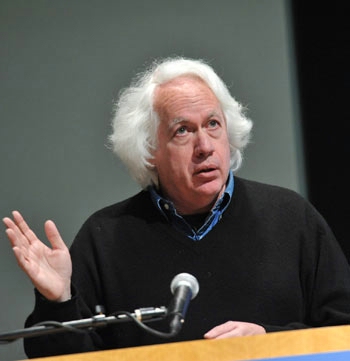
Leon Wieseltier, the longtime literary editor of the New Republic, is a noted writer on politics, religion, and culture. Although frequently characterized as a liberal intellectual, Wieseltier’s views on foreign policy—especially with respect to Israel and the Middle East—often veer toward the hawkish right. Wieseltier does not consider himself a neoconservative, but he has supported the work of various neoconservative-led advocacy groups, including the Project for the New American Century (PNAC) and the Committee for the Liberation of Iraq.
An avowed interventionist, Wieseltier claims to “regard America's influence as generally a blessing for the world” and has criticized the Obama administration for what he considers its “light-footprint” approach toward foreign conflicts.[1]
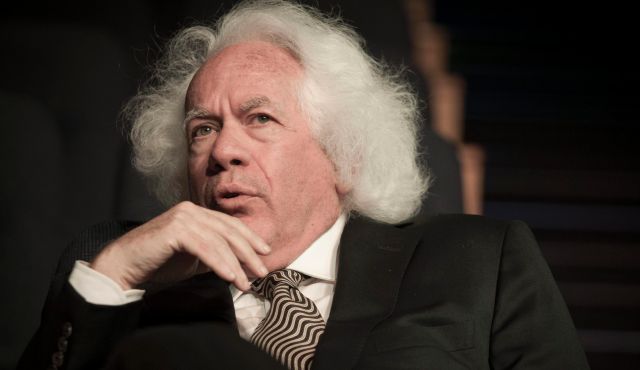
Critics have lampooned Wieseltier for taking an unrealistic view of American power, particularly in light of a security and political climate complicated by wars—notably the Iraq War—that Wieseltier and his neoconservative fellow travelers promoted. "Wieseltier hasn't noticed that we no longer have an army that can win wars, or a large pool of fit recruits, or an adequate budget, or even a national will," wrote Yale lecturer Jim Sleeper in May 2014. "He hasn't considered that that's due partly and inescapably to stances that he, [David] Brooks, and other blowhards of American Destiny have been urging us to take since long before 9/11, as well as the associations and compromises that the chorus members themselves have made."[2]
In December 2014, Wieseltier, along with New Republic editor Franklin Foer and ten other contributing editors, made a surprise announcement that they were resigning from the magazine. The resignations were made in protest at the changes being made to the magazine by its chief executive Guy Vidra, and owner, Chris Hughes.[3]
Josh Marshall of Talking Points Memo explained the resignations thusly: “This afternoon news broke that Editor Frank Foer 'resigned' and he was followed by the magazine's literary editor Leon Wieseltier, either as part of the same push or in protest or something else. A short time later the magazine's new CEO, Guy Vidra, announced that he is "re-imagining The New Republic as a vertically integrated digital media company" rather than a magazine. The news had been foreshadowed by a handful of articles in recent weeks; today it burst like a thunderclap.”[4]
In January 2015, Wieseltier joined the Atlantic as a contributing editor and critic, writing on “his customary wide range of subjects.”[5]
Obama Administration
Wieseltier has been a vociferous critic of the Obama administration's hesitancy to intervene more forcefully in a host of overseas conflicts. Claiming that "the United States can [never] not be almost everywhere," Wieseltier argued in a 2014 New Republic piece that "the Obama administration abandons to their fates one people after another, who pay the price for the president’s impatience with large historical struggles. The Ukrainians, the Syrians, the Iranians, the Israelis, the Palestinians, the Egyptians, the Saudis, the Moldovans, the Poles, the Czechs, the Japanese, the Taiwanese, the Baltic populations: they are all living with the jitters, and some of them on the cusp of despair, because the United States seems no longer reliable in emergencies. … What if American preeminence is good for the world and good for America?"[6]
Following Russia's intervention in Ukraine's 2014 civil crisis and its annexation of the Crimean peninsula, Wieseltier accused Russian President Vladimir Putin of waging a "civilizational" war on the West and eulogized the confrontational U.S. posture during the Cold War. "I leave aside the glory of the cold war, the courage and the justice of the struggle against the Soviet Union," he wrote in March 2014. "I note only that the borderlands of Russia, and some places beyond, are looking increasingly like black squares and white squares to me."[7]
Responding to the arguments, Jim Sleeper, a political science lecturer at Yale, argued that Wieseltier was glorifying a decidedly selective version of Cold War history. "I can only try to imagine," Sleeper wrote, "what must have been Wieseltier's contempt for Dwight Eisenhower, who abandoned Hungarians revolting against Moscow in 1956; for Lyndon Johnson and Richard Nixon, who abandoned Czechoslovakia in 1968; for Ronald Reagan, who sat on his hands throughout the long travails of Polish Solidarity in 1981, leaving them to the Pope; and for George H. W. Bush, who aroused and then betrayed the Kurds in 1992. I can't find any of Wieseltier's remonstrances against these American betrayals of peoples on the cusp of despair. Perhaps he was too busy hymning the glories of Eisenhower's installation of the Shah of Iran, Kennedy's invasion of the Bay of Pigs, Johnson's waging of the Vietnam War, Reagan's propping up the Argentine junta and empowering the Afghan mujahideen and Nicaraguan and Salvadorian 'freedom fighters.'"[8]
Wieseltier struck a similar note on Iran, accusing the U.S. government of overlooking Iran's human rights abuses in the interest of striking a nuclear accord in 2013 and 2014. "The American government is no longer disgusted by the Iranian government, if ever it really was," he claimed. "Generally there is a bizarre warmth between the governments, a climate of practicality and cordiality, as if a new page has been turned in a history of ugly relations, as if the ugliness of those relations were based only in illusion and misunderstanding." Suggesting his support for sanctions legislation introduced by the hawkish Sens. Mark Kirk and Robert Menendez—which critics argued were designed to sink the negotiations—Wieseltier added, "Strenuous negotiations demand strenuous sanctions: the stronger our diplomatic position, the greater the likelihood that we will not resort to force. The thrill of diplomacy must not be allowed to obscure or to soften its purpose. Nor should it shrink our understanding of America’s role in the world." A choice "between a nuclear-free Iran and a tyranny-free Iran," he concluded, "is a false choice, designed to ratify the administration’s prior lack of appetite (and lack of nerve) for the promotion of freedom. … The post-American world is here: behold it and weep."[9]
Not surprisingly, Wieseltier was vocal in his criticism of the July 2015 comprehensive nuclear deal reached with Iran. In a column for the Atlantic, Wieseltier opined: “If I could believe that the Joint Comprehensive Plan of Action marked the end of Iran’s quest for a nuclear weapon … I would support it. I do not support it because it is none of those things.” He added: “I propose—futilely, I know—that now, in the aftermath of the accord, America proceed to weaken it [the Iranian government]. The conclusion of the Joint Comprehensive Plan of Action should be accompanied by a resumption of our hostility to the Iranian regime and its various forces … We need to arm the enemies of Iran in Syria and Iraq, and for many reasons.”[10]
“This means, first and foremost, restoring George W. Bush’s Freedom Agenda,” remarked LobeLog’s Ali Gharib in response. “Wieseltier is no doubt sure about ‘Iran’s quest for a nuclear weapon’ as he was about the Iraqi WMD program.” Gharib then asked: “Does he know who Iran’s enemies in Iraq are? Let me give some hints: they don’t care much about the Freedom Agenda or the Iranian people—they like beheading Shiites.”[11]
Wieseltier staunchly opposed President Obama’s 2013 appointment of Chuck Hagel—a former Republican senator and Vietnam veteran whose skeptical approach to U.S. overseas intervention has been praised by many realist foreign affairs analysts—to head the Department of Defense. “The most egregious aspect of the celebration of Hagel is the belief that his Purple Hearts validate his withdrawalist inclinations,” Wieseltier complained, citing “Hagel's optimism about diplomacy with Iran and Hamas, his opposition to sanctions, [and] his recoil from humanitarian interventions” as key grievances. “We have elected to wane,” he concluded. “One day history will surprise us, and shame on us for being surprised.”[12]
Wieseltier has also been a vocal critic of the Obama administration’s response to the uprisings of the “Arab Spring.” During a New Republic symposium in February 2012, Wieseltier argued that the administration had adopted a double standard in its various responses to the social turmoil in the region. “How can the president dine out on Libya if he is not prepared to do the same for Syria? Assad is perpetrating in Homs, Hama, Dara'a, and elsewhere what Qaddafi only threatened to perpetrate in Benghazi.” Arguing that an important “strategic prize” that could result from Assad's downfall was the weakening of Iran's regional position, Wieseltier said that Washington “should aid and arm the Free Syrian Army.”[13]
In contrast to observers who warned that U.S. intervention could worsen the conflict, Wieseltier brushed aside more substantive concerns and retorted in May 2013 that “we often engage with what we cannot master. No outcomes are assured, except perhaps when we do nothing. We do not need to control the realm in which we need to take action; we need only to have strong and defensible reasons and strong and defensible means, and to keep our wits, our analytical abilities, about us.”[14]
After the Obama administration reached a 2013 deal with Russia to oversee a phased destruction of Syria's chemical weapons stockpile, Wieseltier complained that such diplomacy would preclude a more forceful armed intervention. "Comrades, we have lost," he lamented. "The only achievement of the Obama administration in the Syrian crisis so far has been to eliminate the humanitarian motive from American foreign policy. We have lost. After Syria, the argument about rescue and responsibility, about the uses of American power, will have to begin again. … We will hold Assad to account for his arsenal, but not for what he has done with it.[15]
Earlier, in January 2011, Wieseltier attacked the Obama administration’s approach to the revolution in Egypt. Ignoring decades of U.S. policymaking in the region as well as the unhappy legacy of neoconservative-inspired “democracy” projects, Wieseltier wrote that “the bizarre irony of Obama’s global multiculturalism is that it has had the effect of aligning America with regimes and against peoples.” He also excoriated “liberals” for their “wholesale repudiation of Bush’s foreign policy includ[ing] the rejection of anything resembling his ‘freedom agenda,’” and claimed that President Obama’s multiculturalism amounted to little more than an “acceptance agenda.” He added, “[W]hatever one’s views of the Iraq war, it really does not seem too much to ask of American liberals that they think a little less crudely about democratization—not only about its moral significance but also about its strategic significance.”[16]
Bush Administration
Though often a critic of the George W. Bush administration, Wieseltier endorsed many of the Bush administration’s goals in the Middle East. He was a signatory to a Project for the New American Century letter to Bush that laid out an aggressive series of proposed interventions as part of the “war on terror” just nine days after the 9/11 attacks. The letter named three key targets: Osama bin Laden, Hezbollah, and Iraq, stating that even if Baghdad was found not to be involved in the attacks, the war “must include a determined effort to remove Saddam Hussein from power in Iraq.” In 2002, Wieseltier signed on as a member of the Committee for the Liberation of Iraq, an organization set up to push for the invasion.
Although Wieseltier eventually expressed regret over his initial support for the war, he continued to support it. In a signed editorial for the New Republic, Wieseltier wrote that “an absence of regrets and recrimination on the part of a supporter of this war now amounts to an absence of intellectual honesty” because there were no weapons of mass destruction. Like many of the war’s initial boosters, Wieseltier also took exception to the way the war was conducted, writing in the same editorial that he had “come to despise some of the people who are directing it.”[17]
In a March 2013 New Republic feature on the Iraq War’s 10th anniversary, Wieseltier conceded that Iraq war boosters who believed that Saddam Hussein “possessed weapons of mass destruction must forever ponder the fact that he did not possess them.” However, he added, “I hope that we do not blind ourselves to the extraordinary changes that have taken place there, and to the possibility of a decent outcome. It is an outcome upon which we might have had an influence.” Accusing the Obama administration of saying “goodbye and good luck” to Iraq, Wieseltier pleaded for prolonged U.S. engagement in the country, asserting that “the compromised origins of the Iraq war are not all, or even most, of what we need to know about Iraq now. Cursing George W. Bush is not a strategy. The region is convulsing, and we are pivoting.”[18]
A longtime friend of Wieseltier is I. Lewis “Scooter” Libby, the former chief of staff for Vice President Dick Cheney who was convicted on charges of lying, perjury, and obstruction of justice in the Valerie Plame affair. Before Libby was sentenced, the judge reviewed letters from nearly 200 writers, including one from Wieseltier, who wrote, “I am in no sense a neoconservative, as many of my neoconservative adversaries will attest. I am, to the contrary, the kind of liberal who many neoconservatives like to despise, and that's fine with me.” Wieseltier explained his stance later, writing, “Generally, I detest this White House for many reasons and I think Scooter is a kind of state-of-the-art fall guy in this particular plot.”[19]
On Criticizing Israel and “Anti-Semitism”
Wieseltier, who once described the New Republic as “the cops” policing beltway discourse on Israel,[20] is well known for using his media perch to issue controversial diatribes against critics of Israel and excoriate the purported weakness of liberals. One notorious early attack was Wieseltier’s review of Edward Said’s book Orientalism, a highly regarded opus on Western study of the East, which appeared in the New Republic in 1979. Wieseltier called Said’s analysis “little more than the abject canards of Arab propaganda.”[21] On other occasions, he has disparaged critics of Israel as “Jew baiters.”[22]
On the other hand, Wieseltier favors the establishment of a Palestinian state in order to preserve Israel as a Jewish democracy. He has become increasingly outspoken in his criticism of the Israeli government for its apparent hostility to Palestinian statehood. After accepting a prestigious literary prize in Tel Aviv in June 2013, Wieseltier told an interviewer, “Unless there is a solution to the Israeli-Palestinian conflict, there will not be a Jewish state for very long. … One of the most shameful aspects of the Netanyahu government has been to succeed in taking the Palestinian question off the table.”[23]
Wieseltier elaborated on these views in a December 2012 essay for theNew Republic, despairing that “I no longer believe that peace between Israelis and Palestinians will occur in my lifetime.” Although he placed some blame on “the Palestinians and their inability to recognize the historical grandeur of compromise,” Wieseltier also excoriated Netanyahu for allying himself with “anti-democratic maniacs” like former Israeli Foreign Minister Avigdor Lieberman, dampening prospects for a negotiated peace. “People assure me that all this can change if there is the political will to change it,” he concluded, “but I do not detect the political will. So what if the two-state solution is the only solution, when nobody is desperate to solve the problem?”[24]
Wieseltier also sharply rebuked Netanyahu in a June 2015 column for the Atlantic, proclaiming: “[L]ong before Netanyahu’s revolting last-minute demagoguery about Palestinians and Israeli Arabs during his recent campaign for reelection, it was perfectly clear to me that he will never preside over the establishment of a Palestinian state, which in my view is the very condition of the survival of a Jewish state; that he has no interest in the moral dimensions of Israel’s coexistence with Arabs and Palestinians (the Other, indeed!) and will poison Israel’s relations with its citizens and its neighbors if it suits his political purposes; that he prefers military solutions to diplomatic solutions and is utterly lacking in diplomatic imagination; that he regards Israel’s isolation not as a strategic threat but as a moral victory, as a proof of its righteousness; that he has promoted fear from an empirical response to actual dangers into a philosophy of history, and thereby diminished his country’s sense of historical possibility; that he will pander to the darkest forces of Israeli reaction, secular and religious, to advance himself.”[25]
Wieseltier has nevertheless continued to launch withering attacks on civil society activists who take a critical view of Israel. In 2013, for example, he accused the American Studies Association—which had recently announced that it would honor a Palestinian-proposed academic boycott of Israel to encourage it to pull its troops out of the occupied territories—of being both "anti-Zionist" and "anti-American." Calling the boycott a "travesty," he alleged further that "such progressives" were unconcerned with the problem of "terrorism (and certainly Muslim terrorism)" or any other international problem that did not concern "the turpitude of the Jewish state."[26]
Earlier, in February 2010, Wieseltier attacked popular conservative blogger Andrew Sullivan, hinting that Sullivan’s writings were anti-Semitic—despite categorically rejecting that Sullivan was anti-Semitic during an earlier dispute with his former New Republic colleague.[27] Wieseltier’s 2010 accusation centered on the claim that Sullivan reveals anti-Semitic tendencies in his criticism of Israeli policies toward Palestinians (in particular, the 2009 attack on Gaza), as well as in his disparaging assessments of certain American Jews (in particular, those associated with neoconservatism, or “the [Michael] Goldfarb-[Charles] Krauthammer wing” of the U.S. Jewish community).
Wrote Wieseltier: “The explanation that Sullivan adopts for almost everything that he does not like about America’s foreign policy, and America’s wars, and America’s role in the world—that it is all the result of the clandestine and cunningly organized power of a single and small ethnic group—has a provenance that should disgust all thinking people. And this is not all that is disgusting about Sullivan’s approach. His assumption, in his outburst about ‘the Goldfarb-Krauthammer wing,’ that every thought that a Jew thinks is a Jewish thought is an anti-Semitic assumption, and a rather classical one.”[28]
Journalist Glenn Greenwald described Wieseltier’s diatribe as “an amazingly ugly, reckless, and at-times-deranged screed.” He added, “So shabby and incoherent are Wieseltier's accusations that they merit little real refutation, and I hope Andrew will resist the (understandable) temptation to elevate and dignify them by lavishing them with lengthy self-defenses.”[29]
Another writer, Daniel Luban, argued that Wieseltier’s invective did merit assessment in that it reveals how far the discourse in Washington has shifted with respect to U.S. policy on Israel, in part due to the tendency of “pro-Israel” hardliners to make “frivolous” accusations about anti-Semitism whenever anyone criticizes Israeli policies.
Luban wrote: “The obvious absurdity of these charges has caused many observers to go back and reevaluate the entire way that the charge has been used in the past—and has only confirmed the impression that it is all-too-frequently used to stifle all dissent from Israeli policies. The result is that the tacit framework governing ‘responsible’ criticism of Israel is breaking down. … Wieseltier’s attack on Sullivan appears motivated not by any actual belief that the latter is an anti-Semite, but by rage that he has violated these tacit rules—that a gentile dares offer unapologetic criticism of Israeli policies. More than that, we can detect in Wieseltier’s piece a deep sense of panic that this framework of ‘responsible’ criticism is breaking down. The attack is quite obviously an attempt to intimidate Sullivan into ceasing all criticism; I join many others in hoping that Sullivan sticks to his guns.”[30]
Wieseltier has a long history of haranguing people who point to the influence of the “Israel Lobby” on U.S. foreign policy. He has written particularly venomous critiques against well-known scholars—including Tony Judt, Steve Walt, and John Mearsheimer—who have taken on this subject. When a scheduled talk by Judt in October 2006 at the Polish Consulate in New York was cancelled after the Anti-Defamation League and the American Jewish Committee complained, Wieseltier wrote in the Washington Diarist in October 2006:
“The more significant point is that what Judt was prevented from delivering at the Polish consulate was a conspiracy theory about the pernicious role of the Jews in the world. That is what the idea of ‘the Lobby’ is. It is Mel Gibson's analysis of the Iraq war. It is not just an analysis of the impact of AIPAC [American Israel Public Affairs Committee] on particular resolutions and policies: such an analysis requires a detailed knowledge of American government, specifically of Congress, that I suspect Judt does not possess and that his fellow heroes Mearsheimer and Walt have been shown to lack. It is a larger claim, a historical claim, a claim about a sinister causality, about the power of a small group to control the destiny of a large group. And it is a claim with a sordid history.”[31]
Wieseltier was himself subject to accusations of anti-Semitism in a June 2015 book by former Israeli ambassador to the United States Michael Oren. A key claim in Oren’s controversial book was that Jewish Americans have a bias against Israel. One of Oren’s targets was Wieseltier, whose “antagonism towards Netanyahu,” Oren posited, “resembled that traditionally triggered by the Jews.”[32]
Wieseltier said in response: “I don't take kindly to being called anti-Semitic and I don't take kindly to having Jewish self-hatred attributed to me. It's cheap and it's ugly and he knows better.”[33] He added in a column for the Atlantic, “Oren ludicrously conflates the defense of Netanyahu with the defense of the Jewish people.”[34]
A writer for the Jewish Daily Forward said about the back-and-forth between Oren and Wieseltier: “Leon Wieseltier could himself credibly claim to be the king of spurious and lazy accusations of anti-Semitism. He is the unquestioned master of the genre … it is a bit rich to see Wieseltier lecturing Oren on how ‘anti-Semitism cannot explain everything.’”[35]
As a child, Wieseltier attended the Yeshiva of Flatbush, an ultra-Orthodox school in Brooklyn, where he was a classmate of fellow “pro-Israel” hawk Dennis Prager. He later attended Columbia and Oxford Universities before pursuing a doctorate in Jewish studies at Harvard. On the strength of work for the New York Review of Books written concurrently with his studies, he was lured away from academia by an offer from Martin Peretz, the publisher of the New Republic.[36]
Wieseltier’s books include Kaddish (1998), Against Identity (1996), and Nuclear War, Nuclear Peace (1983).